If you’ve looked at your fence lately and thought, “This used to look better,” you’re not alone. Many Omaha homeowners reach a point where their fence feels uneven in color, worn down, or no longer matches, especially after repairs or board replacements. The hard part is knowing what to do next and what it should cost.
At Brush & Roll Painting, we’ve been helping Omaha homeowners care for their homes since 1996. That includes fences, decks, and exterior wood surfaces that take a beating from Midwest weather. We’ve worked on everything from brand new fences to older ones that need careful prep and matching.
In this article, we’re walking you through a real fence staining project we completed in 2025. You’ll see what led the homeowner to move forward, how the work was done, how long it took, and what it cost. By the end, you’ll be able to compare your own fence and feel more confident about what your project might look like.
Why do people stain their fence?
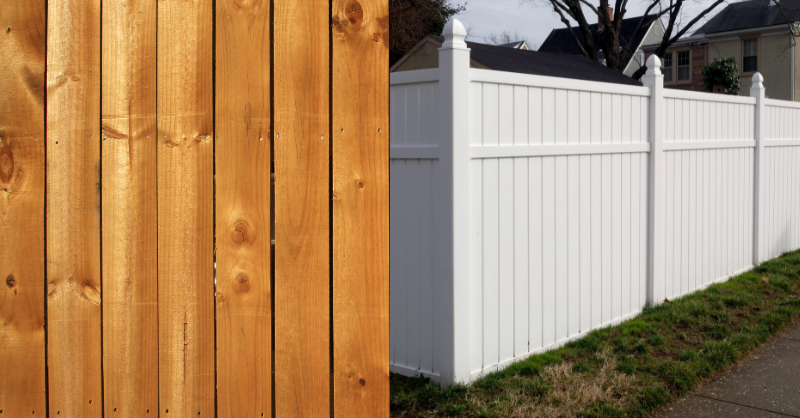
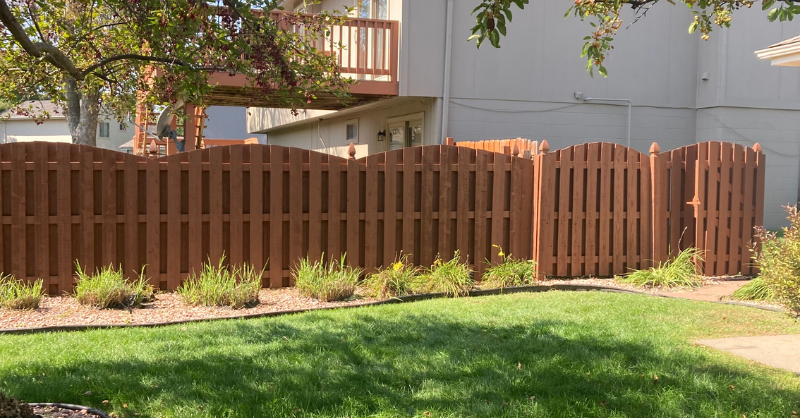
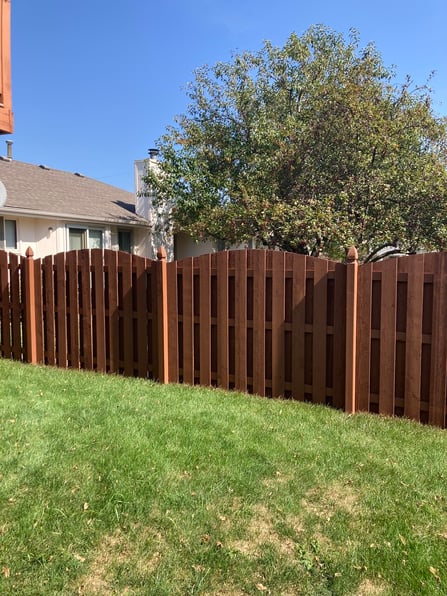
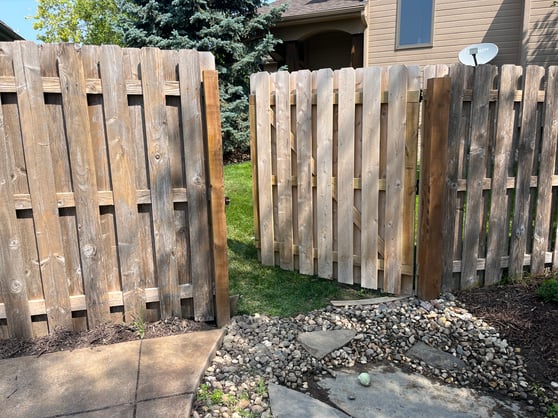
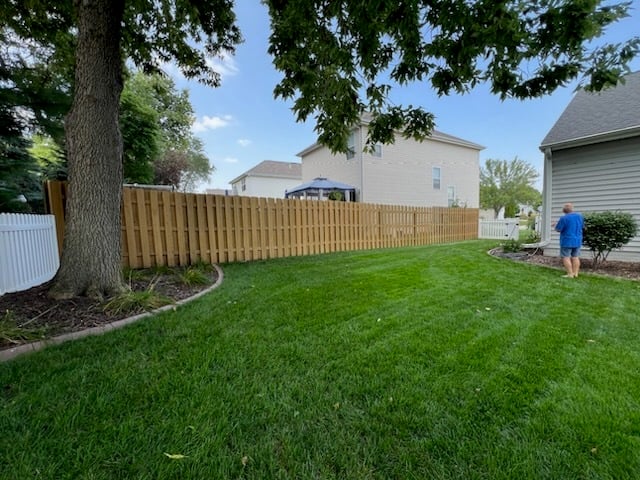
This fence had one side replaced with new wood, while the rest of the fence had a stain that was about five years old. The mismatch in color and protection made it clear that the whole fence needed to be re-stained.
This homeowner had a fairly common situation. One section of the fence had been replaced with brand-new boards. The rest of the fence had been stained about five years earlier.
So now they had:
- One side that looked raw and unfinished
- Other sections that were faded and aging
- A fence that didn’t match from one panel to the next
This is something we see often in Omaha. Repairs happen over time. Boards get replaced. Sections get rebuilt. But unless everything is re-stained together, the fence ends up looking patchy.
What is included in the fence staining process?
The process included power washing with a chlorine and detergent solution, prep work like sanding, and applying stain to both sides of the fence.
This project followed a straightforward but thorough process.
Step 1: Cleaning the fence
Before any stain goes on, the surface has to be clean.
A cleaning solution was applied that included:
- Detergent to loosen dirt and buildup
- Chlorine to kill mildew and mold spores
This step matters more than most homeowners realize.
If you skip proper cleaning:
- Dirt blocks the stain from soaking in
- Mold can grow under the new coating
- The stain may fail sooner
Think of it like painting over dust. It just doesn’t hold up the same.
Step 2: Prep work
After cleaning, the fence was prepped for staining.
This can include:
- Checking for damaged boards
- Sanding the wood
- Making sure the surface is fully dry
Prep is where many jobs fall short.
Some companies rush through this to move faster, but that often leads to uneven color or early wear.
Step 3: Staining both sides of the fence
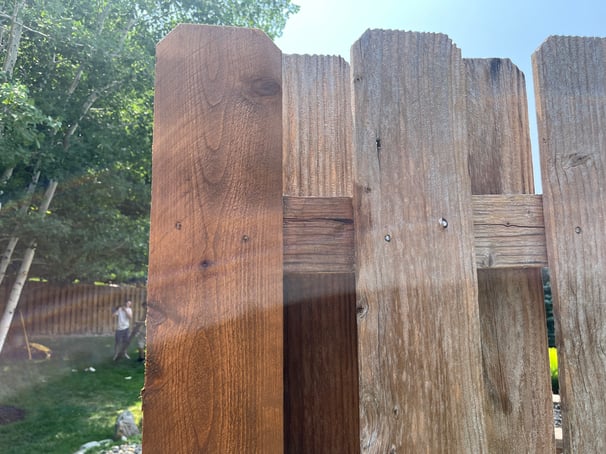
The stain used on this project was Benjamin Moore Flood stain.
Both sides of the fence were coated.
That’s a key detail.
Some quotes you receive may only include one side. That lowers the price, but it also means:
- Less protection overall
- Uneven aging over time
- A fence that looks different depending on the angle
Staining both sides helps the fence wear more evenly and last longer.
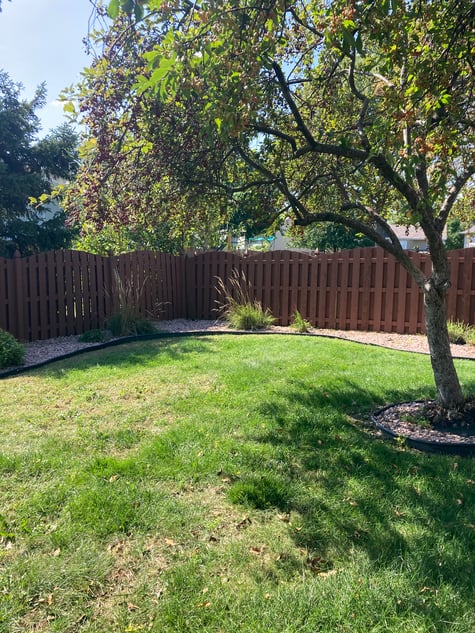
The homeowners chose to match the existing stain. This helped keep the fence consistent with the home and the surrounding area, especially since only one side had new boards.
Instead of changing colors, this homeowner wanted the fence to look like it always had, just refreshed.
This is a smart move when:
- The existing color still fits the home
- Neighbors share parts of the fence
- You want a clean, uniform appearance
Changing colors can look great, but matching is often the easiest way to restore a fence without making it feel completely different.
How long does the fence staining project take?
The project took about 30 hours to complete.
That time includes:
- Cleaning
- Dry time between steps
- Prep work
- Staining both sides
In real terms, this is usually spread across a few days depending on the weather.
Omaha weather plays a big role here.
For example:
- Rain delays drying
- High humidity slows things down
- Hot sun can affect how a stain absorbs
A proper timeline is about letting each step be done right, not just fast.

How much does fence staining cost?
The total cost for this project was $3,659.92.
This price included:
- Full cleaning process
- Prep work
- Staining both sides
- Labor over 30 hours
- Materials, including a premium stain
When you compare this to other fence staining projects in Omaha, a few factors influence pricing:
Fence size
Larger fences increase labor and material costs.
Condition of the wood
Older fences may need more prep.
One side vs both sides
Staining both sides increases time and cost.
Product quality
Higher quality stains cost more but last longer.
Accessibility
Tight areas or landscaping can slow things down.
What can you learn from this project for your own fence?
If your fence has mixed wood, fading stain, or hasn’t been touched in about five years, you’re likely in a similar situation.
Here are a few ways to compare your fence:
Ask yourself:
- Do you have new boards that don’t match?
- Is your stain faded or uneven?
- Does water soak into the wood quickly?
- Has it been around five years since the last stain?
If you said yes to a few of these, your fence is likely ready.
Think about your goals:
- Do you want to match your current color?
- Are you okay with changing the look?
- Do you want both sides stained?
These choices will affect cost and outcome.
Understand what you’re paying for:
- Cleaning is not optional
- Prep affects how long it lasts
- Product choice matters
- Labor time reflects quality
This project wasn’t rushed, and that’s part of why it turned out well.
Fence staining review in Omaha, NE
Here’s the exact review from this customer, posted on Brush & Roll Painting’s Google page in the fall of 2025:
“I used Brush & Roll to paint my wood back yard fence based on a positive review from a good friend. They did a very good job. They were timely, kept me informed daily of their plans, made beneficial recommendations, and the overall job was excellent. This was confirmed by neighbors who shared the fence. I plan to have them paint my house next spring.”
One thing that stands out here is the mention of neighbors.
Shared fences are common in Omaha, and when both sides look good, everyone notices.
FAQ: Fence staining in Omaha
How often should you stain a fence in Omaha?
Every 3 to 5 years, depending on sun exposure and product quality.
South-facing fences may wear faster due to the sun. Shaded areas may last longer.
Is it better to stain or paint a fence?
Stain is usually better for fences because it soaks into the wood and handles weather changes well.
Paint sits on top and can peel over time.
Should both sides of a fence be stained?
Yes, if you want even protection and aging. Staining one side saves money upfront, but may lead to uneven wear.
What happens if you don’t clean before staining?
The stain won’t absorb properly and may fail early. Dirt and mildew act like a barrier between the wood and the stain.
Can you stain new and old wood at the same time?
Yes, but it takes care to blend the look. New wood absorbs stain differently, so matching takes experience.
Fence Staining Cost in Omaha
If your fence is starting to look uneven, faded, or mismatched after repairs, you’re not alone. This 2025 project shows what a real fence staining job looks like in Omaha, from start to finish.
We walked through:
- Why the homeowner decided to re-stain
- How the cleaning and prep process works
- What it takes to match old and new wood
- How long did the project take
- What it costs and why
At Brush & Roll Painting, we’ve been helping Omaha homeowners make these decisions since 1996. Our goal is always to help you understand your options so you can choose what works best for your home.
If you’re ready to move forward, click the button below to talk with our team and to get a quote.

If you’re still figuring things out, a great next step is to check out a deck staining pricing calculator. It can also help you estimate fence projects and give you a better idea of what to expect before scheduling anything.

Topics:


-1.png?width=800&height=418&name=Blog%20Post%20Image%20Size%20(7)-1.png)