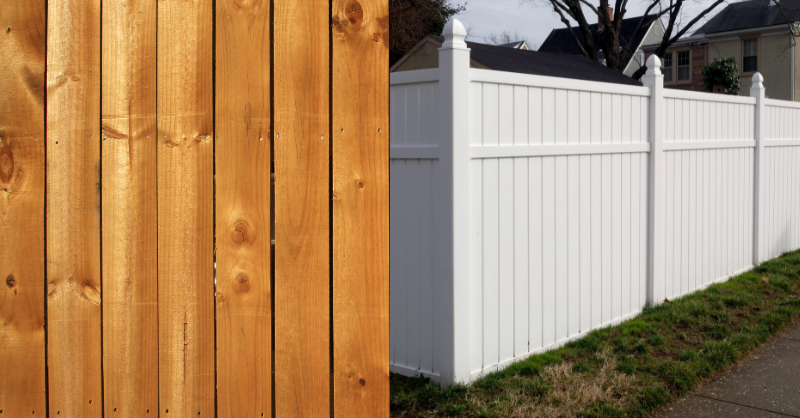
If you are planning to install a fence around your home, you have probably run into the same question many Omaha homeowners ask: Should I choose a wood fence or a composite fence?
The choice seems simple. One option looks traditional and natural. The other promises low maintenance and modern materials. But once you start researching, things get confusing fast. Some people say wood fences last longer. Others claim composite fences never need maintenance. Costs vary widely, and it is hard to know what actually makes sense for your home, your budget, and Omaha’s weather.
Many homeowners also realize something else. The decision you make today affects maintenance, appearance, and cost for the next 10 to 20 years.
At Brush & Roll Painting in Omaha, we have been helping homeowners care for their homes since 1996. While we do not build fences, we work on them frequently through wood fence staining and maintenance projects.
Because of that experience, we see the real condition of fences years after installation. We see wood fences that were cared for properly and still look great after many years. We also see fences that were ignored and deteriorated quickly. And we often hear from homeowners who are deciding between wood and composite before installing a fence.
That hands-on experience gives us a practical perspective on how these materials perform in Omaha’s climate.
By the end of this article, you will clearly understand:
- The differences between wood fences and composite fences
- The true maintenance expectations for each option
- Which material typically costs more over time
- How Omaha weather affects each type of fence
- How to decide which fence fits your home and lifestyle
If you are trying to choose the right fence for your yard, this guide will help you make a confident decision.
What Is the Difference Between a Wood Fence and a Composite Fence?
Wood fences are built from natural lumber and require periodic staining or sealing. Composite fences are made from a mix of recycled plastic and wood fibers and are designed to require less maintenance.
Understanding Wood Fences
Wood fences have been used around homes for generations. Common materials include:
- Cedar
- Pine
- Pressure-treated lumber
- Redwood in some regions
In Omaha, cedar and pressure-treated lumber are the most common choices.
Wood fences are popular because they:
- Look natural
- Can be stained in different colors
- They are usually less expensive upfront
- Can be repaired easily
However, wood is a natural material. Over time, it reacts to weather, moisture, sun exposure, and temperature swings.
That is why wood fences need regular staining or sealing to maintain their appearance and durability.
-May-16-2025-01-24-50-9180-PM.png?width=651&height=340&name=Blog%20Post%20Image%20Size%20(1)-May-16-2025-01-24-50-9180-PM.png)
Understanding Composite Fences
Composite fences are made from a mixture of:
- Plastic materials
- Wood fibers
- Binding agents
These materials are molded into boards that resemble wood. Many composite fences are designed to resist:
- Rot
- Moisture
- Insects
Composite fences usually come in pre-selected colors and are installed in panel systems.
Manufacturers often market them as low-maintenance fencing.
However, low maintenance does not mean zero maintenance. Composite fences still require occasional cleaning and inspection.
How Does Omaha Weather Affect Wood and Composite Fences?
Omaha weather is hard on all outdoor materials. Hot summers, freezing winters, and strong storms affect both wood and composite fences.
Weather Challenges in Omaha
Homeowners in eastern Nebraska experience a wide range of weather conditions throughout the year.
These include:
- Summer heat and strong sunlight
- Spring thunderstorms, hail, and wind
- Winter freezing temperatures
- Snow and ice
- Rapid temperature swings
Each of these conditions affects fencing materials differently.
Wood Fence Performance in Omaha
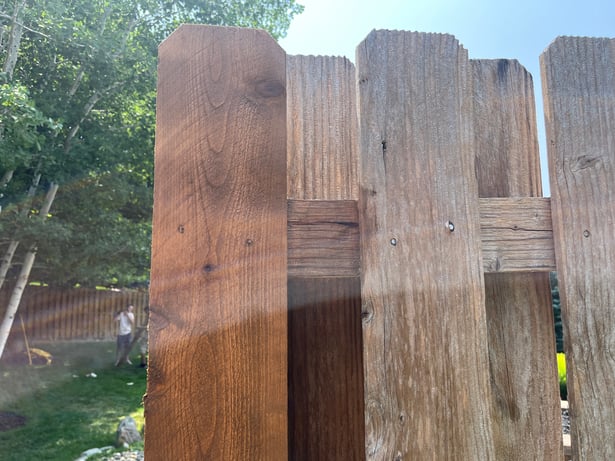
Wood expands and contracts with moisture and temperature changes.
Over time, this can lead to:
- Cracking
- Fading
- Warping
- Surface wear
Staining a wood fence helps protect it from moisture and sun damage. A properly maintained wood fence can last many years.
Regular staining also helps maintain the fence’s color and prevents the gray weathered look that untreated wood develops.
Composite Fence Performance in Omaha
Composite fencing does not absorb moisture the same way wood does. That helps reduce problems like rot.
However, composite fencing can still experience issues such as:
- Fading from UV exposure
- Surface staining
- Warping if installed incorrectly
- Expansion during heat waves
Composite fences also tend to hold heat, which some homeowners notice during hot summer days.
Neither material is completely immune to Omaha’s weather. Both require thoughtful installation and care.
Which Fence Requires More Maintenance, Wood or Composite?
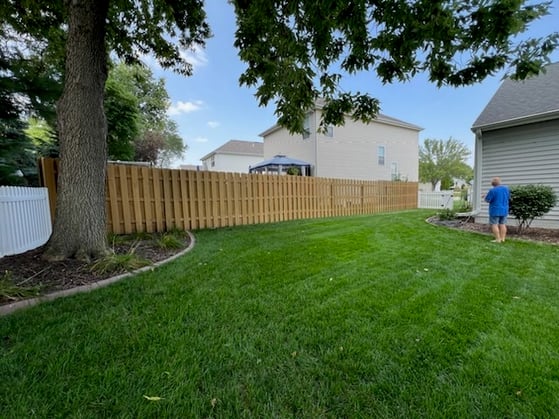
Wood fences require more maintenance than composite fences, mainly because they need staining every few years.
Wood Fence Maintenance
Wood fences should typically be:
- Cleaned periodically
- Inspected for damage
- Stained every 3 to 5 years, depending on exposure
Staining protects the wood from moisture and sunlight while improving the appearance of the fence.
Without staining, wood can:
- Turn gray
- Crack
- Absorb moisture
- Deteriorate faster
Many homeowners choose wood fences because they enjoy the natural appearance and are comfortable maintaining them over time.
Composite Fence Maintenance
Composite fences generally require less maintenance.
Typical care includes:
- Occasional washing with water
- Cleaning dirt or mildew
- Inspecting posts and hardware
Composite fences do not require staining or sealing.
However, they still benefit from periodic cleaning to remove dirt, algae, or environmental buildup.
For homeowners who want minimal upkeep, composite fences can be appealing.

Which Fence Costs More in Omaha?
Composite fences usually cost more upfront. Wood fences are typically less expensive initially but require ongoing maintenance.
Wood Fence Costs
Wood fencing tends to have a lower installation cost.
Costs vary depending on:
- Fence height
- Lumber type
- Labor
- Gate installation
- Property layout
However, homeowners should also plan for long-term maintenance costs, including periodic staining.
Fence staining is usually needed every few years to maintain protection and appearance.
-May-16-2025-01-26-11-3697-PM.png?width=750&height=392&name=Blog%20Post%20Image%20Size%20(2)-May-16-2025-01-26-11-3697-PM.png)
Composite Fence Costs
Composite fences often have higher material costs.
Installation may also cost more because:
- Panels can be heavier
- Systems may require specialized hardware
- Materials are more expensive
The trade-off is reduced maintenance costs over time.
For homeowners planning to stay in their home for many years, that difference can matter.
Which Fence Looks Better, Wood or Composite?
This mostly comes down to personal preference. Wood fences offer a natural appearance, while composite fences offer a uniform, manufactured look.
Appearance of Wood Fences
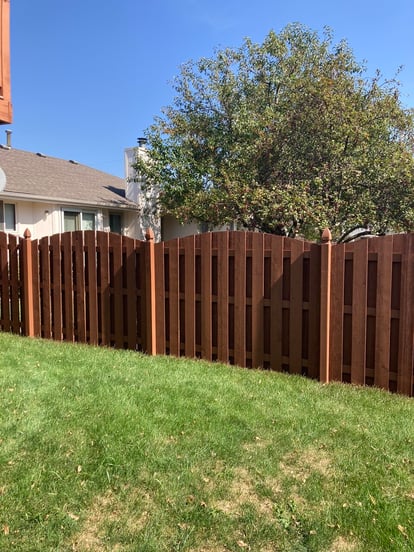
Wood fences offer a natural texture and grain pattern.
They can also be stained in different tones, such as:
- Natural cedar
- Walnut
- Redwood
- Dark brown
- Semi-transparent stains
Staining allows homeowners to customize the color of their fence to match their home.
Many people appreciate the traditional appearance of real wood.
Appearance of Composite Fences
Composite fences usually come in a limited number of color options.
The color is built into the material rather than applied afterward.
Composite fences offer:
- Consistent color
- Uniform boards
- A modern appearance
Some homeowners like the clean look, while others prefer the character of real wood.
Can Wood Fences Last as Long as Composite Fences?
Yes, wood fences can last many years when properly maintained.
Longevity depends on several factors:
- Installation quality
- Wood type
- Weather exposure
- Maintenance
A well-cared-for wood fence that is stained regularly can last a long time.
Composite fences may last longer in some cases because they resist rot and insect damage.
However, installation quality still matters. Poorly installed fences of any material can fail early.
FAQ: Wood Fence vs Composite Fence
Do wood fences always need staining?
Yes, staining is recommended to protect the wood from weather and moisture. Most fences benefit from staining every few years.
Do composite fences fade?
Yes, many composite materials can fade gradually from sun exposure.
Are composite fences completely maintenance-free?
No. They require occasional cleaning and inspection, even though they do not need staining.
Can you change the color of a composite fence?
Usually no. Composite fencing colors are built into the material.
Can wood fences be repaired easily?
Yes. Individual boards can usually be replaced without rebuilding the entire fence.
Wood Fence vs Composite Fence: Choosing What Is Right for Your Home
Choosing between a wood fence and a composite fence often comes down to priorities.
Some homeowners value the natural appearance and customization options that wood offers. Others prefer the reduced maintenance of composite materials.
Both fence types can work well in Omaha when installed properly and cared for appropriately.
This article walked through the major factors homeowners should think about when comparing these two options, including cost, maintenance, weather exposure, and appearance.
At Brush & Roll Painting, we have worked with Omaha homeowners since 1996, helping maintain and protect wood fences through professional staining and maintenance. While we do not install fences, we regularly see how different materials perform over time.
If you are planning to stain or maintain a wood fence, you can click the button below to get a quote.

If you are still planning your project and want to understand the cost of maintaining a fence, you can also explore our deck staining pricing calculator (which will also work for fences), which provides helpful insight into staining and maintenance costs for outdoor wood surfaces.

Topics:

-Mar-27-2026-02-08-12-9646-PM.png?width=800&height=418&name=Blog%20Post%20Image%20Size%20(1)-Mar-27-2026-02-08-12-9646-PM.png)
-Mar-20-2026-03-16-05-8428-PM.png?width=800&height=418&name=Blog%20Post%20Image%20Size%20(2)-Mar-20-2026-03-16-05-8428-PM.png)
.jpg?width=1280&height=721&name=Havens%20after%201%20(1).jpg)