You finish a painting project and everything looks perfect. The trim is clean, the paint looks smooth, and the lines where the trim meets the wall look tight and sealed. Then months later, small cracks appear along the seams. The caulk that once looked smooth now has thin lines running through it.
Many homeowners in Omaha notice this around baseboards, door frames, window trim, or crown molding. At first, it can feel frustrating. Did the painter do something wrong? Is the house shifting? Is the paint failing?
The truth is that cracked caulk inside a home is usually not a sign of poor workmanship. In many cases, it is simply the natural movement of wood inside your home.
Brush & Roll Painting has worked inside homes across the Omaha area since 1996. Over the years, we have seen thousands of interior trim projects, from brand new homes to houses built a century ago.
One thing every home has in common is movement. Wood expands and shrinks as seasons change, humidity levels shift, and temperatures move up and down. Because interior trim is made from wood or wood based materials, that movement affects the caulk placed between trim and walls.
Understanding this movement helps homeowners know what is normal and what may need attention.
By the end of this guide, you will understand:
- Why caulk cracks around interior trim
- How expansion and contraction affect woodwork inside homes
- Where cracked caulk most often appears
- When cracks are normal and when they may need repair
- What professional painters do to help reduce cracking
If you have ever wondered why trim lines change after a painting project, this article will help you make sense of it.
What Causes Caulk to Crack on Interior Trim?
Caulk cracks because wood trim expands and contracts as humidity and temperature change inside a home. When the wood moves even slightly, the caulk line stretches and sometimes splits.
Caulk sits in the joint between two surfaces. In most homes, that joint is between drywall and wood trim.
Those two materials behave very differently.
Drywall tends to stay fairly stable. Wood does not. Wood absorbs moisture from the air and releases it when the air becomes dry. As this happens, the wood grows slightly larger or smaller.
Even a movement that is less than the thickness of a credit card can cause a visible crack in a caulk line.
Inside Omaha homes, seasonal weather swings can make this movement more noticeable.

Why Does Wood Trim Expand and Contract Inside Homes?
Wood naturally absorbs moisture from the air. When humidity rises, wood expands. When air becomes dry, wood shrinks.
This process happens constantly, even inside climate-controlled homes.
Omaha weather plays a big role in this.
During the summer months, the air becomes humid. In winter, furnaces dry the air significantly. That swing in moisture levels causes wood trim to move slightly throughout the year.
Even newer homes experience this.
Many homeowners notice small caulk cracks during:
• The first winter after construction
• Seasonal temperature changes
• Periods of very dry indoor air
The movement is usually small, but caulk lines are thin and flexible. When the wood pulls away from the drywall, the caulk can split.

Where Do Caulk Cracks Usually Appear Inside a House?
Most cracks appear where trim meets drywall, especially along baseboards, door frames, and crown molding.
These areas experience the most visible movement.
Common places homeowners notice cracked caulk include:
Baseboards
Baseboards run along the bottom of every wall in a home. Because they stretch across long distances, even a small amount of movement can create hairline cracks.
Door frames
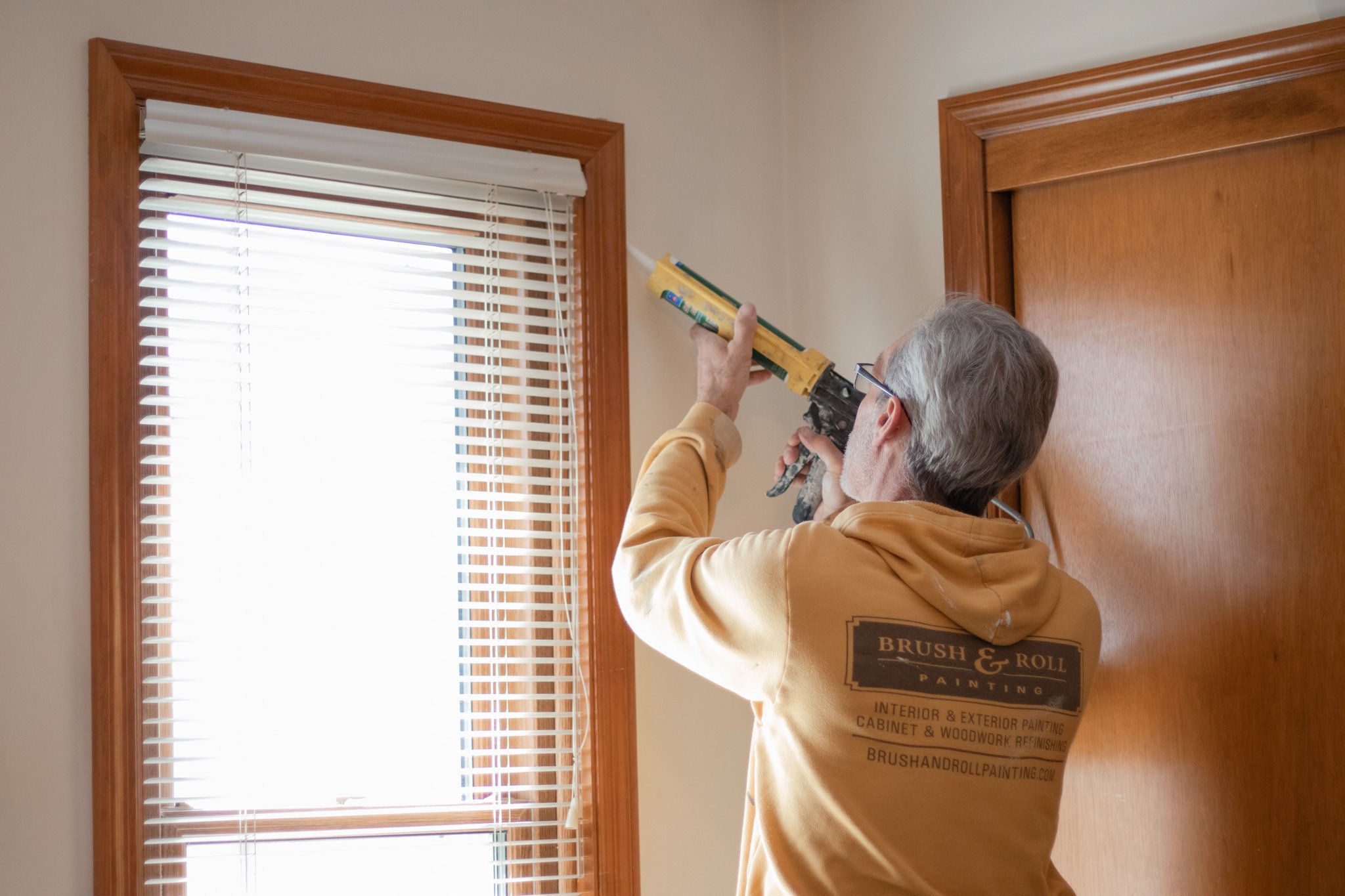
Door trim often cracks where the vertical casing meets the drywall. Doors also move slightly when they are opened and closed, which can add stress to the caulk joint.
Window trim
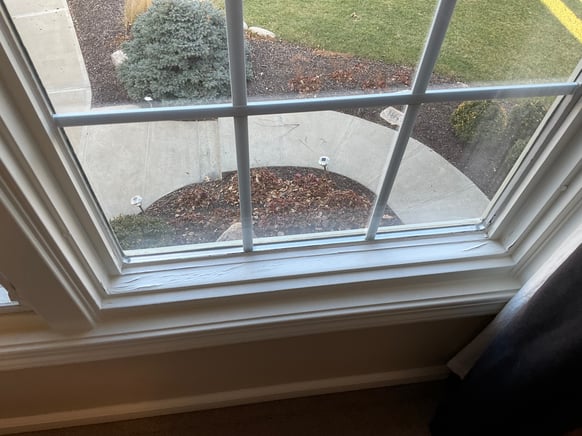
Windows are exposed to temperature changes near exterior walls. That movement can affect the surrounding trim.
Crown molding
Crown molding sits between the wall and the ceiling. Because it touches two surfaces, it often shows cracks if either surface shifts slightly.
Built-in cabinets or shelving
Woodwork attached to walls may also develop cracked caulk lines as the materials move at different rates.
Is Cracked Caulk a Sign of Bad Painting Work?
Usually no. Small cracks in caulk are common and often appear months after a painting project due to normal home movement.
When painters finish a project, caulk lines typically look smooth and seamless.
However, caulk is flexible, not permanent. Over time, it can stretch, shrink, or separate slightly.
This is especially true in homes where:
• Wood trim was newly installed
• Humidity levels often fluctuate
• Seasonal weather changes are strong
In Omaha, winter heating systems can dry the air quickly. That drying effect causes wood to shrink slightly, which sometimes creates small cracks along trim joints.
Even homes that were painted perfectly may develop these small changes over time.
Why Do Caulk Cracks Often Appear During Winter?
Winter air inside homes becomes very dry. Dry air causes wood trim to shrink, which can pull caulk apart.
This is one of the most common times homeowners notice cracked caulk.
During winter in Nebraska:
• Furnaces run frequently
• Indoor humidity drops
• Wood dries out slightly
As the wood shrinks, tiny gaps can appear between trim and drywall. The caulk line stretches and sometimes splits.
When humidity returns during spring or summer, the wood may expand again. Sometimes the cracks become less noticeable.
Can Temperature Changes Inside the Home Cause Caulk to Crack?
Yes. Temperature swings can cause wood to expand and contract, especially near windows, doors, or exterior walls.
Even though interior spaces are climate-controlled, they are not perfectly stable.
For example:
• Sunlight warms walls during the day
• Nighttime temperatures cool them
• Exterior walls experience larger shifts
These subtle changes cause wood fibers to move slightly.
Over time, that movement affects caulk joints.
What Types of Caulk Are Used Around Interior Trim?
Painters typically use flexible acrylic latex caulk designed for interior trim work.
This type of caulk is paintable and flexible.
Common features of interior trim caulk include:
• Flexibility that allows slight movement
• Paint compatibility
• Smooth finish along trim edges
Higher-quality caulks usually last longer before cracking. However, no caulk can completely stop the natural movement of wood.
Professional painters choose products designed to handle expansion and contraction as much as possible.
Can High Quality Paint Help Reduce Caulk Cracking?
Paint cannot stop wood movement, but higher-quality paint systems can help protect trim and reduce visible changes over time.
Paint acts as a protective layer on wood surfaces. When trim is sealed well, it slows how quickly wood absorbs moisture.
Some professional-grade paints create a stronger protective layer.
For example, some painters use durable coatings designed for trim and doors. These products help wood surfaces stay stable and resist wear.
While paint helps protect wood, it cannot completely prevent seasonal movement.
-Feb-23-2024-09-45-28-1985-PM.png?width=678&height=354&name=Blog%20Post%20Image%20Size%20(1)-Feb-23-2024-09-45-28-1985-PM.png)
How Do Professional Painters Help Reduce Caulk Cracking?
Painters focus on proper preparation, flexible caulking products, and careful application techniques.
Several steps can help trim joints perform better over time.
Professional painters often focus on:
- Cleaning joints before caulking
- Applying the right amount of caulk
- Smoothing the bead so it bonds well
- Using flexible paintable caulk products
Prep work plays a large role in how well caulk performs.
Brush & Roll Painting has seen over the years that careful preparation often helps caulk last longer before showing movement.
Still, no process can fully eliminate natural wood movement inside a home.
Should Homeowners Fix Cracked Caulk?
Small hairline cracks are usually cosmetic. Many homeowners choose to leave them unless they become noticeable.
If cracks grow larger or appear in many areas, touch ups may help.
Common repair options include:
• Light recaulk and touch up paint
• Seasonal maintenance before repainting
• Addressing humidity levels inside the home
Interior trim touch-ups are often simple and quick compared to large painting projects.
What Can Help Reduce Caulk Cracks?
Keeping indoor humidity stable can reduce how much wood expands and contracts.
Homes with very dry winter air often experience more trim movement.
Homeowners sometimes reduce seasonal movement by using:
- Humidifiers during the winter months
- Proper ventilation in summer
- Consistent thermostat settings
These steps help wood remain more stable throughout the year.
FAQ: Interior Caulk Cracking in Omaha Homes
Why does my caulk crack even in a newer house?
New homes often experience more movement during the first few years as materials settle and adjust to seasonal conditions.
Is cracked caulk a structural problem?
No. In most cases, cracked caulk is cosmetic and related to wood movement, not structural damage.
Should painters guarantee that caulk will never crack?
No painter can guarantee that caulk will never crack. Wood movement is a natural process in every home.
Why do cracks appear months after painting?
Seasonal humidity changes often cause wood trim to shift after the painting project is finished.
Can repainting fix cracked caulk permanently?
Repainting and recaulk can improve the appearance, but future seasonal movement may still create new cracks over time.
Interior Painting in Omaha, NE
Small cracks in interior caulk lines can feel frustrating, especially after a painting project. The good news is that these cracks usually come from a very normal process. Wood trim expands and contracts as humidity and temperature shift throughout the year.
In Omaha homes, seasonal weather swings make this movement more noticeable. Winter dryness, summer humidity, and everyday temperature changes all play a role.
This article explained why caulk cracks, where they usually appear, and how painters help manage these changes through preparation and flexible materials. When homeowners understand how wood behaves, those small trim cracks start to make much more sense.
Brush & Roll Painting has been helping homeowners across Omaha understand and care for their painted woodwork since 1996. Our goal is always to help homeowners make informed decisions when planning interior painting projects.
If you are planning an interior painting project and want guidance, you can click the button below to get a quote.

If you are still exploring ideas and pricing, you can also try our interior painting pricing calculator to get a better understanding of what your project may involve.


-Mar-27-2026-02-08-12-9646-PM.png?width=800&height=418&name=Blog%20Post%20Image%20Size%20(1)-Mar-27-2026-02-08-12-9646-PM.png)
-Mar-20-2026-03-16-05-8428-PM.png?width=800&height=418&name=Blog%20Post%20Image%20Size%20(2)-Mar-20-2026-03-16-05-8428-PM.png)