If you are thinking about painting your kitchen cabinets, you might be excited about the color change but worried about the prep work. Maybe you have heard stories about paint peeling, chipping, or not sticking. Or maybe you are wondering, “Do I really need to clean cabinets before painting?”
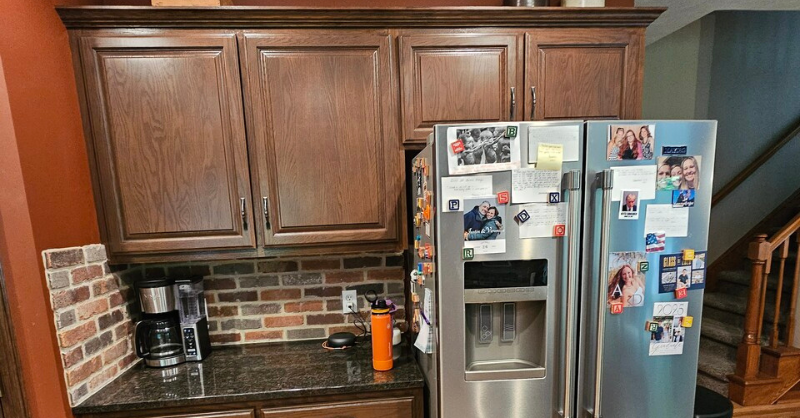
In many Omaha homes, especially kitchens that have been used daily for 10, 20, or even 30 years, cabinets collect grease, food splatter, hand oils, and cleaning product residue. If that grime is not removed, paint will not bond well. That can lead to peeling cabinets just months later.
Brush & Roll Painting has served homeowners in Omaha since 1996. We have worked on hundreds of cabinet refinishing projects, from older oak kitchens in Millard to painted maple cabinets in Elkhorn and West Omaha. We use high-quality products and detailed prep steps because cabinets take daily wear from hands, heat, moisture, and cleaning.
We have seen what happens when cabinets are not cleaned properly before painting, and we have seen how long finishes last when they are.
In this article, you will learn exactly how to clean cabinets before painting, what products to use, why degreasing is necessary, and what can go wrong if you skip this step. You will also understand why cabinet painting is more than just brushing on a coat of paint.
By the end, you will know what to expect from a professional cabinet cleaning and prep process, and you will be able to make a confident decision about your own kitchen.
Why Do You Have to Clean Cabinets Before Painting?
Paint does not stick to grease or grime. Cleaning removes oils and residue so primer and paint can bond directly to the wood or existing finish.
Cabinets are not like walls. Walls do not usually get touched every day with greasy hands. Cabinet doors and drawer fronts do. Around handles and knobs, you often see darkened areas. That is hand oil buildup.
In kitchens across Omaha, especially homes built in the 1990s and early 2000s, we commonly see:
- Cooking grease near the stove
- Sticky residue near trash pull-outs
- Cleaning product buildup
- Smoke residue in older homes
- Food splatter on the lower cabinets
If you paint over those contaminants, the paint bonds to the dirt instead of the cabinet surface. Over time, that dirt layer can separate, and the paint chips or peels.
.png?width=605&height=316&name=Blog%20Post%20Image%20Size%20(19).png)
What Is the Best Cleaner to Use Before Painting Cabinets?
A strong degreaser like Krud Kutter works very well because it cuts through grease and stains without damaging the cabinet surface.
At Brush & Roll Painting, we use Krud Kutter as part of our cabinet prep process. It is a degreaser and stain remover that is designed to break down grease, oil, and grime.
Here is how we typically use it:
- Remove doors and drawer fronts
- Label everything carefully
- Spray Krud Kutter on the surface
- Scrub using a Scotch pad
- Wipe clean with a cloth
- Allow surfaces to fully dry
We clean both the front and back of doors and drawers. Many people forget the backs, but overspray and finish need a clean surface everywhere.
How Do You Clean Greasy Kitchen Cabinets Before Painting?
Use a degreaser, scrub thoroughly, rinse, and let everything dry completely before sanding or priming.
Let’s break it down step by step.
Step 1: Remove Doors and Drawers
This allows you to clean every edge and corner. It also prevents drips and missed spots.
Step 2: Apply Degreaser
Krud Kutter is sprayed or wiped on generously. Focus on areas near handles, around the stove, and near the sink.
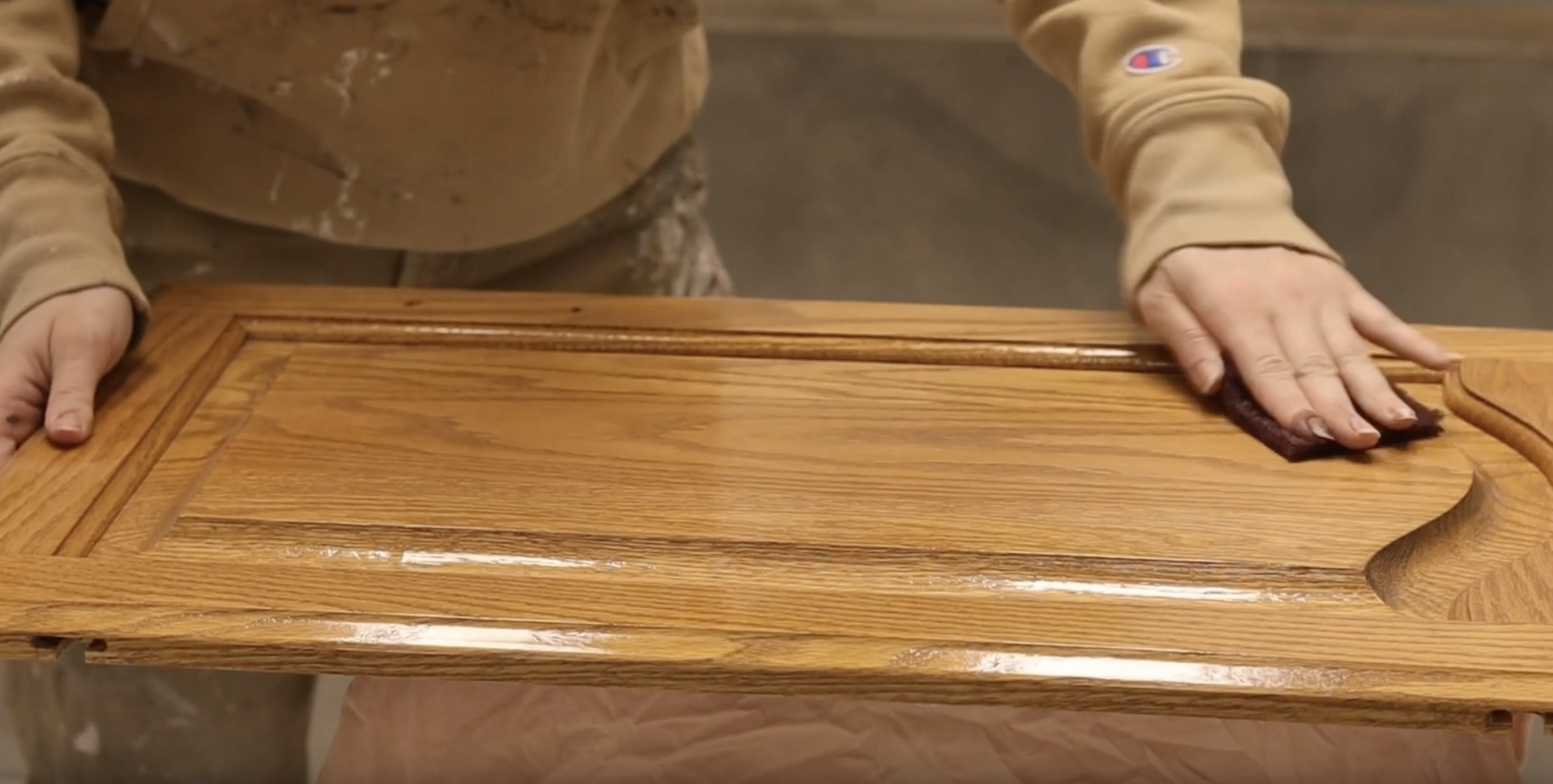
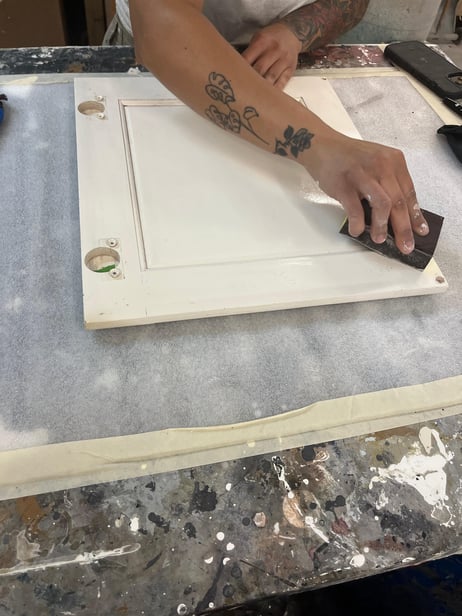
Step 3: Scrub with a Scotch Pad
A Scotch pad helps break through grease and dull the surface slightly. You are not sanding yet, but you are helping remove stubborn buildup.
Step 4: Wipe and Rinse
Use clean water and cloths to remove residue. If the degreaser dries on the surface, it can interfere with adhesion.
Step 5: Let Cabinets Dry
Moisture trapped under the primer can cause bonding issues. In Omaha’s humid summers, this step matters even more.

Can You Paint Cabinets Without Cleaning Them First?
You can, but the results often fail sooner than expected.
We have seen DIY cabinet painting projects where the paint starts chipping around handles within a year. Many times, when we inspect those cabinets, we can scrape paint off easily with a fingernail. That usually points to poor cleaning and prep.
Cabinet paint needs:
- A clean surface
- Proper sanding
- High quality primer
- Durable topcoat
Skipping cleaning might save an hour or two, but it risks the entire project.
Do You Have to Sand After Cleaning Cabinets?
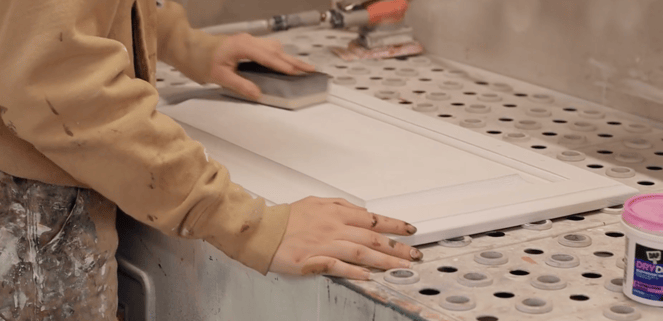
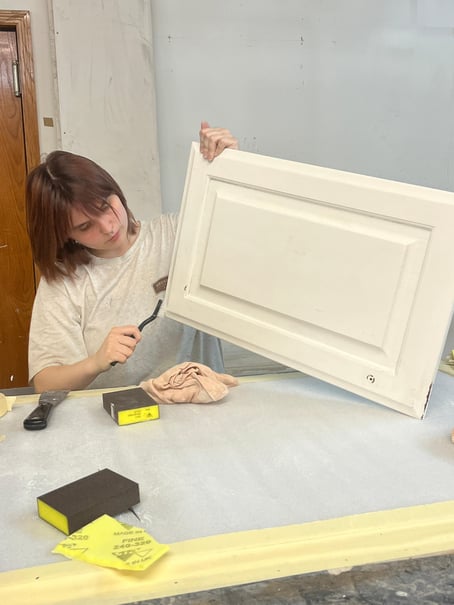
Yes, cleaning removes grease, and sanding creates mechanical adhesion.
Even after degreasing with Krud Kutter, cabinets should be sanded. Cleaning removes contaminants. Sanding scuffs the surface so primer can grip.
In older oak cabinets common in Omaha neighborhoods, sanding also helps smooth the raised grain and old finish.
Professional cabinet refinishing often includes:
- Cleaning
- Sanding
- Spot filling
- Caulking small gaps
- Priming
- Sanding between coats
- Spraying or applying finish coats
Cleaning is just one piece of a larger system.
How Long Should Cabinets Dry After Cleaning Before Painting?
Cabinets should be fully dry, usually for several hours, sometimes overnight, depending on humidity.
In winter, Omaha's air is dry, and surfaces dry quickly. In summer, humidity slows drying.
If cabinets feel cool or damp to the touch, wait longer. Trapped moisture can cause:
- Adhesion problems
- Blistering
- Longer cure times
Patience here protects the final finish.
Is Cleaning Different for Staining vs Painting Cabinets?
Short answer, no. Both processes require a clean, grease-free surface.
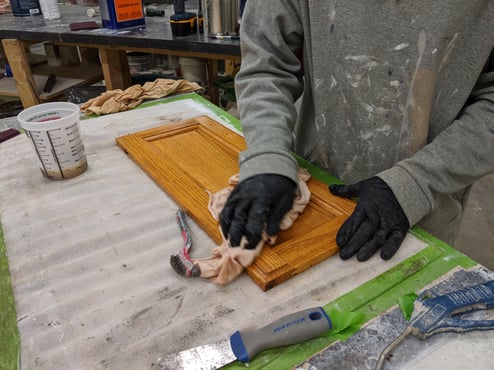
If you are staining cabinets instead of painting, cleaning is just as critical. Stain penetrates into wood fibers. If grease is present, the stain may absorb unevenly.
We have seen situations where the stain turns blotchy because the grease was not fully removed. Cleaning helps achieve an even color.
What Happens If Cabinets Are Not Properly Degreased?
Paint may peel, chip, or fail early if the cabinets are painted over grease and grime.
Common failure signs include:
- Peeling around knobs
- Flaking near stove areas
- Paint is scratching off easily
- Finish separating from the corners
When we redo failed cabinet jobs in Omaha, improper cleaning is often part of the problem.
Cabinet painting is not just about color. It is about bonding and durability.
Why Is Cabinet Painting More Than Just Cleaning and Painting?
Short answer, cabinets require a system, not just a quick coat of cheap paint.
Many homeowners search for “how to paint kitchen cabinets yourself” or “best paint for cabinets in Omaha.” Cleaning is step one, but durability comes from:
- Removing doors
- Cleaning thoroughly
- Sanding properly
- Using the right primer
- Applying high-quality cabinet-grade products
- Allowing proper dry and cure time
Brush & Roll Painting uses high-quality products and detailed prep because cabinets get heavy use. Doors open and close thousands of times a year. That requires more than wall paint.
Frequently Asked Questions About Cleaning Cabinets Before Painting
Do I need to clean brand-new cabinets before painting?
Yes, even new cabinets may have factory residue, dust, or handling oils.
Can I use dish soap to clean cabinets before painting?
Dish soap can remove light grease, but it may not cut heavy buildup near cooking areas. A dedicated degreaser is more effective.
Should I clean inside cabinet boxes?
If you are painting interiors, yes. If not, focus on areas being painted.
Do I need to wear gloves when using a degreaser?
Yes, especially if you are cleaning a full kitchen cabinet set. Degreasers can dry out skin.
How do I know if cabinets are clean enough?
Rub a white cloth over the surface. If it comes away clean and the surface feels smooth but not slick, you are on the right track.
Cabinet Painting in Omaha, NE
If you started this article worried about peeling paint or wondering whether cleaning really matters, you now have a clear answer. Cleaning cabinets before painting is not optional. It is the foundation of a long-lasting finish.
You have learned:
- Why does grease prevent paint adhesion?
- How to use a degreaser like Krud Kutter
- Why does scrubbing with a Scotch pad helps
- Why doors and drawers should be cleaned front and back
- How cleaning fits into the larger cabinet painting process
Brush & Roll Painting has been serving Omaha homeowners since 1996. We believe homeowners should understand every step of their project, even if they are hiring a painter, so they can make informed decisions. Cabinet painting is a detailed process, and cleaning is one of the most important early steps.
If you are ready to move forward with your cabinet painting project, click the button below to get a quote.

If you are still exploring costs and options, we encourage you to visit our free cabinet painting pricing calculator to better understand what goes into a professional cabinet refinishing project.

Topics:
-Mar-20-2026-03-16-05-8428-PM.png?width=800&height=418&name=Blog%20Post%20Image%20Size%20(2)-Mar-20-2026-03-16-05-8428-PM.png)