If you’ve ever tried painting a full-size interior door, you already know it can go sideways fast. Brush marks show up out of nowhere. Paint drips along the edges. The finish looks smooth in one light, then streaky in another. And if you’re hiring a painter, it’s hard to know what “good” should actually look like.
At Brush & Roll Painting, we’ve been working in homes around Omaha since 1996. Interior doors are one of those details that can make a home feel clean and updated, or leave it feeling unfinished if done poorly. Over the years, we’ve painted doors in just about every way possible, removed and sprayed off-site, sprayed inside the home, and also brushed and rolled when that makes more sense.
In this guide, you’ll learn how to paint full-size interior doors the right way. We’ll walk through prep steps, product choices, different painting methods, and what to expect from a professional. By the end, you’ll know how to spot quality work and decide what approach fits your home best.
Should you remove interior doors before painting?
Sometimes yes, sometimes no. Removing doors allows for a smoother sprayed finish, but it is not always required, depending on the painting method used.
When doors are removed, they can be laid flat and sprayed in a controlled setting. This often leads to a smoother, factory-like finish. It also reduces the risk of drips and dust settling into the paint.
That said, not every project calls for removal. In occupied homes, removing every door can add time and disruption. Some painters will spray doors in place or brush and roll them, depending on the situation.
In Omaha homes, this decision often depends on:
- How many doors are being painted
- Whether space is available to set up a spray area
- The condition of the existing finish
- The homeowner’s schedule and tolerance for disruption
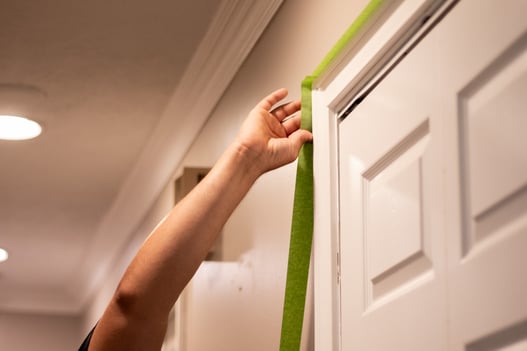
What is the best way to paint interior doors?
Spraying usually gives the smoothest finish, but brush and roll can still look great when done carefully.
Spraying is often preferred because it creates an even coat without brush lines. This is especially noticeable on flat-panel or modern doors.
Brush and roll methods are still very common, especially in homes where spraying is not practical. A skilled painter can minimize brush strokes and create a clean, consistent finish.
Here’s how they compare:
Spraying
- Smooth, factory-like finish
- Faster for large batches
- Requires masking and setup
- Can be done easiest in our climate-controlled shop
Brush and Roll
- Less setup required
- Easier for small jobs or touch-ups
- May show slight texture depending on the technique

How do you prep interior doors before painting?
Proper prep includes cleaning, sanding or deglossing, priming, and caulking where needed.
Prep is where most of the quality comes from. Skipping this step is one of the biggest reasons paint fails or looks uneven.
A professional prep process typically includes:
- Deglossing with sandpaper or a liquid deglosser
- Sealing stains, like sap, with an oil-based primer
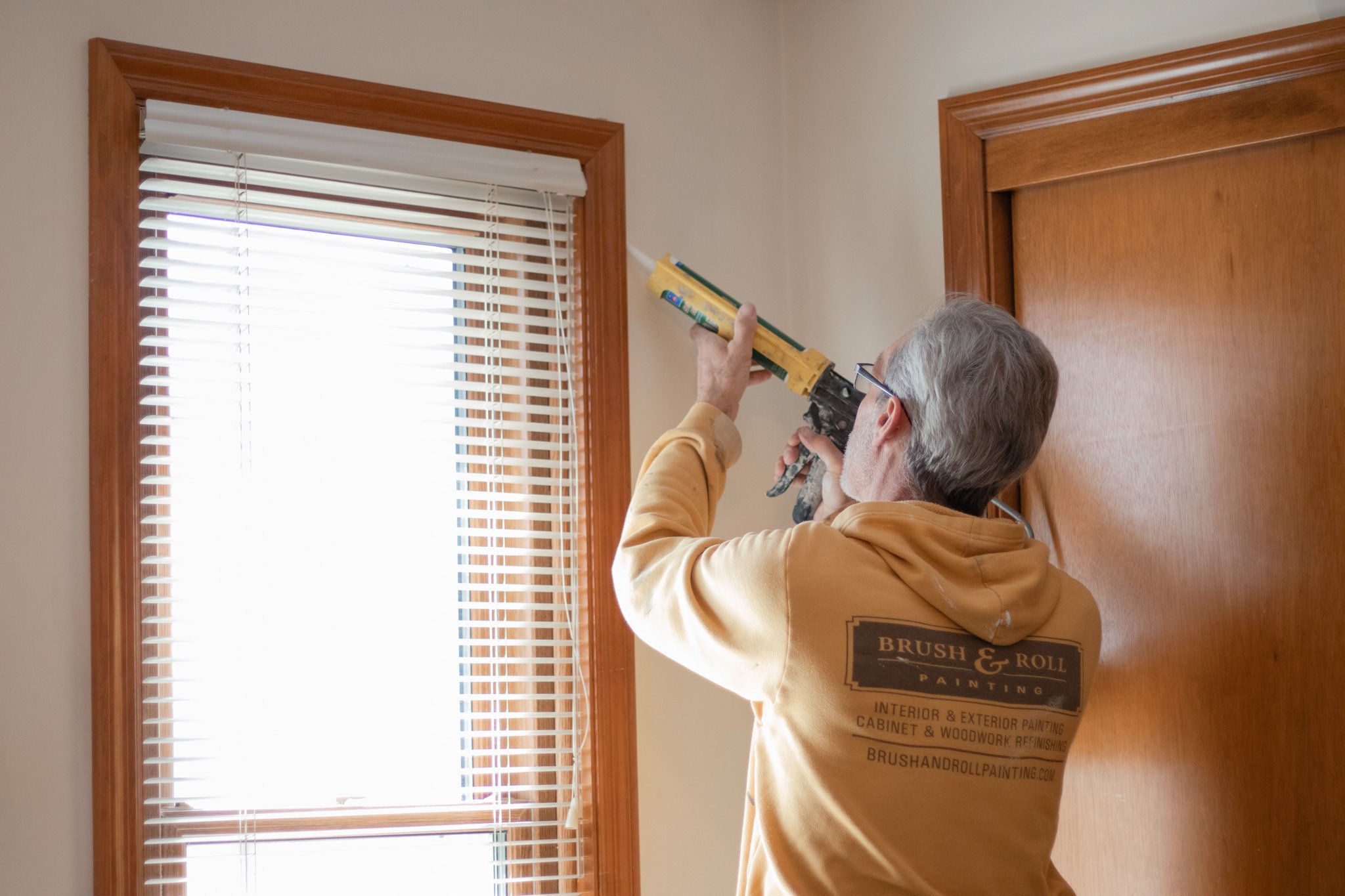
- Caulking small cracks between wood pieces
- Light sanding for bare or stained wood
- Applying a bonding primer for adhesion over stains and areas that were repaired
Deglossing is especially important on previously painted doors. It dulls the surface so the new paint can grip properly.
If a door has knots or sap bleed, those areas need to be sealed first. Otherwise, stains can come back through the new paint over time.
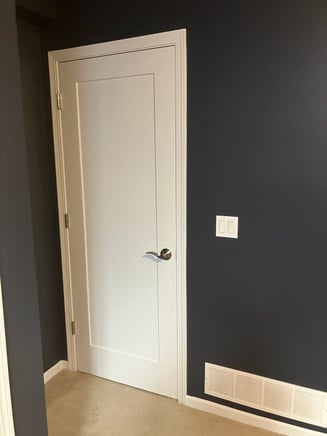
What paint should be used on interior doors?
A durable, high-quality enamel is best for interior doors.
Interior doors take a lot of use. Hands, pets, and daily traffic all wear on the surface. That’s why the paint needs to be tougher than standard wall paint.
One product commonly used is Benjamin Moore Command. It is designed for durability and cures quickly, which helps reduce downtime.
Look for paint that offers:
- Strong adhesion
- Smooth leveling
- Resistance to scuffs and fingerprints
- Faster cure times
The finish is usually satin or semi-gloss, depending on the look you want and how much shine you prefer.
How do you avoid brush marks when painting interior doors?
Use the right tools, apply thin coats, and work in sections.
Brush marks usually come from too much paint or rushing the process. Slowing down and using better tools makes a big difference.
Tips to reduce brush marks:
- Use a high-quality brush or microfiber roller
- Apply thin, even coats
- Follow the direction of the wood grain
- Avoid overworking the paint
- Let each coat dry fully before the next
When done well, a brushed door can still look clean and professional, even if it has a slight texture.
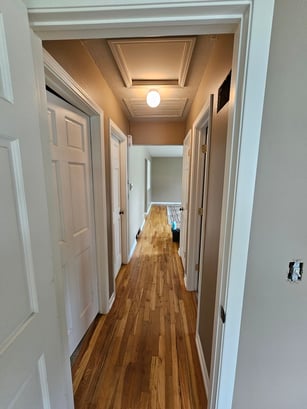
How long does it take to paint interior doors?
It really depends on how many doors are being painted and which process is being used. For just a few doors, it can take one to two days.
If the doors are being brought to our climate-controlled shop, it may take longer due to spraying each side and the dry time that is safe to deliver them.
The actual painting might only take a few hours, but drying time matters. Doors need time between coats and time to cure before heavy use.
In Omaha’s climate, indoor temperature and humidity can affect drying time. During winter, dry air can speed things up. In summer, higher humidity can slow it down.
Should you spray interior doors inside your home?
Yes, but only with proper setup and protection.
Spraying indoors requires careful masking and airflow control. Without it, overspray can land on floors, walls, and furniture.
Professional setups often include:
- Full plastic containment
- Masking of surrounding surfaces
- Air filtration or ventilation
Some painters create temporary spray booths in garages or basements. This can work, but homeowners should be cautious if the space is not properly controlled.
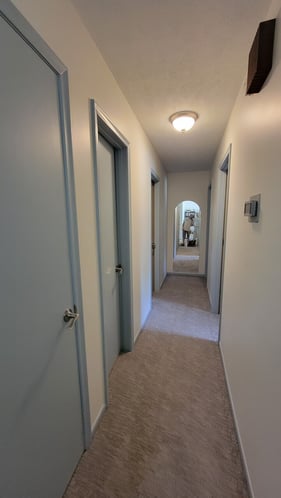
What are common mistakes when painting interior doors?
Skipping prep, using the wrong paint, and rushing the process are the biggest mistakes.
Interior doors seem simple, but small errors show up clearly once the paint dries.
Common issues include:
- Not taking the doors off the hinges
- Not taking the knobs off
- Not sanding the doors
- Painting over stains or repairs without sealing
- Applying thick coats that lead to drips
- Ignoring edges and corners
- Reinstalling doors before they fully cure
These mistakes often lead to peeling, uneven finishes, or doors sticking after installation.
FAQ: Painting Full-Size Interior Doors
How many coats of paint do interior doors need?
Most doors need two finish coats over a properly primed surface.
What sheen is best for interior doors?
Satin or semi-gloss are the most common choices for durability and cleanability.
Can you paint doors without sanding?
You can use a liquid deglosser, but some form of surface prep is still needed.
How do you keep painted doors from sticking?
Allow full cure time before closing the door fully, and avoid pressure on the edges early on.
Is it worth hiring a professional to paint interior doors?
For many homeowners, yes. Doors are high-visibility surfaces, and small mistakes are easy to see.
Interior Painting Wood Doors in Omaha, NE
Painting full-size interior doors can feel simple at first, but the details make all the difference. From prep work to choosing the right method, each step plays a role in how the final result looks and holds up over time.
If you started this article feeling unsure about how doors should be painted, you now have a clear understanding of what goes into a clean, durable finish. You know when doors should be removed, how prep affects adhesion, and why product choice matters.
At Brush & Roll Painting, we’ve been helping Omaha homeowners make these decisions since 1996. Our goal is always to give you the information you need so you can feel confident in your project.
If you’re ready to move forward, click the button below to get a quote.

If you’re still in the planning stage, a great next step is to use an interior painting pricing calculator to better understand what your project might cost and what to expect.

-Mar-27-2026-02-08-12-9646-PM.png?width=800&height=418&name=Blog%20Post%20Image%20Size%20(1)-Mar-27-2026-02-08-12-9646-PM.png)
-Mar-20-2026-03-16-05-8428-PM.png?width=800&height=418&name=Blog%20Post%20Image%20Size%20(2)-Mar-20-2026-03-16-05-8428-PM.png)