Have you looked at your walls and noticed a small mark, shadow, chip, or uneven spot on the paint? Maybe it shows up when the sun hits just right, or when you walk by at night and a lamp catches the wall differently. It can feel frustrating, especially after investing in a professional paint job.
At Brush & Roll Painting here in Omaha, we’ve been helping homeowners care for and understand their walls since 1996. Over the years, we’ve seen this same concern come up again and again. Not because something was done wrong, but because walls behave in ways most people don’t expect.
In this article, you’ll learn why interior walls are never truly perfect, how lighting and angles change what you see, and what is normal versus what may need attention. By the end, you’ll have a clear, realistic expectation of your walls so you can feel confident moving forward with your project.
Why do interior walls always have imperfections?
Interior walls might always have imperfections because drywall and paint are not perfectly smooth materials, and your home naturally changes over time.
Walls are made from drywall, which has texture, seams, and small variations. Paint sits on top of that surface. Even with great prep work, sanding, and high-quality products, the surface underneath still has slight differences.
Over time, everyday life also plays a role. Furniture bumps, temperature changes, and normal settling can all create small marks or shifts.
That means even a well-done paint job will not look flawless from every angle forever.
What does “porous walls” actually mean?
Porous means your walls can absorb and reflect paint and light in slightly uneven ways.
Drywall, joint compound, and even previous layers of paint all absorb paint differently. Some areas soak in more, some less. This creates subtle differences in how the surface dries and reflects light.
Imagine pouring water onto dry soil; some spots soak it in right away, while others take a little longer. Your wall reacts in a similar way when paint is applied. Even with primer and proper prep, small differences in absorption can still show up later
This is one reason you may notice a spot later that you didn’t see right away.
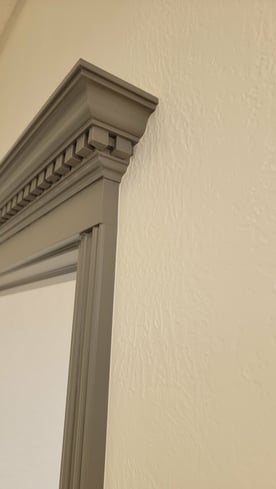
Why do spots show up weeks or months after painting
You may notice imperfections in your wall paint weeks or months after it was done due to lighting changes, surface curing, looking at it from another angle or distance, and your eyes adjusting over time.
Right after painting, everything looks fresh and uniform. As time passes, a few things happen:
- Paint continues to cure and harden
- Natural light shifts with seasons
- You start noticing details you didn’t notice before
- Small scuffs from daily life begin to appear
For example, a wall that looked perfect in winter might show more in summer when sunlight hits at a sharper angle.
This does not always mean the paint failed. It means you are seeing the wall under different conditions.

Why do walls look different depending on the lighting?
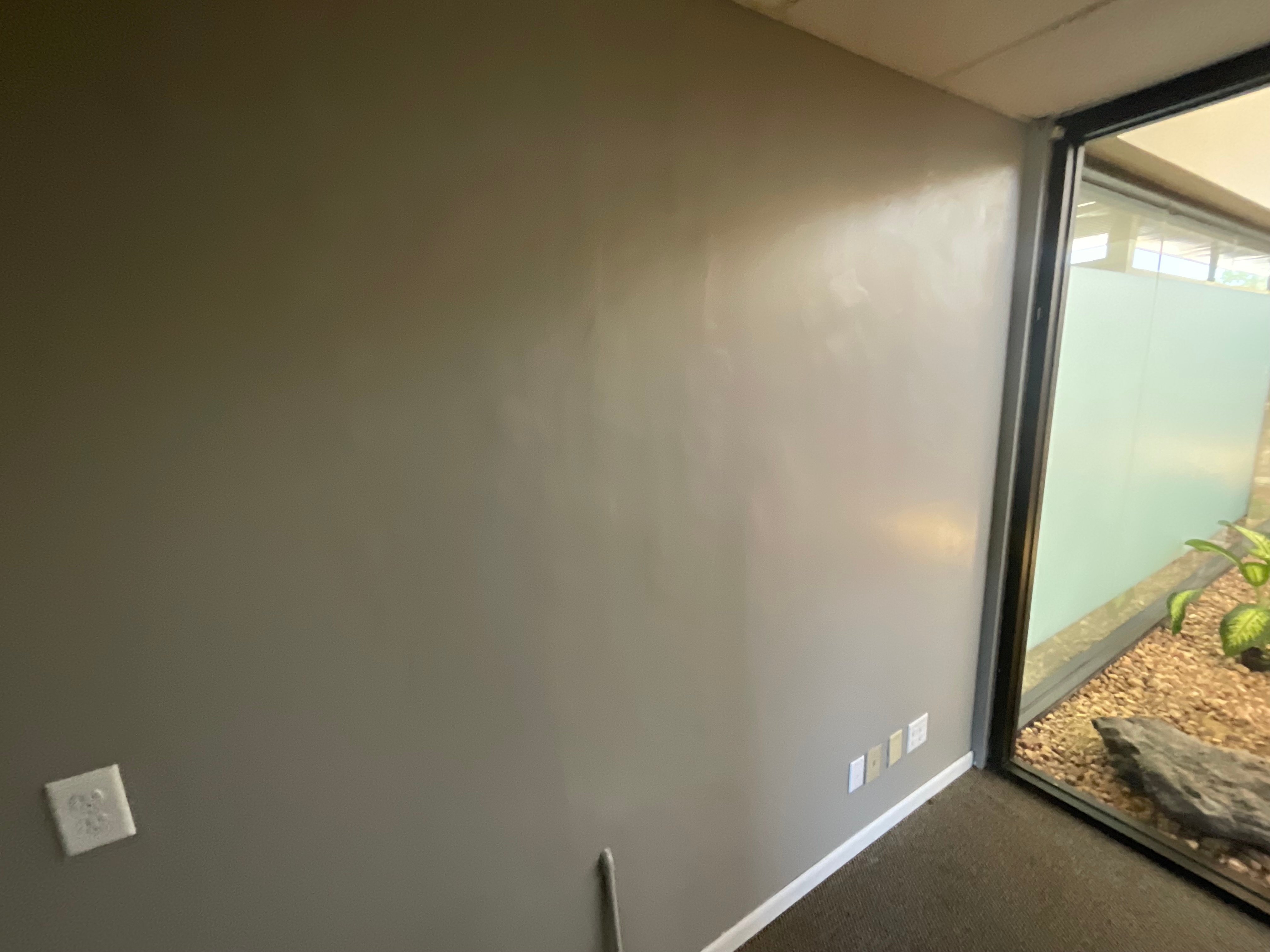
Light reveals texture, shadows, and tiny surface changes that are always there. Lighting is one of the biggest factors in how your walls look.
Natural light
Sunlight coming through windows creates strong, directional light. This can highlight:
- Drywall seams
- Roller texture
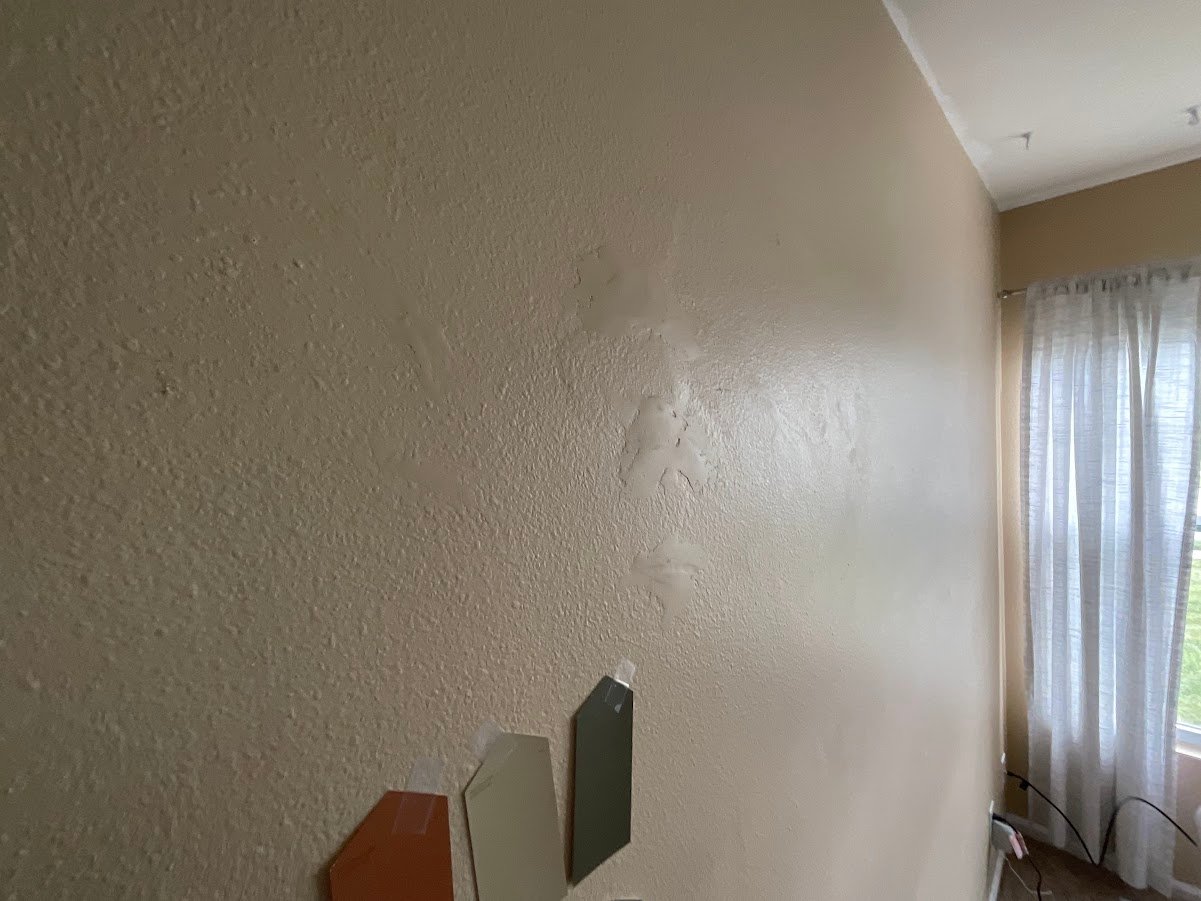
- Minor patches or repairs
Artificial light
Lamps and overhead lights create softer or angled lighting. Depending on placement, they can:
- Hide imperfections
- Or highlight them in specific spots
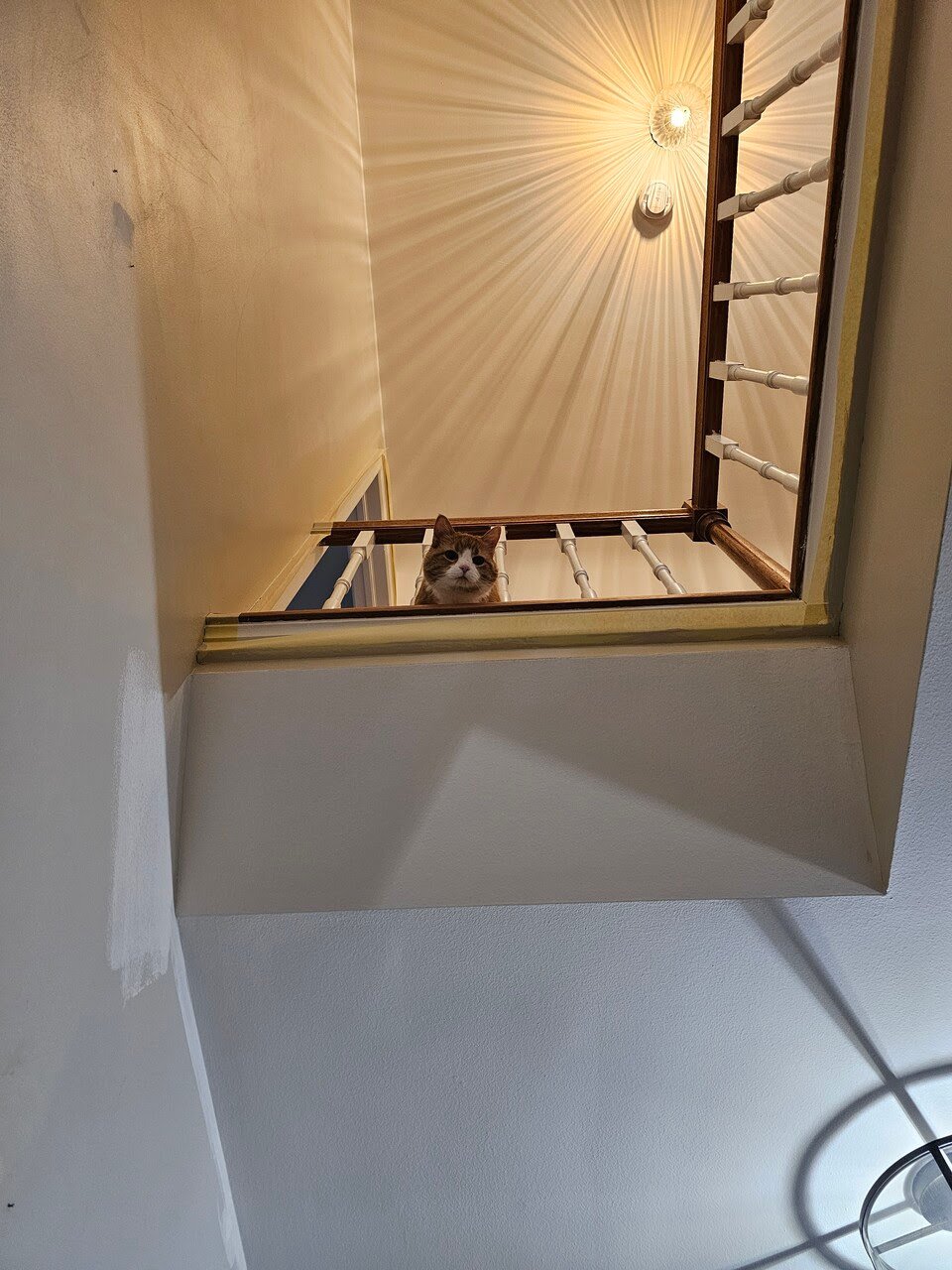
Raking light
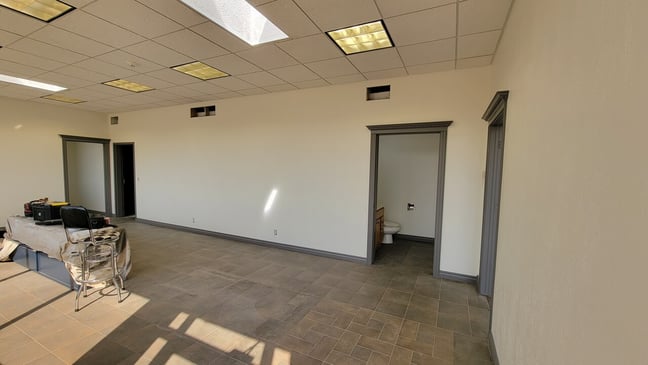
This is when light hits the wall at a sharp angle, often from a window or lamp close to the surface. This type of light shows everything.
Even brand new homes with fresh drywall will show imperfections under raking light.
Why do walls look different when you stand close versus far away?
Walls look different as distance changes how your eyes blend or separate details.
When you stand far away, your eyes blend the wall into one smooth surface. Up close, your eyes pick apart every detail.
Think about it like this:
- From across the room, the wall looks clean and even
- From a few inches away, you may see texture, small bumps, or an odd line
This is completely normal. Professional painters aim for a finish that looks great and clean from a normal viewing distance, not from inches away under direct light.
What kind of imperfections are normal on interior walls?
Small texture variations, minor scuffs, and light-dependent shadows are all normal on painted interior walls.
Here are common things homeowners notice:
- Slight roller texture differences
- Small dents or dings from everyday use
- Areas that look different in certain lighting
- Touch up spots that blend from most angles but show slightly from others
These are part of living in a home, not signs of poor workmanship.
When should you be concerned about wall imperfections?
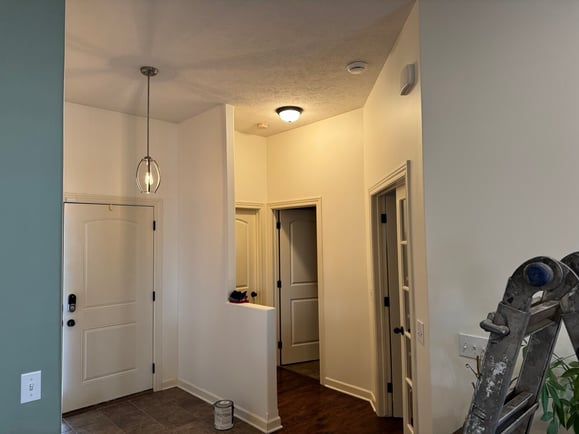
You should be concerned about wall imperfections when issues are visible from a normal viewing distance in standard lighting.
While some imperfections are expected, there are times when it is worth asking questions.
You may want to follow up if you see:
- Large patches that stand out from across the room
- Uneven color or coverage in normal lighting
- Drips, runs, or heavy buildup of paint
- Areas that were missed entirely
A good rule is this: if you notice it from across the room without trying, it is worth discussing.
How do professional painters try to minimize imperfections?
Professional painters should use thorough prep work, quality materials, and proper technique.
While walls will never be perfect, experienced painters take steps to get them as close as possible.
Prep work
This includes:
- Filling holes and dents
- Sanding surfaces smooth
- Caulking gaps where needed
Priming
Primer (when needed) helps create a more even surface so paint absorbs more consistently.
Application
Using the right tools and techniques helps reduce visible differences:
- Consistent roller pressure
- Proper drying times between coats
- Applying enough thin coats for even coverage
At Brush & Roll Painting, prep work is one of the biggest factors in how a finished wall looks.
Why do touch-ups sometimes stand out?
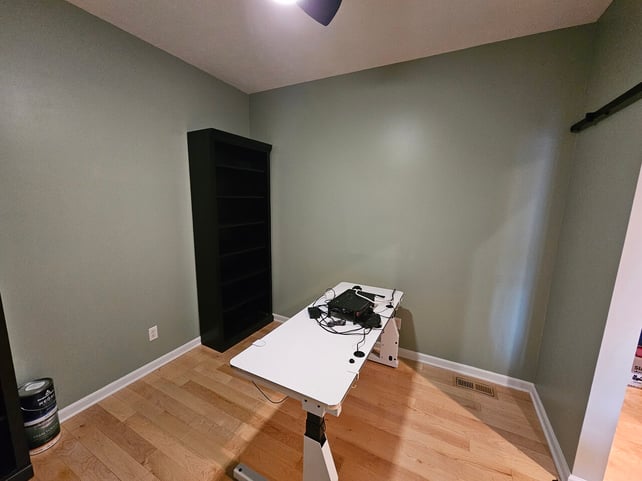
Touch-ups may stand out on a wall because paint blends differently when applied later and in smaller areas.
Touch-ups are helpful, but they are not always invisible.
Here’s why:
- The paint on the wall has already cured
- New paint may have a slightly different sheen
- The application method may differ from the original coat
Even using the same paint, a touch-up can look slightly different depending on the angle and lighting.
That is why larger areas are sometimes repainted instead of spot touching.
How should Omaha homeowners set realistic expectations?
When having your interior walls painted in Omaha, NE, expect clean and consistent walls, not perfection from every single angle and distance across the whole wall.
A well-painted home should:
- Look uniform from a normal viewing distance
- Have consistent color and coverage
- Feel smooth to the touch overall
It should not:
- Look flawless under a flashlight or direct side lighting
- Stay untouched after daily living
- Hide every small surface variation
Understanding this helps you feel more confident in what you are seeing after your project is complete.
.png?width=664&height=347&name=Blog%20Post%20Image%20Size%20(8).png)
How can you keep your walls looking their best over time?
Interior wall paint maintenance just involves gentle care and occasional cleaning.
Here are a few simple tips:
- Use washable, high-quality paint when possible
- Clean marks gently with a soft cloth
- Avoid bumping furniture into walls
- Keep leftover paint for future touch-ups
Even with the best care, small imperfections will happen. That is part of living in your home.
FAQ: Interior Wall Imperfections
Why do my walls look patchy in sunlight but fine at night?
Sunlight creates strong, angled lighting that highlights texture and surface changes. At night, softer lighting hides those same details.
Is it normal to see roller marks on walls?
Yes, a slight roller texture is normal. It should be even across the wall, not heavy or uneven in patches.
Why does my touch-up paint look different?
Touch-ups can reflect light differently and may have a slight sheen difference compared to the surrounding area.
Do higher-quality paints reduce imperfections?
They help with coverage and durability, but they do not eliminate underlying surface variations.
Should I inspect walls up close after painting?
It is better to look at walls from a normal living distance. Inspecting from inches away can make normal surfaces look flawed.
Interior Wall Painting in Omaha, NE
If you’ve been feeling unsure about small marks, shadows, or changes on your walls, you’re not alone. Many Omaha homeowners go through the same experience after a painting project. What you’ve learned here is that walls are naturally porous, lighting changes everything, and daily life adds its own wear over time.
A well-done paint job should look clean, consistent, and inviting from the way you normally experience your home. It is not meant to look flawless under every angle, distance, or lighting condition.
At Brush & Roll Painting, we’ve worked with homeowners across Omaha since 1996, helping them understand not just how walls are painted, but how they behave after the job is done. Our goal is to help you feel confident in what you are seeing and what is normal.
If you’re ready to move forward with your project, click the button below to get a quote.

If you are still exploring your options, a great next step is to try an interior painting calculator. It can help you understand pricing and plan your project at your own pace.

-May-22-2026-01-56-32-9736-PM.png?width=800&height=418&name=Blog%20Post%20Image%20Size%20(1)-May-22-2026-01-56-32-9736-PM.png)
-May-15-2026-04-54-24-9954-PM.png?width=800&height=418&name=Blog%20Post%20Image%20Size%20(1)-May-15-2026-04-54-24-9954-PM.png)
-Sep-20-2024-01-43-26-0356-PM.png?width=800&height=418&name=Blog%20Post%20Image%20Size%20(2)-Sep-20-2024-01-43-26-0356-PM.png)