Key Takeaways
- Proper preparation before bathroom cabinet painting usually takes more time than applying the finish, but it is the main reason painted bathroom cabinets last.
- Doors and drawer cabinet fronts should be removed, labeled, and finished in a controlled shop setting whenever possible.
- Bathroom cabinets need a coating that can handle moisture, cleaning products, makeup, toothpaste spills, and frequent touching.
- Cleaning, sanding, stain-blocking primer, and sanding between coats should never be skipped when painting cabinets.
- A professional 2K polyurethane finish is harder and more resistant than ordinary wall paint or many store-bought cabinet paints.
- Homeowners should allow the coating to cure and use the bathroom gently after installation, even when the surface feels dry.
Bathroom vanities may look like small projects, but they live in a demanding room. Steam, splashed water, soap, cosmetics, and daily cleaning can expose weak preparation or the wrong coating. Homeowners often worry about peeling around the sink, soft paint near the handles, visible brush marks, or spending money on a finish that fails too soon.
Those concerns are reasonable. A bathroom cabinet can look beautiful on installation day and still develop problems months later if residue was left on the wood, glossy areas were not sanded, or the coating was not made for hard daily use.
Brush & Roll Painting has served homeowners in Omaha and the surrounding area since 1996. During that time, we have worked on cabinets in bathrooms, kitchens, laundry rooms, and other moisture-prone spaces. Our experience has shown that product quality matters, but the cleaning, sanding, priming, application, and curing steps matter just as much.
This article is meant to be a practical guide, not a sales pitch. It explains what a careful cabinet painting process should include so you can ask better questions, compare quotes fairly, and understand what you are paying for.
By the end of this article, you will know how bathroom cabinets should be removed and protected, why cleaning and sanding take so much time, what primer and finish should be used, and how long the coating needs to cure. You will also know what questions to ask an Omaha cabinet painter before signing an estimate.
1. Removing Bathroom Cabinet Drawers & Door Fronts
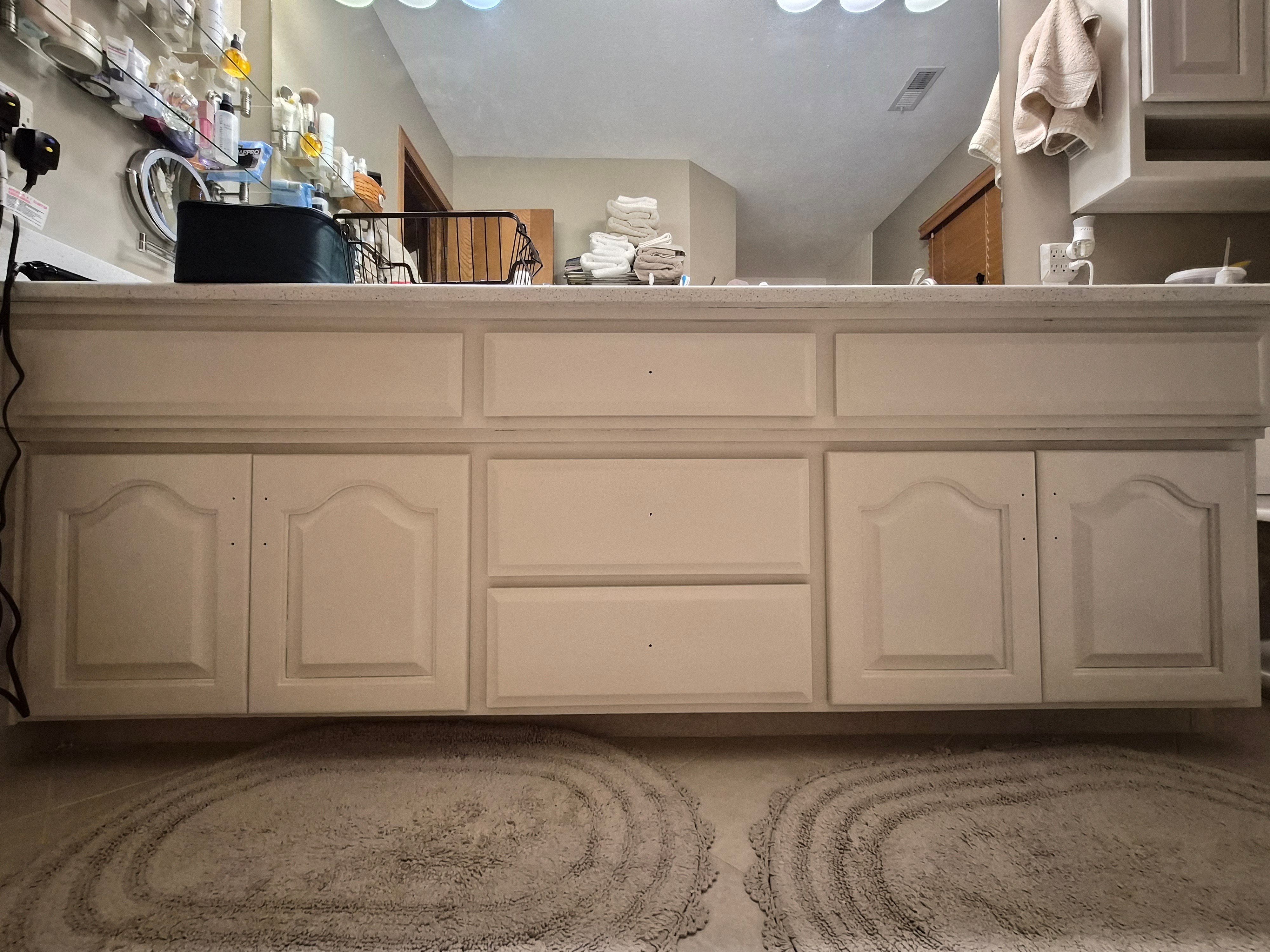
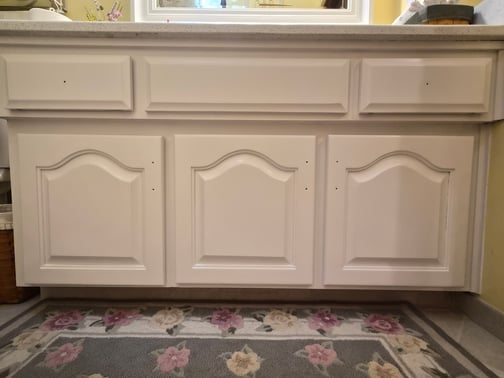
Removing the doors and drawer fronts gives the painter better access to edges, corners, and cabinet openings. It also allows those removable pieces to be finished flat in a cleaner, controlled space. Each piece should be labeled so it returns to the same opening, especially when older doors or hinges fit slightly differently.
When Brush & Roll Painting begins a cabinet refinishing project, the doors and drawer fronts are labeled, carefully packaged, and transported to our shop. Hardware is kept organized, and the cabinet boxes remain in the home for preparation and finishing.
This approach helps reduce several common problems:
- Missed edges around hinges
- Paint buildup on hardware
- Doors being returned to the wrong openings
- Runs caused by finishing doors upright
- Dust, hair, or bathroom lint settling into wet coatings
The doors and drawer fronts receive the same cleaning, sanding, priming, and finishing steps as the cabinet boxes. The work simply happens in two locations at the same time.
2. Protective Measures Before Cabinet Painting Begins
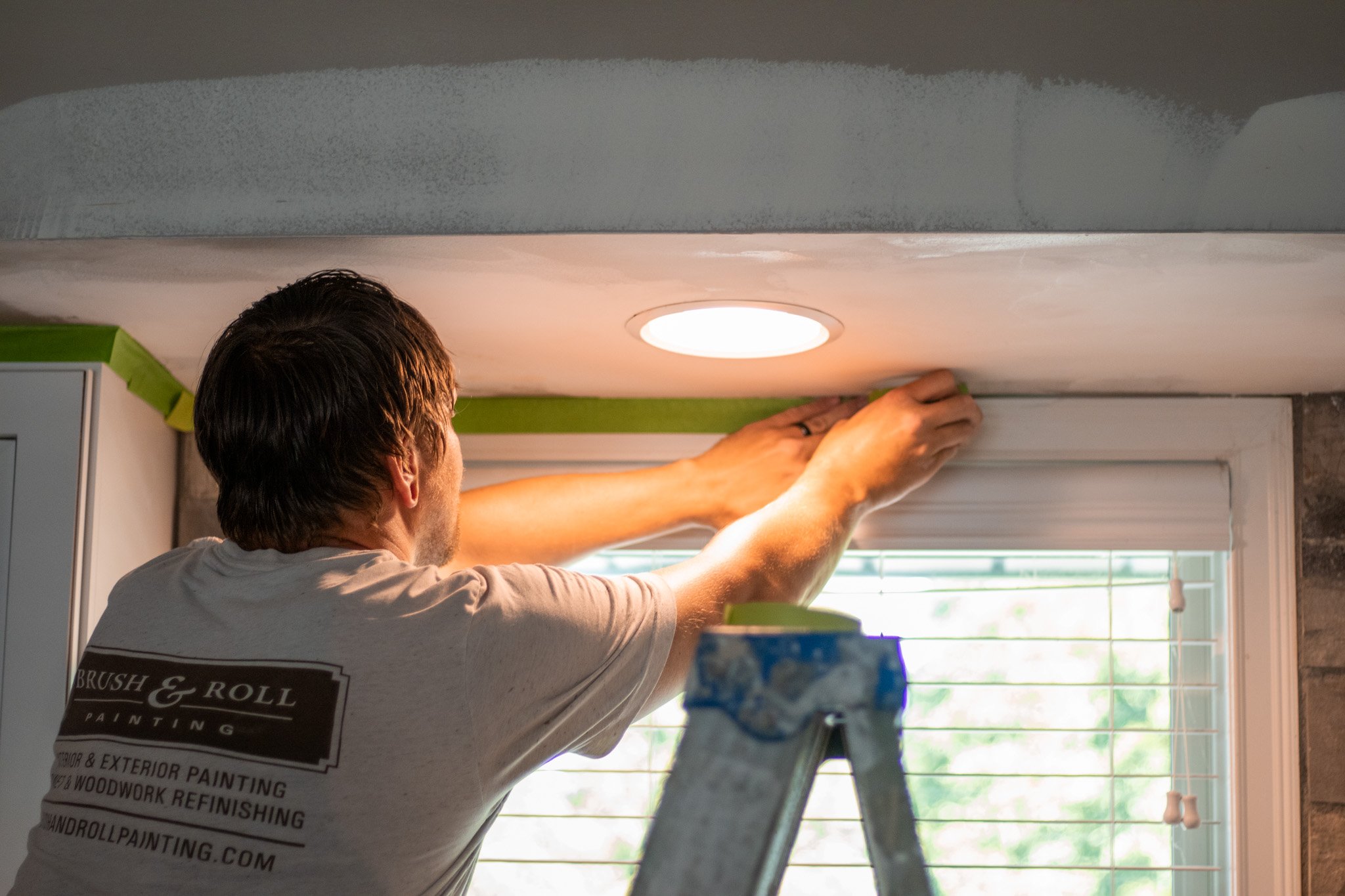
The painter should cover every surface that is not being refinished. This includes flooring, countertops, sinks, tile, walls, and nearby fixtures. Paper, plastic, tape, and drop cloths should be secured carefully so protection stays in place throughout the job without damaging existing surfaces.
Bathrooms can be tight spaces, so careful protection matters. A painter may be working only a few inches from a stone countertop or newly installed toilet paper holder.
If your drawer fronts can be removed, you do not need to empty out your drawers. If they can’t be removed, you’ll need to empty them out. Before work begins, remove personal items such as:
- Toothbrushes and medicine
- Towels and bathmats
- Makeup and skin care products
- Hair dryers and electric razors
- Items stored inside drawers and cabinets
- Decorations sitting near the vanity
Ask the painter whether the bathroom can be used during the project. If the cabinet boxes will be sprayed, access may be limited because the room needs more masking, ventilation, and controlled drying time. If the boxes are brushed or rolled with the proper product, the bathroom may remain easier to access, depending on the layout.
3. Cleaning Before Painting Bathroom Cabinets
Bathroom cabinets collect more than visible dust. Hair spray, lotion, soap, toothpaste, cleaning spray, body oils, and fine cosmetic powders can settle on doors and drawer fronts. If that film remains, sanding may push it into the old finish, and the new primer may attach to the residue instead of the cabinet.
A careful painter cleans before sanding. At Brush & Roll Painting, our process may include a strong degreasing cleaner, followed by a denatured alcohol mixture and a Scotch pad when appropriate for the existing finish. The exact cleaner may change with the surface, but the goal remains the same, remove contaminants without soaking or damaging the wood.
The areas around knobs, pulls, sink bases, and lower doors often need extra attention. These are the places touched most often and exposed to drips.
One simple comparison is painting over a dirty bathroom mirror. The coating may cover the fingerprints for a moment, but it is not truly attached to the glass. Cabinet primer behaves the same way when residue is trapped underneath it.
4. Sanding Before Painting Bathroom Cabinets
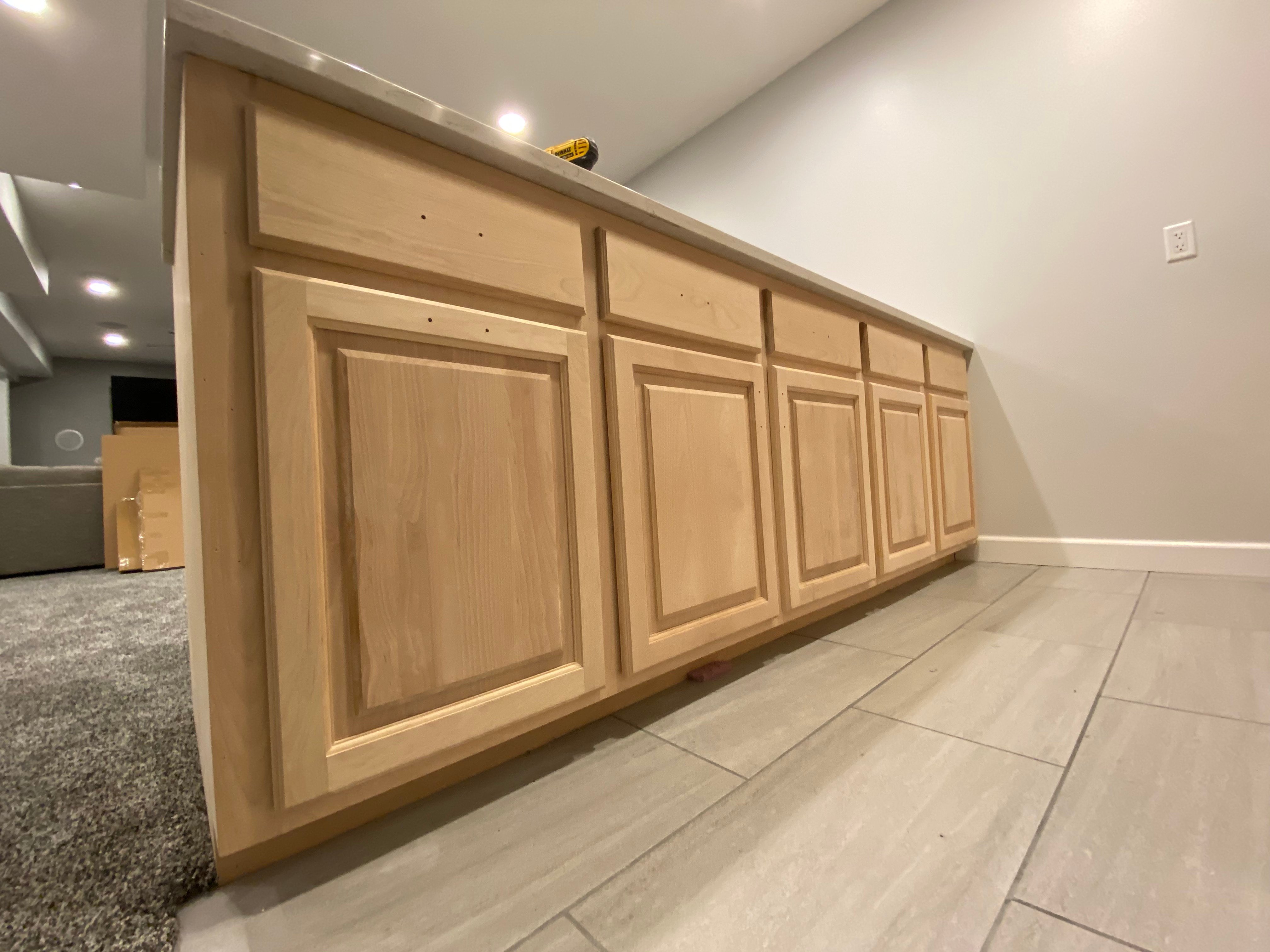
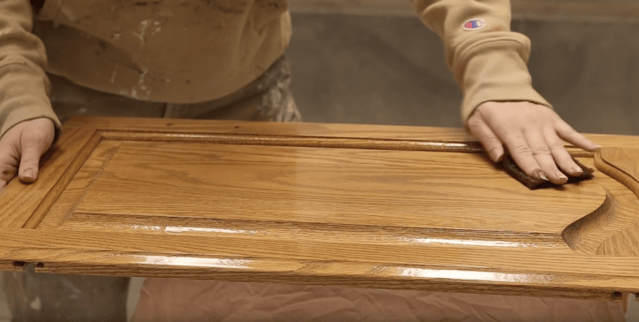
Bathroom cabinets usually do not need to be stripped down to bare wood, but every painted surface should be sanded enough to remove shine, smooth damage, and create a surface the primer can grip. The amount of sanding depends on the existing finish, wood condition, previous coatings, and the new finishing system.
Professional sanding is controlled rather than aggressive. The goal is not to erase every trace of the original finish. It is to create an even surface and correct defects without cutting through edges or changing door details.
A painter may use several grits during the project:
- 180 grit for rougher areas or surfaces that need more leveling
- 220 grit for general smoothing between preparation stages
- 320 grit for a lighter sanding before later finish coats
Dust control matters inside a bathroom. Sanders connected to vacuums can capture much of the dust at the source. The painter should still clean the work area and remove fine dust from the cabinets before applying primer.
Preparation often accounts for 60 to 70 percent of a quality cabinet refinishing project. That can seem surprising because homeowners naturally focus on the final color. Yet the finish can only be as dependable as the surface beneath it.

5. Priming Before Painting Bathroom Cabinets
The best primer depends on the cabinet material and existing finish, but it should bond strongly, block stains, and work with the chosen topcoat. Oak, maple, previously painted wood, laminate, and medium density fiberboard can require different preparation. A painter should identify the surface before choosing the primer system.
For many wood cabinet projects, Brush & Roll Painting begins with an isolante resurfacer or a suitable bonding product. This creates a separating layer between the cleaned cabinet and the primer coats. We then apply two or three coats of a Milesi stain blocking primer when the cabinet condition and finishing system call for it.
A strong primer system can help with:
- Tannins bleeding through from wood
- Yellow or brown stains returning through light colors
- Uneven absorption on repaired areas
- Adhesion over a hard factory finish
- Minor grain filling and surface leveling
No primer can make up for grease, silicone, moisture damage, or loose material. Those problems must be handled first. If the vanity has swollen panels, soft wood, active plumbing leaks, or peeling laminate, repair or replacement may be needed before painting.
6. Sanding Between Coats For Painting Bathroom Cabinets
Sanding between coats removes small dust particles, smooths raised wood fibers, and helps the next coat attach evenly. It is usually a light sanding, not a repeat of the first preparation stage. Skipping it can leave a rough texture or make small flaws more visible after the final coat dries.
After sanding, all dust must be removed before another product is applied. This step is repeated as needed through the primer and finish system.
It takes extra time, but it is one reason a professionally refinished vanity can feel closer to a factory-finished piece of furniture than a cabinet painted with a brush in one afternoon.
7. What is the Best Paint or Finish for Bathroom Cabinets?
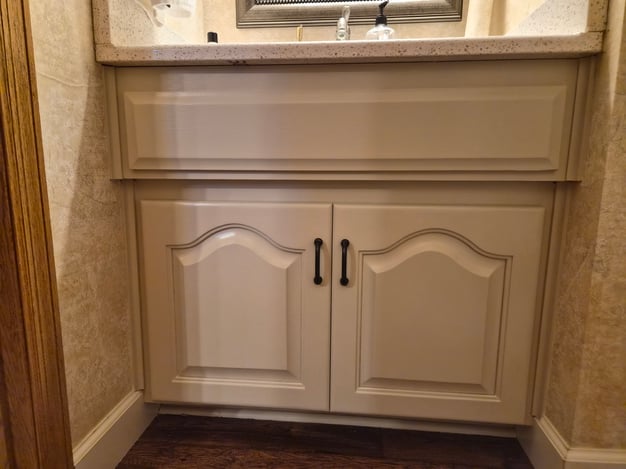
Bathroom cabinets need a hard, washable paint or stain product that resists moisture, abrasion, household chemicals, and skin oils. Regular wall paint is not designed for this job. Some one-part cabinet paints can work for lighter use, but homeowners should compare hardness, cure time, chemical resistance, and the painter’s preparation process before choosing a system.
Brush & Roll Painting uses Milesi 2K polyurethane for many cabinet refinishing projects. A 2K product has two components: the coating and a measured catalyst or hardener. Once mixed, the material has a limited working time and should be applied with professional equipment, ventilation, protective gear, and product-specific training.
Milesi can be tinted for solid colors or used in systems designed for stain and tone work. We commonly apply two or three finish coats as required for even coverage and protection.
For a bathroom, this type of coating offers helpful resistance to:
- Water splashes near the sink
- Toothpaste and soap residue
- Makeup and skin care products
- Household cabinet cleaners
- Wear around knobs and pulls
- Small scratches from daily use
Moisture-resistant does not mean waterproof. Standing water should still be wiped up, and leaks should be repaired quickly. Even a strong coating can fail if water repeatedly enters a door joint, an unfinished cabinet edge, or damaged wood.
Should Bathroom Cabinet Boxes Be Sprayed, Brushed, or Rolled?
All three methods can produce good results when the surface is prepared correctly, and the coating is made for the application method. Spraying can create a smooth finish, but it requires extensive masking, ventilation, and control of airborne material. Brushing or fine finishing rollers can reduce disruption inside the home when the product levels well.
Brush & Roll Painting typically finishes cabinet boxes by hand unless a homeowner requests spraying and the room can be prepared safely. Doors and drawer fronts are sprayed in our shop, where dust, airflow, lighting, and application conditions are easier to control.
The method should be discussed before the project begins. Ask whether visible brush texture is expected, how the room will be ventilated, and how surrounding surfaces will be protected. The word sprayed does not automatically mean the job is better. Preparation and product choice still carry most of the weight.
How Long Do Painted Bathroom Cabinets Need to Dry and Cure?
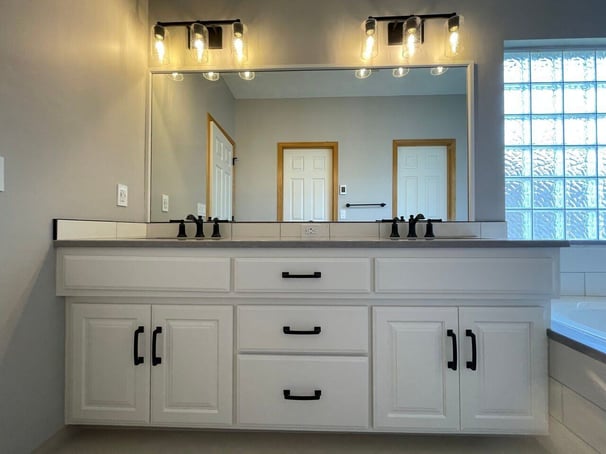
Drying and curing are not the same. A cabinet coating may feel dry enough to touch or reinstall while it is still gaining hardness below the surface. The exact schedule depends on the product, temperature, humidity, coat thickness, and airflow. Your painter should provide written care instructions for the specific system used.
During the early curing period:
- Open doors and drawers gently
- Avoid scrubbing the finish
- Keep standing water off the vanity
- Do not hang wet towels over doors
- Use knobs and pulls instead of grabbing painted edges
- Avoid placing rubber or plastic items against fresh coatings for long periods
Omaha humidity can affect drying, especially during summer. A small bathroom with poor airflow may also hold moisture after showers. Use the exhaust fan, leave the door open when practical, and follow the painter’s instructions about shower use during the first days after installation.
What Happens When the Doors, Drawers, and Hardware Are Reinstalled?
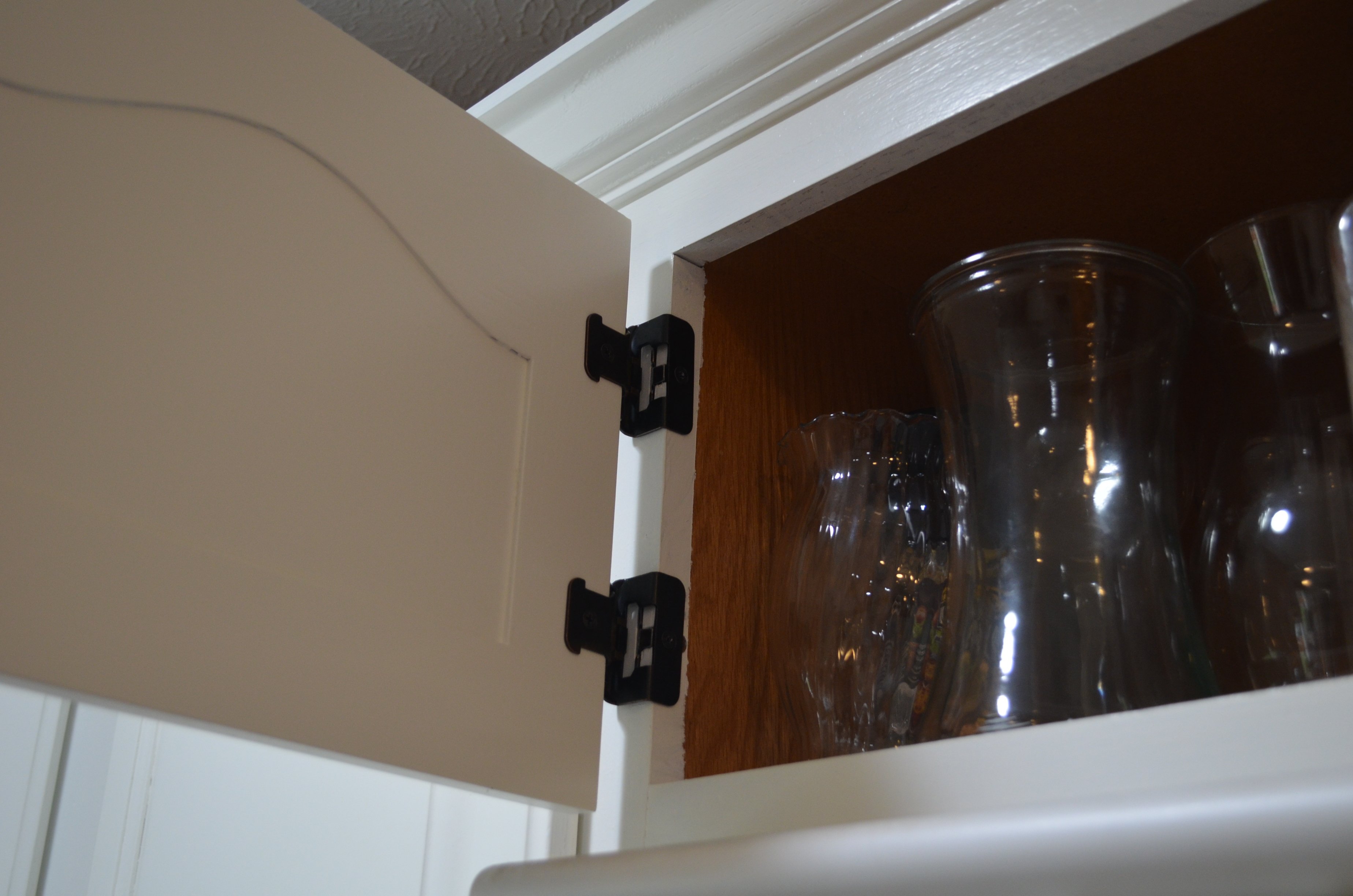
After the finish passes quality checks and is ready for handling, doors and drawer fronts should be wrapped for transportation and installed in their original locations. Hinges are adjusted, bumpers are replaced when needed, and the existing or new knobs and pulls are attached carefully without damaging the fresh coating.
The final walkthrough should include more than checking the color. Open each door and drawer. Look at edges in good lighting. Check that doors align, hardware is secure, and painted surfaces are clean.
A useful final checklist includes:
- Correct door and drawer placement
- Even color and sheen
- Clean edges near walls and countertops
- Smooth operation of hinges and drawers
- Secure knobs and pulls
- No paint on tile, plumbing, or cabinet interiors that were excluded
- Clear instructions for cleaning and curing
What Should a Bathroom Cabinet Painting Estimate Include?
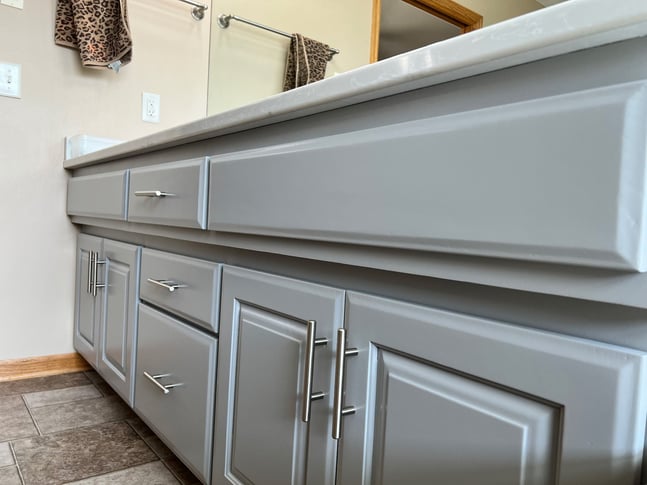
A clear estimate should describe the preparation, products, number of coats, application method, protection, and reinstallation work. It should also explain repairs, color changes, hardware changes, and anything that could change the price. Comparing only the final dollar amount can hide major differences in labor and materials.
Ask each Omaha cabinet painter these questions:
- Will doors and drawer fronts be removed and labeled?
- Where will removable pieces be finished?
- How will the vanity be cleaned before sanding?
- What sanding is included before and between coats?
- What primer and topcoat will be used?
- What product do you use and why?
- Will the cabinet boxes be sprayed, brushed, or rolled?
- How will the bathroom be ventilated and protected?
- How long before normal cleaning and shower use?
- Do you offer a warranty or maintenance plan?
Brush & Roll Painting in Omaha, NE, includes a nine-year cabinet maintenance plan with yearly time available for qualifying touchups under the plan’s terms. Other companies may offer different coverage. Read any warranty or maintenance plan closely and ask whether it covers adhesion failure, ordinary wear, water damage, homeowner damage, or only manufacturer defects.
Frequently Asked Questions About Painting Bathroom Cabinets
Can You Paint a Bathroom Vanity Without Removing It?
Yes. The cabinet box normally stays installed while the doors and drawer fronts are removed. Painting the entire vanity in place with the doors attached makes it harder to clean edges, sand evenly, protect hinges, and produce a smooth finish. Removable parts are better handled separately.
Can Bathroom Cabinets Be Painted if They Are Laminate?
Some laminate vanities can be painted if the surface is secure, cleaned correctly, sanded without damage, and coated with a compatible bonding system. Peeling, swollen, or loose laminate should be repaired or replaced first. Ask the painter to perform an adhesion test when the surface is uncertain.
Do Oak Bathroom Cabinets Need Grain Filling?
Only if you want a smoother, less textured appearance. Paint does not automatically erase oak grain. A resurfacer, filling primer, or added grain filling steps can reduce the texture, but the estimate should say whether that work is included. Some homeowners prefer to keep a small amount of visible grain.
What Cabinet Color Works Best in a Small Omaha Bathroom?
Light colors can make a small bathroom feel more open, but they are not the only good choice. Deep green, navy, charcoal, and warm wood-inspired colors can work well when the room has suitable lighting and balanced wall colors. Test samples beside the countertop, flooring, and tile before deciding.
Can I Use the Shower While the Bathroom Vanity Is Being Painted?
That depends on the product and whether cabinet boxes are sprayed. Steam can interfere with application and early curing, while masking may block access to parts of the room. Ask for a daily access plan before work begins. Another bathroom is helpful during active spraying and the first drying period.
How Should Painted Bathroom Cabinets Be Cleaned?
Use a soft cloth with mild soap and water after the coating has fully cured. Avoid abrasive pads, harsh solvents, and soaking cabinet edges. Wipe off toothpaste, makeup, and standing water promptly. Follow the coating manufacturer’s care directions and any instructions supplied by your painter.
Is Painting a Bathroom Vanity Cheaper Than Replacing It?
Often, yes, especially when the cabinet layout and boxes are in good condition. Replacement may be the better choice when there is swelling, rot, a poor layout, broken drawer systems, or plumbing-related damage. Compare the full cost, including removal, plumbing, countertop work, disposal, and wall repairs.
Painting Bathroom Cabinets in Omaha, NE Area
A bathroom vanity may be smaller than a kitchen, but it deserves the same disciplined preparation. Cleaning removes invisible residue, sanding creates grip, primer controls stains and adhesion, and a professional cabinet finish protects the surface from daily use. Understanding these steps helps you avoid quotes that rely on vague promises or leave out the work beneath the color.
Brush & Roll Painting has served the Omaha area since 1996. We share this process to help homeowners understand what a durable bathroom cabinet project should involve, whether they hire our team or another qualified painter.
If you are ready to discuss your bathroom cabinets, click the button below to get a quote.

If you are still comparing options, use our cabinet painting pricing calculator to get a better idea of the investment before scheduling an estimate.