Key Takeaways
- A lasting cabinet finish depends more on cleaning, sanding, priming, and controlled application than it does on the final color.
- Cabinet painting estimates can describe very different processes, products, and levels of surface preparation.
- Removing doors and drawer fronts and finishing them in a controlled shop setting can produce a smoother, more consistent result.
- A professional cabinet painter in Bennington should explain what will be done to the doors, drawers, cabinet boxes, edges, and damaged areas.
- A good cabinet stain or paint product is made to handle daily touching, cleaning, moisture, and kitchen wear better than standard wall paint.
- Homeowners should ask about curing, cleanup, touch-ups, and the written warranty before choosing a painter.
Cabinet painting sounds simple until several estimates arrive with different prices and very different descriptions. One painter may plan to spray everything in the kitchen. Another may remove the doors, spray them in a shop, repair damage, use a cabinet primer, and apply a product you’ve never heard of.
That can leave a homeowner wondering what is truly necessary. You may also worry about brush marks, peeling around handles, cabinets that feel sticky, or a finish that chips within a year. Since the kitchen is used every day, a poor result is hard to ignore.
Brush & Roll Painting has served Bennington-area homeowners since 1996. Over that time, we have seen how different wood species, old finishes, cooking grease, moisture, and daily use affect painted cabinets. Our process places heavy attention on preparation, controlled application, and coatings made for cabinetry.
By reading this article, you will learn what to expect when hiring a cabinet painter in Bennington, how a detailed refinishing process works, where painting companies may take different approaches, and which questions can help you compare estimates. You will also know what to expect during the project and how to care for the finish afterward.
What Should Bennington Homeowners Expect Before Cabinet Painting Begins?
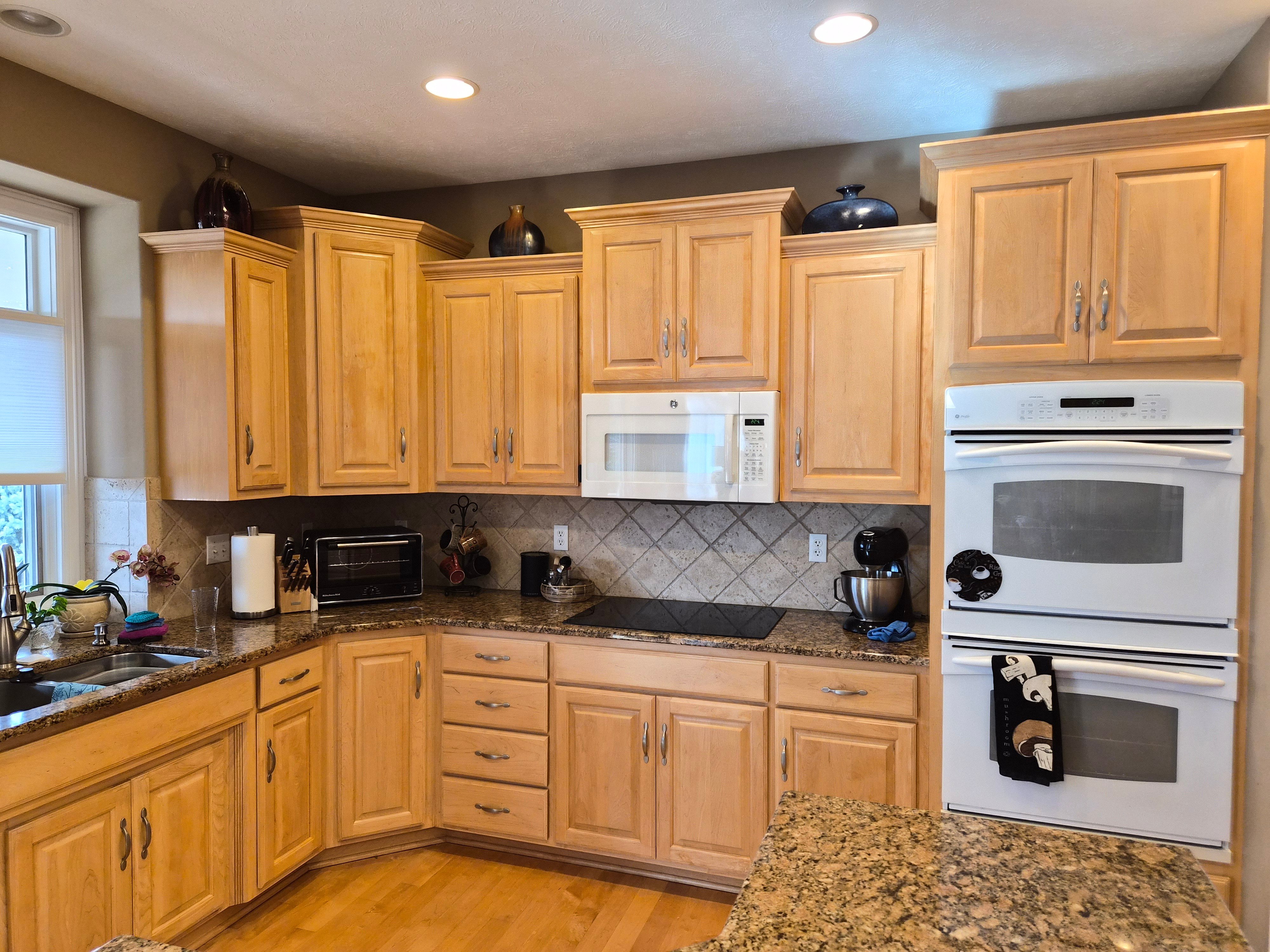
A cabinet project should begin with an inspection and a clear conversation about goals. The painter should look at the cabinet material, current finish, visible damage, layout, hardware, and areas exposed to heat or water. This is also the time to discuss color, sheen, scheduling, and how the kitchen will be used during the work.
During an estimate, a cabinet painter should check for:
- Grease and cooking residue, especially near the stove
- Water damage near the sink and dishwasher
- Loose veneer or failing finish
- Cracks, dents, and open seams
- Worn areas around knobs and pulls
- Doors or drawers that rub against one another
- Existing paint that may have poor adhesion
- Silicone or other materials that paint will not bond to
The inspection helps determine whether painting is a good choice. Cabinets with solid boxes and doors are often strong candidates, even if the color feels dated. Cabinets with major water damage, broken boxes, or a layout that no longer works may require repairs or replacement instead.
Bennington homeowners should receive a written scope that explains which surfaces are included. Ask whether the price covers both sides of the doors, drawer fronts, cabinet face frames, exposed end panels, crown molding, toe kicks, and shelves. The word “cabinets” alone leaves too much room for confusion.
How Do You Prepare a Kitchen for Cabinet Refinishing in Bennington?
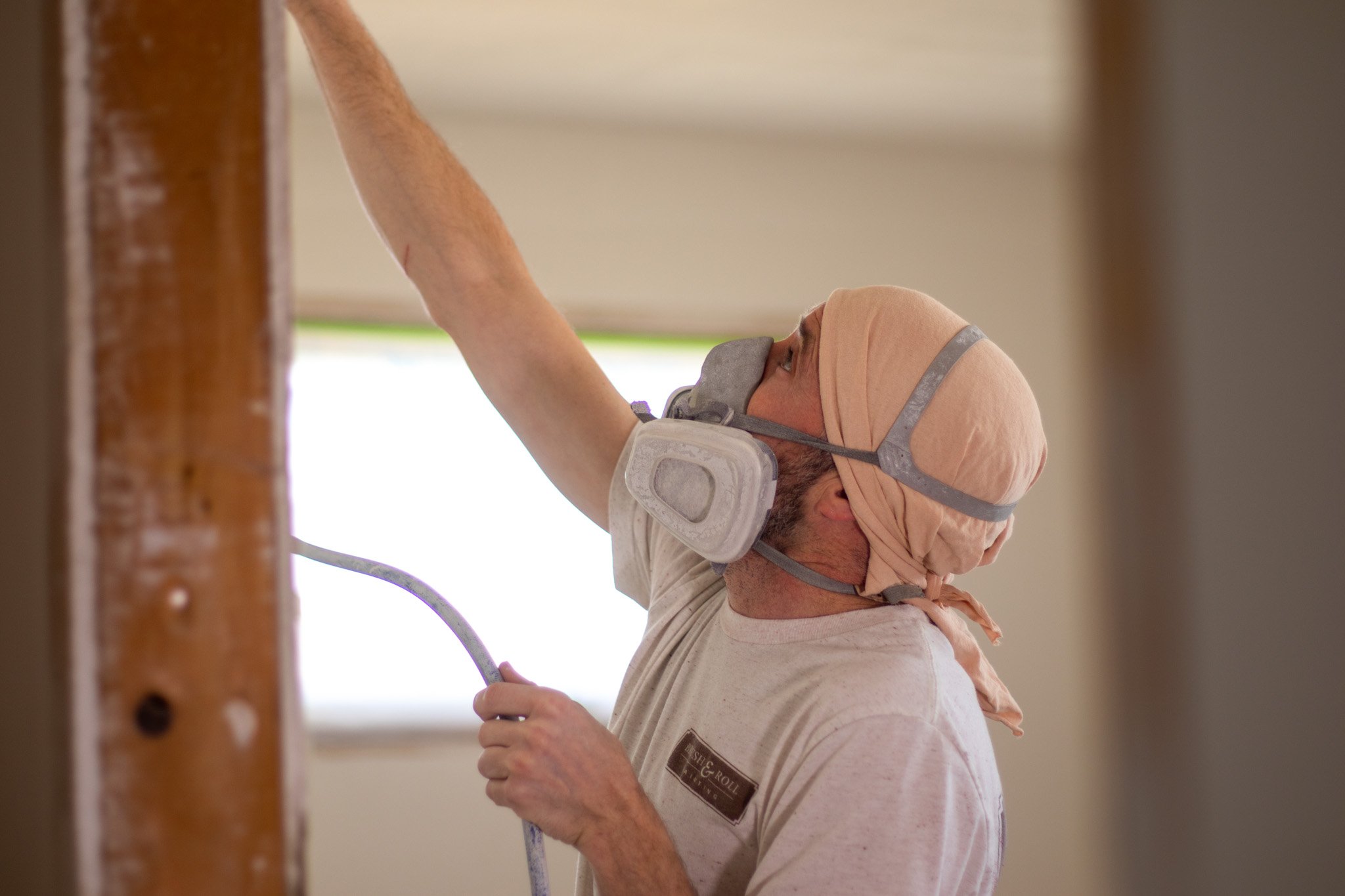
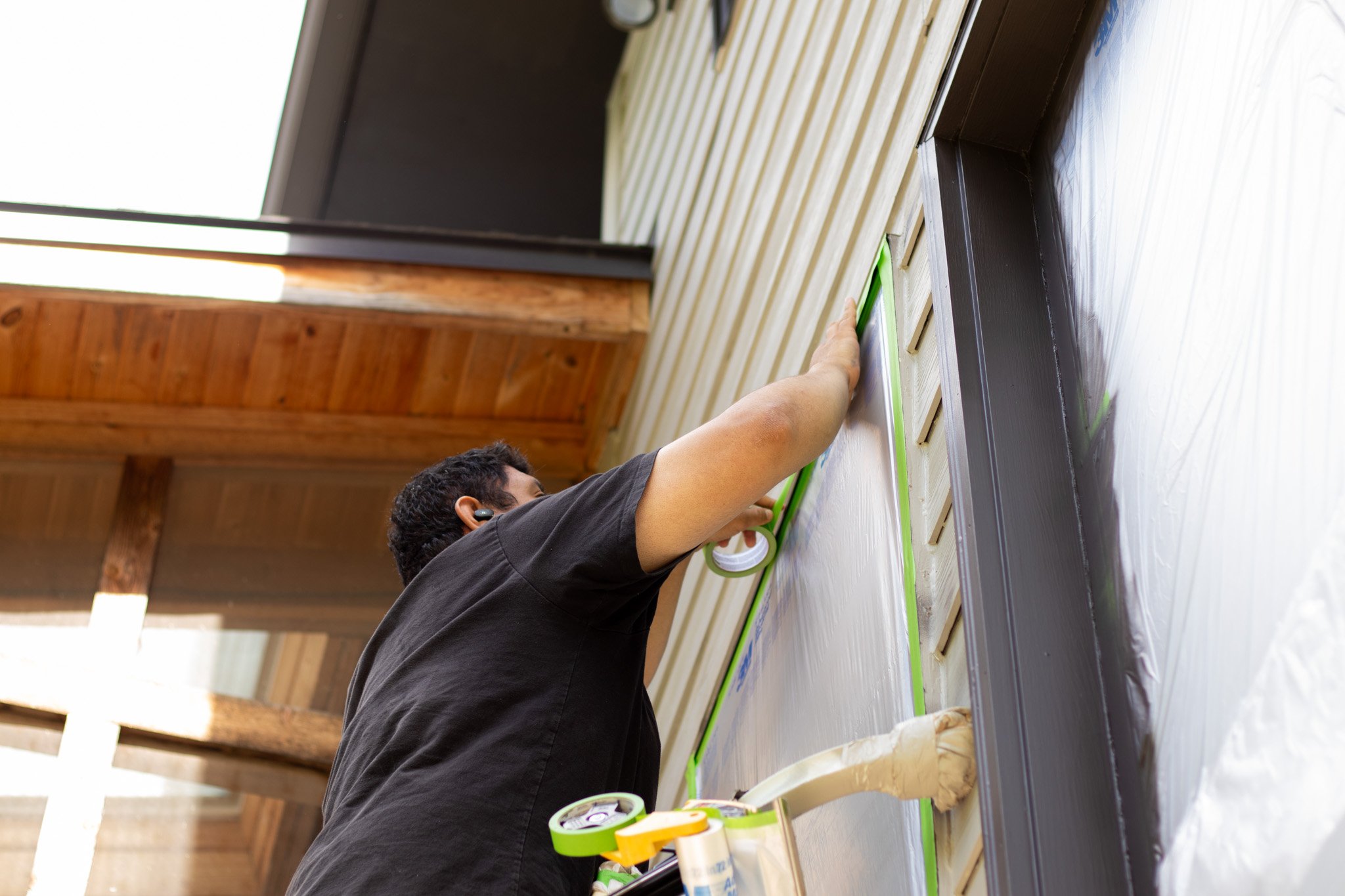
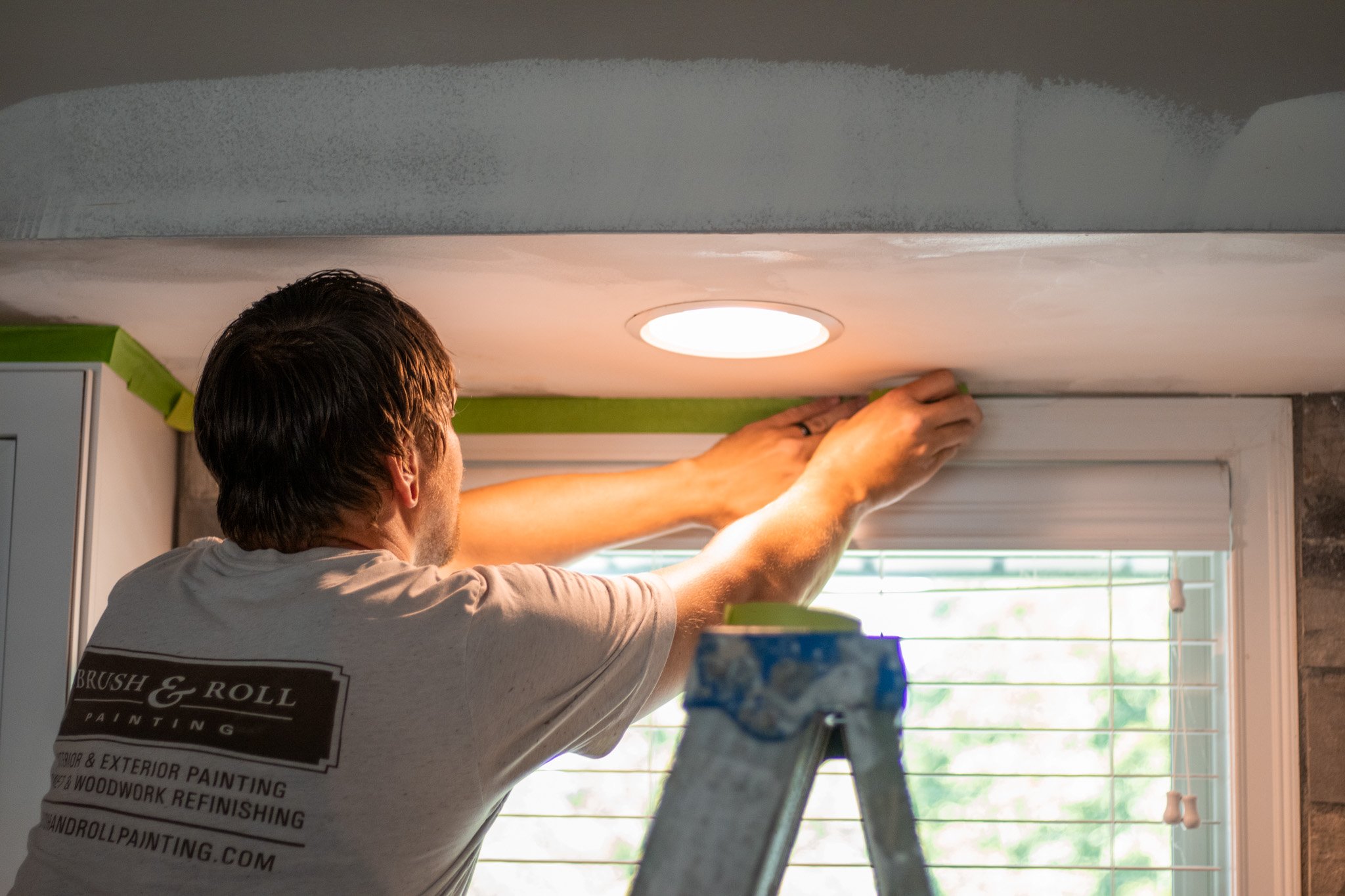
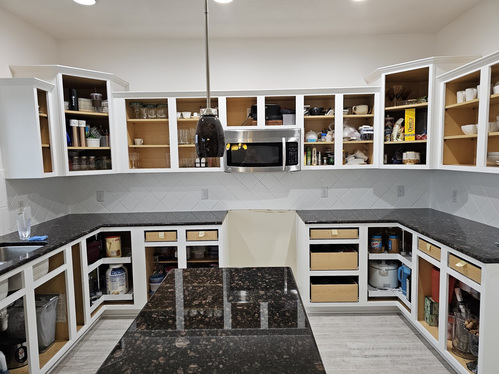
The first working step is protecting the home and setting up an organized work area. Floors, countertops, appliances, backsplashes, walls, and nearby openings need protection from dust and coating particles. A clean setup also helps the crew keep hardware and cabinet pieces properly labeled.
Homeowners are usually asked to clear the countertops and remove items that could interfere with access. Most items can stay inside the cabinet boxes when the interiors are not being painted, though the painter may ask that items near the front edge be moved back or removed.
The setup may include:
- Floor coverings in the kitchen and travel paths
- Plastic or paper over counters and appliances
- Masking around walls, tile, and cabinet openings
- Dust control and air movement equipment
- A labeled system for doors, drawer fronts, hinges, and hardware
- A temporary spray enclosure when parts of the work are completed onsite
Clear labeling matters. Cabinet doors can look nearly identical but fit slightly differently because of age, hinge adjustments, or minor changes in the cabinet openings. Returning each door and drawer front to its original place helps the final installation go smoothly.
Why Are Cabinet Doors and Drawer Fronts Removed?
Removing doors and drawer fronts gives the painter better access to edges, profiles, and cabinet frames. It also allows removable pieces to be finished flat in a controlled space. This can reduce runs, limit airborne dust, and create a smoother appearance than trying to coat every surface while it hangs in the kitchen.
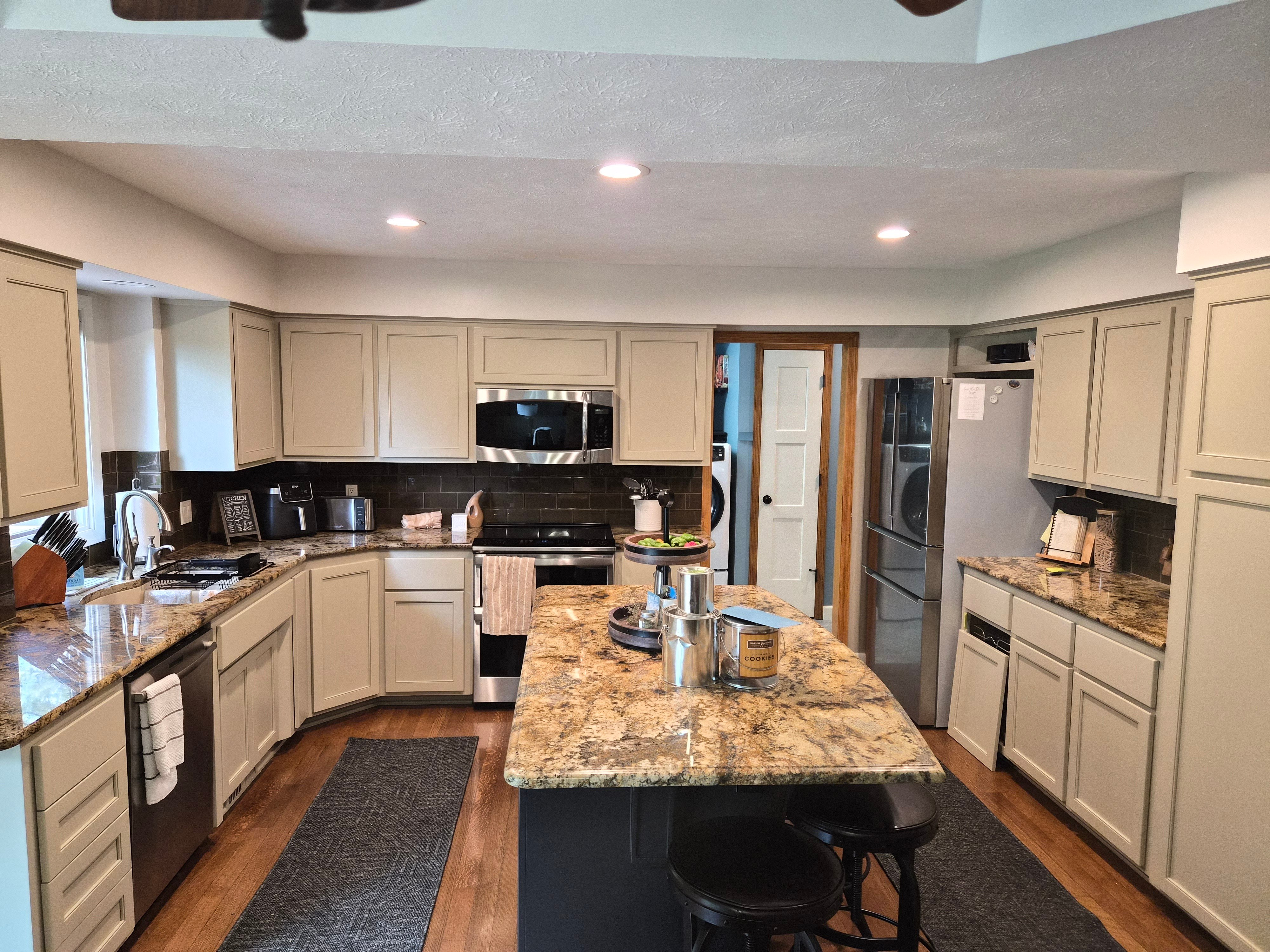
At Brush & Roll Painting, we remove the doors and drawer fronts and take them to our shop for preparation and finishing. The cabinet boxes and fixed trim stay in the home and are completed on-site.
Some cabinet painters complete the whole project inside the home in a few short days.
Hardware decisions should also be made early. If you plan to reuse the same knobs and pulls, the original holes can normally stay. If the new hardware has a different size, old holes may need to be filled and new ones drilled. New hinges may also require adjustments or carpentry that should be included in the estimate.

How Are Kitchen Cabinets Cleaned Before Painting?
Cabinets must be cleaned before sanding and coating. Kitchen grease can be nearly invisible, yet it can prevent primer from gripping the old finish. Areas above the stove, around handles, near trash pullouts, and beside the dishwasher often need extra attention.
Professional cleaning is more than a quick wipe with a household spray. The goal is to remove grease, wax, polish, food residue, and cleaning product buildup. The surface may need more than one cleaning pass.
We like to use Krud Kutter to ensure the surface is completely clean before sanding.
Skipping this step can push grease into the surface during sanding. It can also lead to small craters, poor adhesion, or peeling around frequently touched areas. When comparing cabinet painting Bennington estimates, ask whether degreasing is listed as its own preparation step.
Do Cabinets Need to Be Sanded Before They Are Painted?
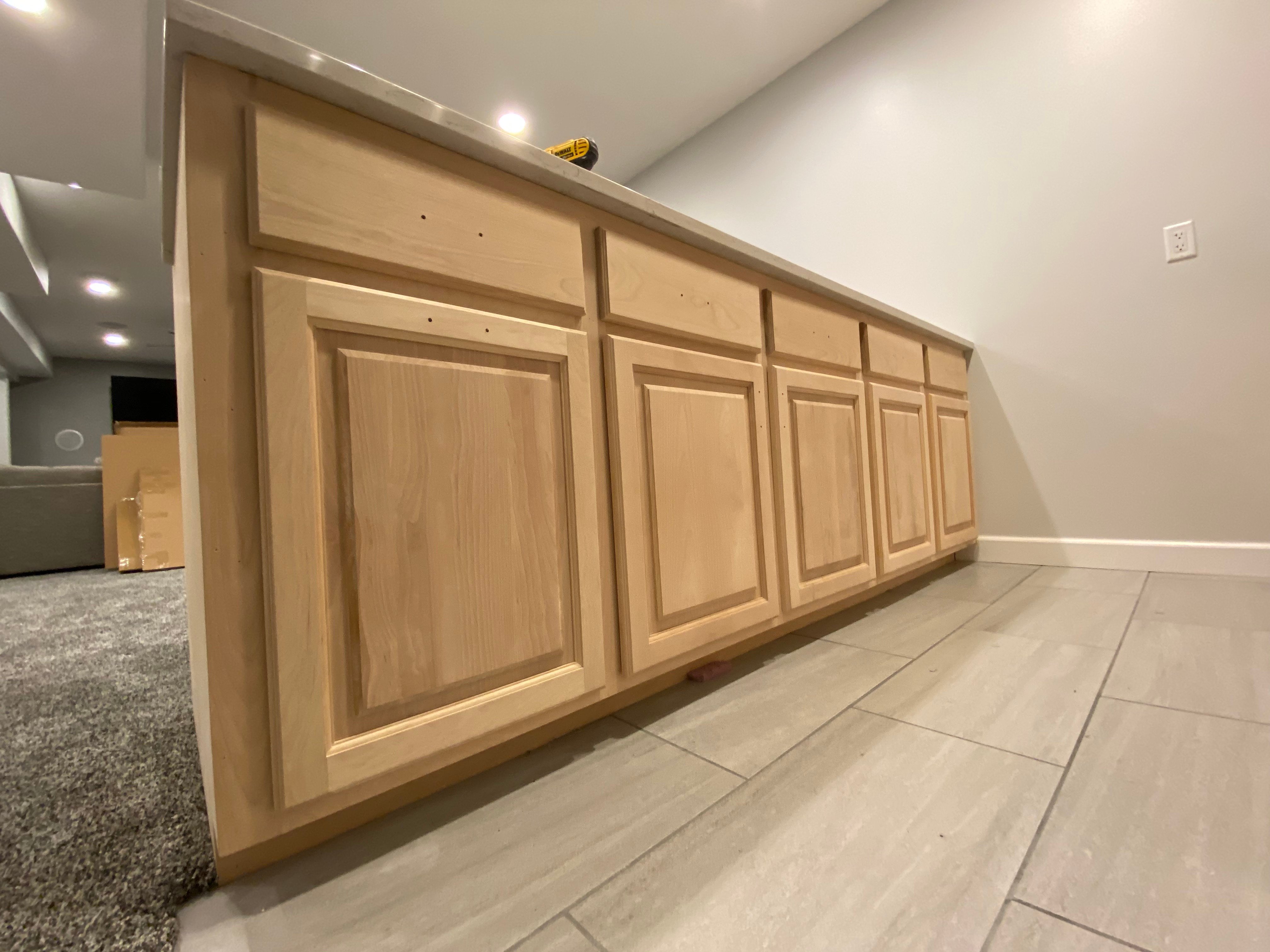
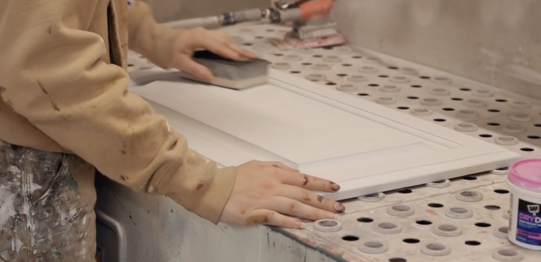
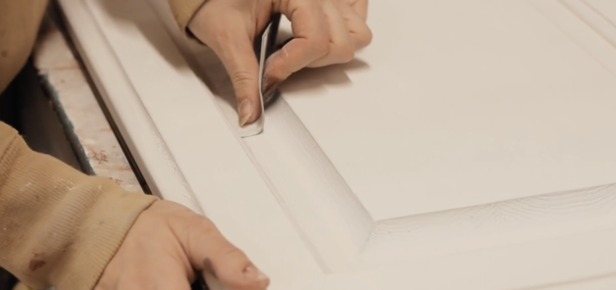
Yes, most cabinets need to be sanded, but that does not always mean removing every trace of the original stain or finish. The purpose is to dull the slick surface, smooth damaged areas, reduce raised grain, and give the primer a better surface to grip.
The amount of sanding depends on the condition and material. A factory finish in good condition may need a consistent scuff sand. Peeling paint or a damaged clear coat may require more work. Repairs and filled hardware holes must also be sanded smooth so they do not show through the final finish.
After sanding, the dust needs to be removed carefully. Dust left in corners or door profiles can create rough spots in the coating. Proper dust removal is one reason shop finishing can be helpful. The work area can be cleaned and controlled before spraying begins.
Some estimates may say “lightly sand as needed.” Ask what that means for your cabinets. Will every paintable surface be scuff sanded, or only obvious problem areas? A specific answer makes it easier to understand the process you are buying.
What Cabinet Repairs Should Be Completed Before Primer?
Small defects should be repaired before priming so the finish looks clean and the doors operate properly. Painting does not hide deep dents, open joints, worn corners, or old hardware holes. In some cases, a fresh solid color makes those flaws easier to see.
Common repairs include:
- Filling unwanted hardware holes
- Repairing small dents and scratches
- Caulking selected seams that should appear closed
- Securing loose trim
- Addressing minor veneer damage when practical
- Smoothing chipped edges
- Adjusting doors and drawer fronts that rub
Wood movement must be handled with care. Cabinet doors expand and contract as indoor humidity changes, especially during Nebraska’s seasonal shifts. Some joints are meant to move and should not be packed with filler. A knowledgeable cabinet painter can explain which lines can be improved and which may return as the wood moves.
Major carpentry is a separate issue. If a door is split, a box is swollen from water, or veneer is badly separated, the painter should discuss repair limits before coating begins.
What Primer Should a Cabinet Painter in Bennington Use?
The right primer creates a bond between the cleaned, sanded cabinet and the finish coats. It can also help block wood tannins, old stains, grease shadows, and other discoloration that might bleed through a light paint color.
Primer choice should be based on the existing surface. Oak, maple, cherry, previously painted cabinets, and laminate do not always need the same product. Dark stained wood going to white may also require extra stain-blocking attention.
After the primer dries, it should be inspected and sanded as needed. This step smooths raised grain and minor texture before the finish coats are applied. Any remaining defects are easier to see once the surface has a uniform primer color.
Not every cabinet quote includes a full primer coat. Some painters may use a paint product marketed as self-priming, while others may spot prime only repaired areas. Ask exactly what primer will be used, why it fits your surface, and whether every paintable area will receive it.
What is the Best Product to Use for Painting Cabinets?
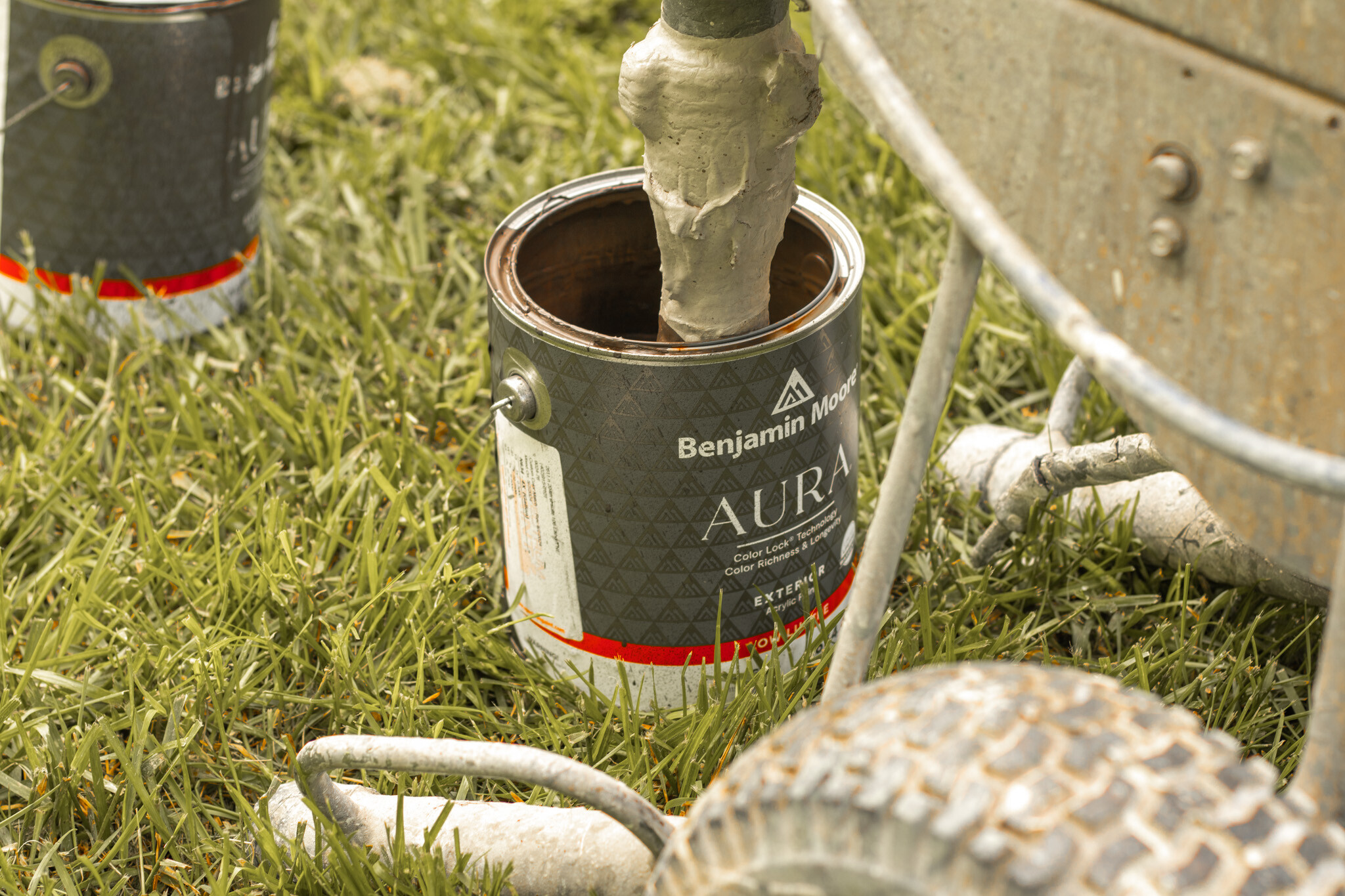
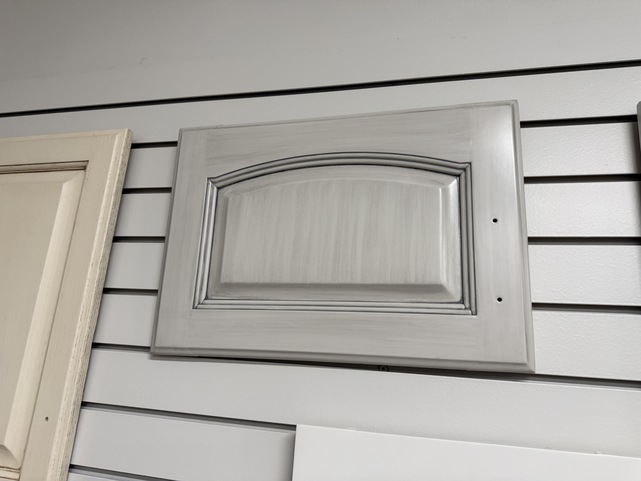
At Brush & Roll Painting, we use a professional-grade product called Milesi two-component coatings. We believe this product provides strong adhesion, a smooth appearance, and resistance to normal kitchen wear.
A two-component product combines the coating with a hardener before application. The chemical cure creates a harder finish than ordinary wall paint. That matters around handles, sink cabinets, trash pullouts, and other areas touched many times each day.
Our solid color cabinet process generally includes three coating layers after cleaning, sanding, and repairs:
- One appropriate primer coat
- One cabinet finish coat
- A second cabinet finish coat
Each layer must be applied within the product requirements and allowed suitable drying time. The exact primer or coating system can change when the cabinet material or existing finish calls for a different solution.
Other companies may use acrylic trim paint, enamel, lacquer, one-component cabinet paint, or another coating system. A familiar brand name does not tell you the whole story. Ask for the exact product line, the number of coats, the method of application, and why the product is suitable for cabinets.
How Are Cabinet Boxes Painted Inside the Home?
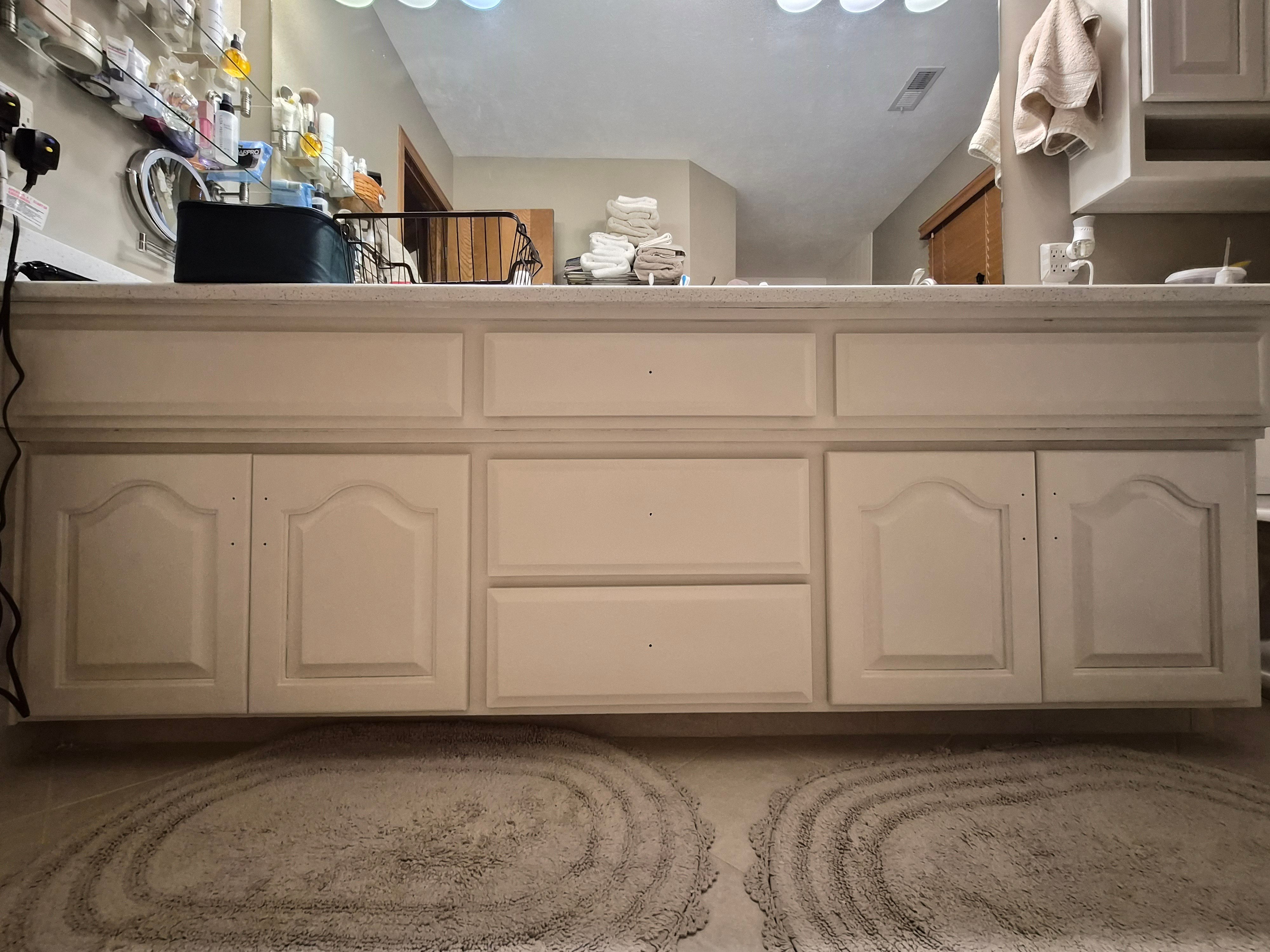
Cabinet boxes remain fixed to the walls, so they are prepared and finished on-site. The crew protects the surrounding kitchen, cleans and sands the paintable areas, completes repairs, primes, and applies the finish coats while controlling dust and overspray.
The process should cover all included exterior surfaces, such as face frames, exposed ends, toe kicks, and attached trim. Cabinet interiors are usually excluded unless the written scope says otherwise. Painting interiors adds time, cost, odor, and curing needs, so it should be discussed separately.
The application method may vary by layout. Spraying often creates the smoothest finish, but it requires careful masking and air control. Some fixed areas may be brushed or rolled when access, project scope, or site conditions make that method more practical. The painter should explain the expected texture before work begins.
How Long Does Cabinet Painting Take in Bennington, Nebraska?
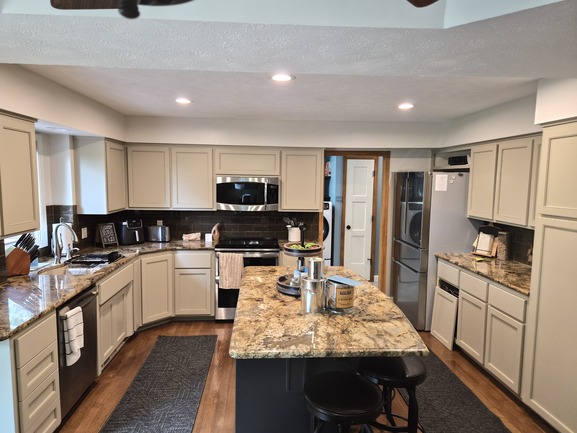
Many cabinet projects take about one to two working weeks, but size and condition can change the schedule. A small kitchen with little damage may move faster. A large kitchen with many doors, color changes, repairs, or new hardware may take longer.
The schedule may include:
- Home protection and setup
- Door and drawer front removal
- Cleaning and sanding
- Repairs and primer
- Finish coating in the shop and home
- Drying between coats
- Reinstallation and adjustments
- Final inspection and cleanup
Dry to the touch does not mean fully cured. Many coatings continue to harden after the doors are reinstalled. During this period, homeowners should close doors gently, avoid harsh cleaning, and keep damp towels away from the finish.
Ask each contractor for both the working schedule and the curing instructions. A shorter quoted timeline is not automatically better if the process allows too little time for cleaning, drying, sanding, or coating.
How Can Homeowners Compare Cabinet Refinishing Bennington Estimates?
Compare the process line by line, not just the final price. Two estimates may differ because one includes more preparation, shop finishing, premium coatings, repairs, and a longer warranty. Another may cover fewer surfaces or use a faster process.
Ask every cabinet painter these questions:
- Are the doors and drawer fronts removed?
- Where will those pieces be finished?
- How will grease and household polish be removed?
- Will every paintable surface be sanded?
- What primer and finish products will be used?
- Is the coating designed specifically for cabinets?
- How many primer and finish coats are included?
- Are both sides and all edges of doors included?
- Which box surfaces, panels, and trim pieces are included?
- How will the kitchen and nearby rooms be protected?
- Are repairs, new hardware holes, and hinge changes included?
- How long should the finish cure before normal cleaning?
- What does the written warranty cover?
Also ask, “What could make this quote change?” That question can reveal allowances for hidden damage, carpentry, extra color changes, added panels, or hardware modifications.
Frequently Asked Questions About Cabinet Painting in Bennington, NE
Can stained cabinets be painted without stripping them to bare wood?
Often, yes. If the old finish is stable, the cabinets can usually be cleaned, sanded, primed, and coated without removing all the previous product. Failing clear coat, wax, silicone, or heavy damage may require extra preparation.
Is cabinet painting cheaper than replacing cabinets?
Painting is often much less expensive when the cabinet boxes are solid, and the layout still works. Replacement may make more sense when the cabinets have major water damage, poor storage, failing boxes, or a layout the homeowner wants to change.
Will painted wood grain still show?
It can. Open-grain woods such as oak may show texture through a painted finish. Reducing that grain requires extra filling and sanding, which may not be part of a standard painting process. Ask whether the goal is a smooth painted surface or a painted surface with natural grain still visible.
Can wall paint be used on kitchen cabinets?
Wall paint can add color, but it is generally not the best choice for surfaces that receive constant touching, wiping, heat, and moisture. Cabinet coatings are designed to dry harder and resist daily wear. Ask for the exact product rather than accepting a broad description such as “premium paint.”
Do cabinet painters paint the inside of the boxes?
Usually not unless it is requested and written into the scope. Many homeowners keep the interiors in their original finish because they receive different wear and hold dishes or food. Painting inside cabinets adds preparation, coating, curing time, and cost.
How long will professionally painted cabinets last?
The life of the finish depends on surface preparation, coating quality, household use, cleaning habits, moisture, and care. A strong professional process should be designed for years of normal service, but no finish is immune to sharp impacts, standing water, heavy grease, or harsh chemicals.
Does Brush & Roll Painting provide a cabinet warranty?
Brush & Roll Painting in Bennington, NE provides a nine-year maintenance plan on qualifying cabinet refinishing projects. This includes 1 hour yearly of touch-ups to guarantee your finish is long-lasting.
Cabinet Painting in Bennington, NE
Choosing a cabinet painter can feel difficult when every estimate uses similar words but describes a different level of work. You now know how to look past the phrase “cabinet painting” and compare cleaning, sanding, repairs, primer, coating layers, shop conditions, curing instructions, and warranty coverage.
Brush & Roll Painting has served the Omaha area since 1996. Our cabinet refinishing process centers on detailed preparation, controlled shop finishing for removable pieces, and professional coatings selected for kitchen use. We share this process so Bennington homeowners can ask better questions and choose the approach that fits their home, expectations, and budget.
If you are ready to discuss your kitchen, click the button below to get a quote.

If you are not ready for a quote, use our cabinet painting cost calculator to get a range of what your exact project could cost.