Key Takeaways
- A clear coat can be applied to cabinets in many situations, but it must be done with the right products and preparation.
- A protective refinish is often a great choice for stained wood cabinets that are still in good shape but have lost their shine or protection.
- High-traffic kitchens, homes with children, pets, or heavy daily use often benefit the most from a protective clear finish.
- A quality protective refinish includes cleaning, stain touch-ups, and applying a durable clear coating to cabinet doors, drawer fronts, and cabinet boxes.
- Not every cabinet is a good candidate for a clear coat. The condition of the existing finish matters just as much as the product being applied.
- Understanding your options before hiring a cabinet painter can help you choose the right service for your kitchen and avoid paying for work you do not need.
If your kitchen cabinets have started looking dull, scratched, or worn, replacing them is probably the last thing you want to hear. Maybe the stain color still looks beautiful, but years of cooking, cleaning, fingerprints, and everyday use have taken away the smooth finish they once had. Many Omaha homeowners wonder if there is a way to refresh their cabinets without completely changing their appearance.
One question comes up again and again.
Can you simply put a clear coat over your cabinets?
At Brush & Roll Painting, we have been working with homeowners throughout the Omaha area since 1996. During that time, we have restored cabinets with solid color finishes, stained finishes, and protective clear coats. Every kitchen is different, and there is no single answer that works for every home. The goal of this guide is to explain when a protective refinish makes sense, when it does not, and what homeowners should expect before making a decision.
By the end of this article, you will understand what a protective cabinet refinish is, when it is worth considering, what preparation should be completed, how long the finish can last, and how to tell whether your cabinets are good candidates. You will also know the right questions to ask before hiring someone to perform this type of work.
Can you put a clear coat on kitchen cabinets?
Yes, you can, but only under the right conditions. The existing finish needs to be stable, clean, and properly prepared before a new protective coating is applied.
Many people think a clear coat is simply another layer that hides scratches or damage. That is not really how it works.
A clear finish is designed to protect what is already there. It is not intended to hide peeling stain, loose finish, deep water damage, or worn-out wood.
Think of it like putting a screen protector on your phone.
If your phone screen is clean and in good shape, the protector works well. If the screen is badly cracked, the protector does not fix the problem.
Cabinets work much the same way.
When the existing stain and finish are still in decent condition, a protective refinish can help extend their life while keeping the original wood appearance homeowners love.
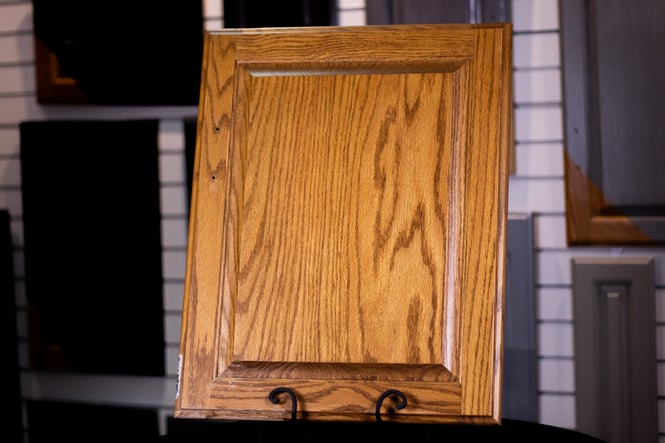
What is a protective cabinet refinish?
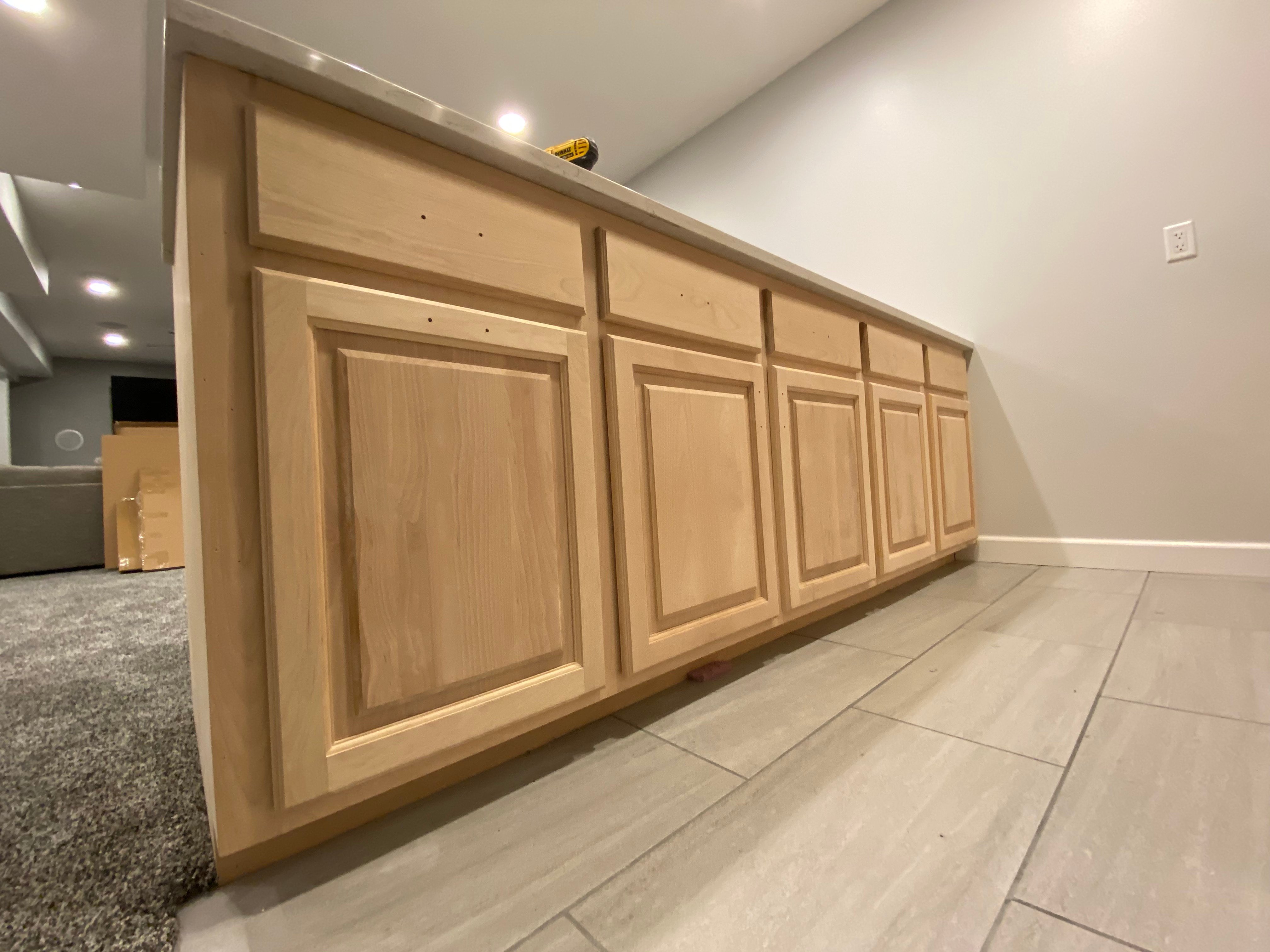
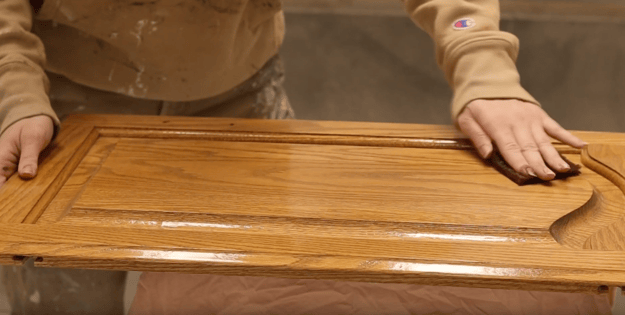
A protective refinish restores the protective layer on stained cabinets without completely changing their color.
Rather than painting cabinets a new color, this service focuses on preserving their existing appearance.
A professional protective refinish may include:
- Deep cleaning to remove years of grease and cooking residue
- Light sanding to improve adhesion
- Touching up worn stain where needed
- Repairing minor scratches
- Applying a durable clear protective finish
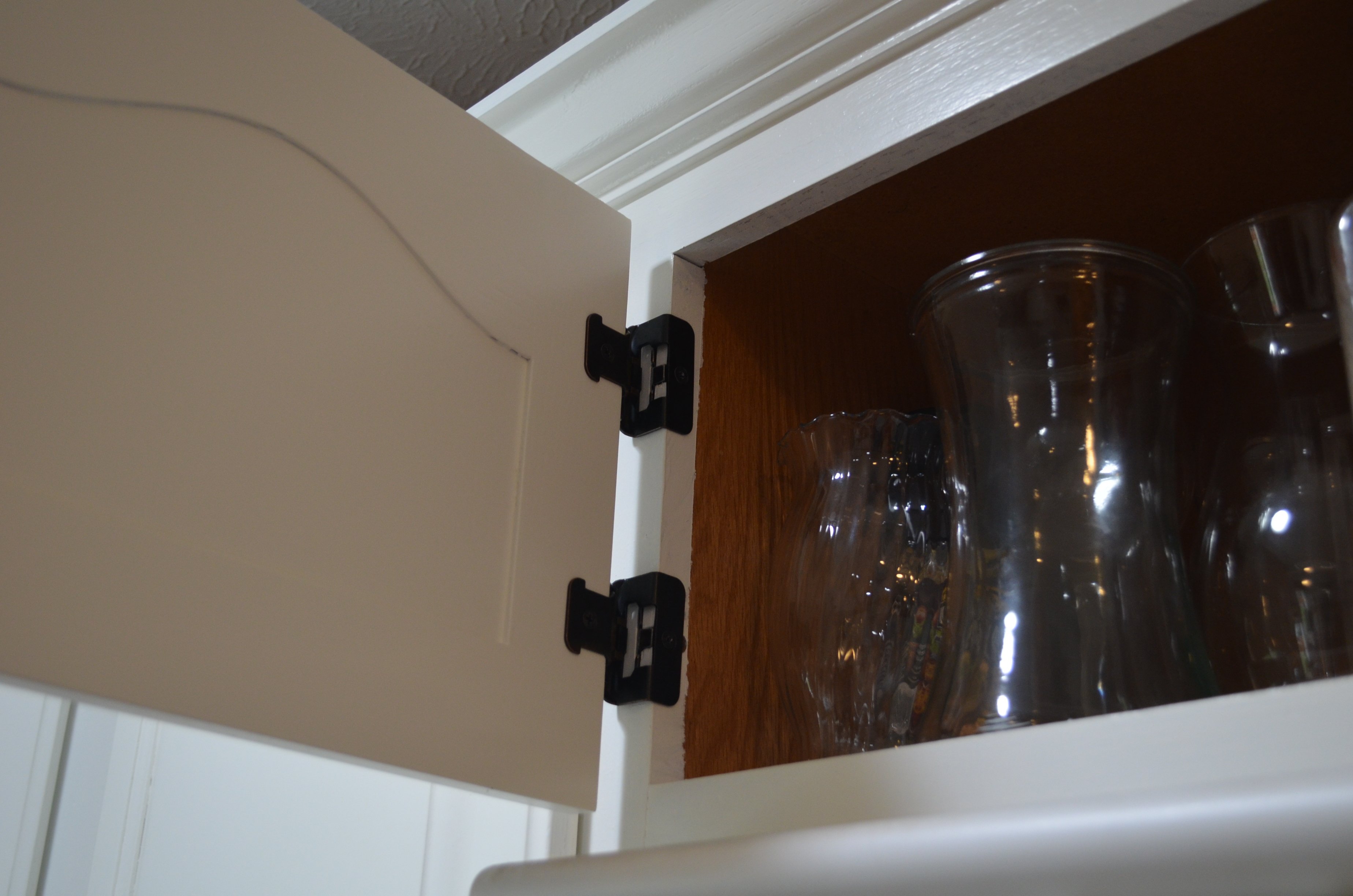
- Coating both sides of cabinet doors
- Coating drawer fronts
- Applying clear finish to the visible cabinet frames
The goal is not to make old cabinets look brand new.
Instead, the goal is to make well-cared-for cabinets look refreshed while giving them another layer of protection against everyday use.
When is a protective refinish a good option?
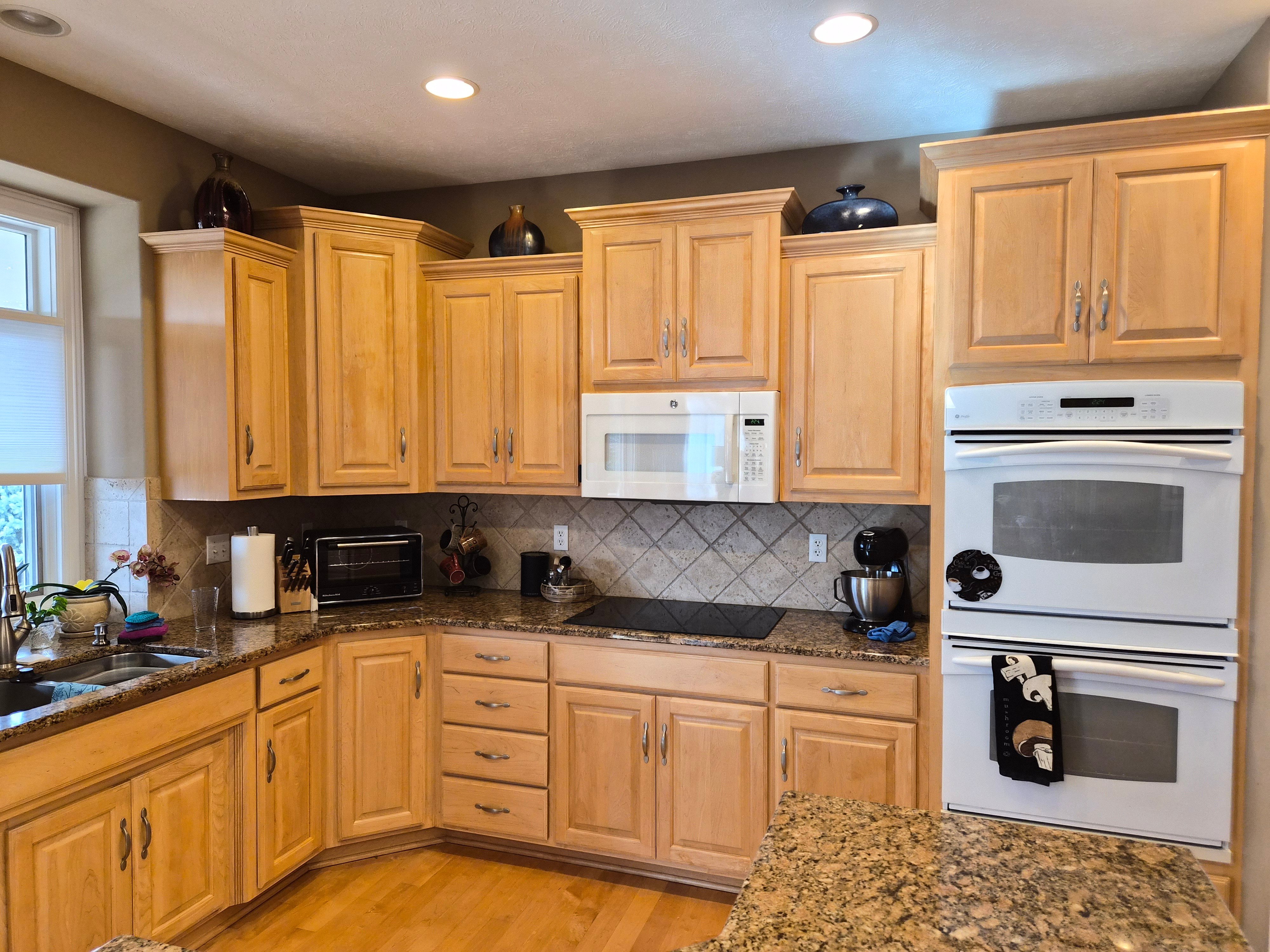
It works best when your cabinets are structurally sound and you still like the existing wood color.
Many Omaha homeowners fall into this category. Their cabinets are not outdated enough to replace. They simply look tired.
A protective refinish is often a good fit if:
- The stain color still matches your style.
- The wood has only light wear.
- Most of the finish is still attached well.
- There are minor scratches around handles.
- The finish has become dull over time.
- You want to extend the life of your cabinets.
Many homes built in the late 1990s and early 2000s have quality wood cabinets that simply need new protection instead of replacement.

Why do kitchen cabinets wear out over time?
Daily use slowly wears away the factory finish, especially around doors, drawers, and sink cabinets.
Cabinets experience more abuse than almost anything else inside your home.
Every day they are exposed to:
- Finger oils
- Grease from cooking
- Steam
- Moisture
- Cleaning products
- Food spills
- Pet scratches
- Children's hands
- Constant opening and closing
The cabinet doors closest to the sink, dishwasher, and trash can usually wear the fastest.
After years of use, the protective finish slowly becomes thinner. Once that happens, the wood underneath becomes more vulnerable to stains, moisture, and additional wear.
Adding a new protective coating before serious damage develops can often help extend the life of the cabinets.
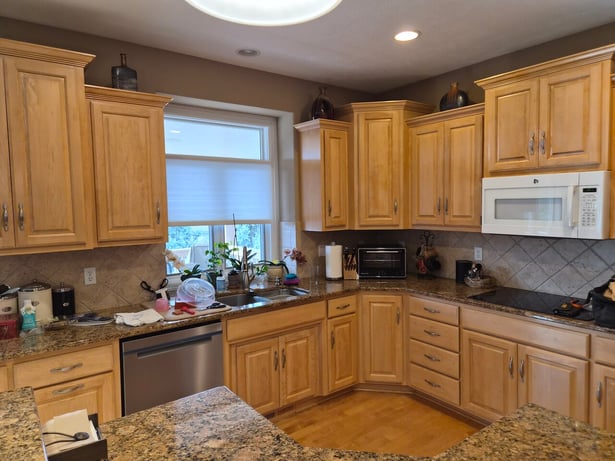
Can you put a clear coat over painted cabinets?
Sometimes, but not always. It depends on the paint system that was originally used.
This is one of the biggest misconceptions homeowners have: Not every painted cabinet needs a clear coat.
Many professional cabinet coatings already contain the durability they need.
Adding another clear finish over them may not improve performance and, in some cases, could even create adhesion problems if the products are incompatible.
If your cabinets have already been professionally painted, it is worth having them evaluated before deciding to add another finish.
Does a protective refinish change the color of the cabinets?
The goal is to keep the cabinets looking as close to their current color as possible.
Many homeowners worry that adding another clear finish will make their cabinets look darker.
Depending on the product selected, there may be a slight difference in sheen or warmth, but the purpose is to preserve the existing appearance rather than change it.
If stain touch-ups are needed, they are usually blended into worn areas before the protective finish is applied.
This helps create a more consistent appearance across the cabinets.
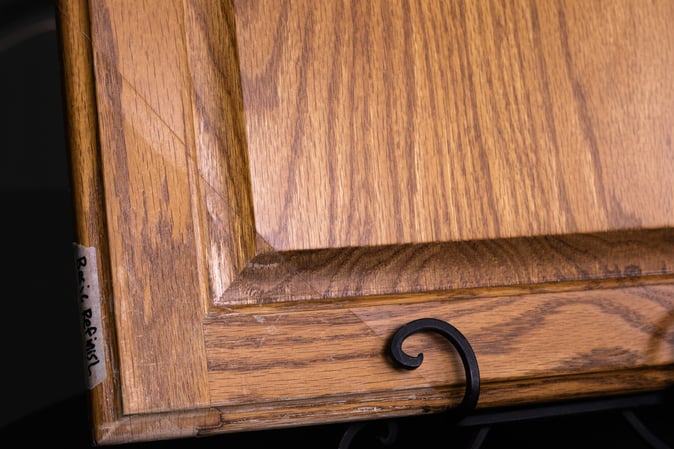
What preparation should happen before applying a clear coat?
Preparation is one of the biggest factors in how long the finish lasts.
Skipping preparation often leads to peeling, poor adhesion, or an uneven finish.
A quality process generally includes:
- Removing grease buildup
- Cleaning every cabinet thoroughly
- Light sanding
- Dust removal
- Stain touch-ups in worn areas
- Checking for loose finish
- Repairing minor imperfections
- Applying the protective finish under proper conditions
Preparation often takes longer than applying the finish itself. That is completely normal.
How durable is a protective cabinet refinish?
A professionally applied finish, with a high-quality product and prep work, and a maintenance plan can provide 15-20 years of added protection.
The actual lifespan depends on several factors.
These include:
- How often the kitchen is used
- Quality of the existing cabinets
- Cleaning habits
- Humidity levels
- Product selection
- Daily wear
A family of six that cooks every evening will naturally place more stress on cabinets than a retired couple who uses the kitchen less frequently.
That does not mean the finish will fail.
It simply means every kitchen experiences different levels of use.
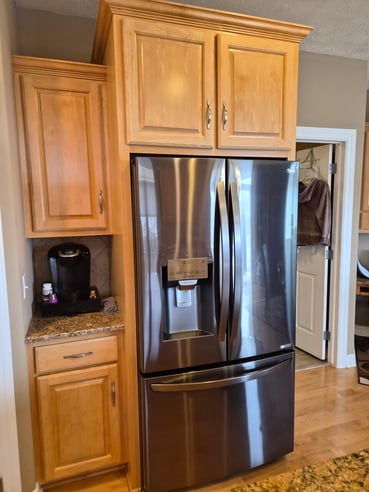
Why do people just put a clear finish over natural cabinets?
Homeowners who love their wood cabinets but want them to last longer are often the best candidates.
Some common situations include:
- You recently purchased a home with stained cabinets.
- Your cabinets still match your home's style.
- You want to avoid a full cabinet replacement.
- You are planning to stay in your home for years.
- You want to refresh your kitchen without changing its character.
This option can also make sense for homeowners preparing for resale if the cabinets are still attractive but need a little attention.
How should you care for cabinets after a protective refinish?
Gentle cleaning and regular maintenance help keep the finish looking good for years. Simple habits make a big difference.
Good maintenance includes:
- Wiping spills quickly.
- Using soft microfiber cloths.
- Avoiding abrasive scrub pads.
- Avoiding harsh chemical cleaners.
- Cleaning grease before buildup becomes heavy.
- Keeping excessive moisture away from cabinet edges.
These small habits help preserve the protective finish and reduce unnecessary wear.
How do you know if your cabinets need more than a protective refinish?
Some cabinets have too much damage for a clear coat alone.
Signs that another solution may be better include:
- Large sections of peeling finish
- Water-damaged wood
- Swollen cabinet doors
- Deep gouges
- Loose veneer
- Structural damage
- Cabinets that no longer function properly
In these situations, repainting, refinishing, repairs, or replacement may be the better long-term choice.
A professional inspection can usually determine which option makes the most sense.
Frequently Asked Questions About Clear Coats on Cabinets
Is a protective cabinet refinish less expensive than replacing cabinets?
Protective refinishing costs much less than replacing cabinets. Since the existing cabinets stay in place, homeowners avoid the cost and disruption of a complete replacement. Protective refinishing is also the lowest cost option compared to cabinet staining or painting.
Can scratches be repaired before applying the clear coat?
Yes. Minor scratches and worn areas can often be touched up before the protective finish is applied.
Does the clear finish go on both sides of cabinet doors?
A quality protective refinish generally includes coating both sides of the cabinet doors, along with the visible cabinet box frames.
Will my cabinets become shinier with a clear coat?
That depends on the sheen selected. Some homeowners prefer a lower sheen that looks more natural, while others like a little more shine.
Can every cabinet receive a protective refinish?
No, the existing finish needs to be stable enough for the new coating to bond properly.
How long does putting a clear coat on cabinets usually take?
At Brush & Roll Painting, our typical protective refinish, clear coat on cabinets, project will take roughly 2 weeks. This process includes about 4-5 days working in your home on the boxes. The rest of the time includes finishing up the drawer and door fronts at our shop.
Clear Coat of Paint on Cabinets in Omaha, NE
If you started reading this article wondering whether your kitchen cabinets needed to be replaced, hopefully you now know there may be another option. When stained cabinets are still in good condition, a protective cabinet refinish can help restore their appearance while adding another layer of protection against everyday wear.
Every kitchen is different, which is why taking time to evaluate the condition of the existing finish is one of the first steps before deciding on any cabinet project.
Brush & Roll Painting has been serving Omaha area homeowners since 1996. Our goal is to help homeowners understand their options so they can make informed decisions about their homes, whether they choose a protective refinish, a painted cabinet finish, or another solution that better fits their needs.
If you are ready to discuss your cabinet project, click the Get a Quote button below to schedule an estimate.

If you are still comparing options and would like a better idea of potential costs before speaking with a painter, try our Cabinet Painting Pricing Calculator. It is a helpful way to explore your options and begin planning your project with confidence.