Key Takeaways
- Galvanized steel can absolutely be painted, but only if it is cleaned and primed correctly.
- Most peeling paint on galvanized steel happens because the wrong primer or poor preparation was used.
- Omaha's changing weather can make existing paint fail faster if moisture gets underneath the coating.
- Loose paint should always be removed before repainting, even if only small areas appear damaged.
- Choosing the correct bonding primer is often the biggest factor in how long the paint lasts.
- Knowing what questions to ask a painting contractor can help you avoid costly repainting later.
Many homeowners are surprised when paint starts peeling off galvanized steel.
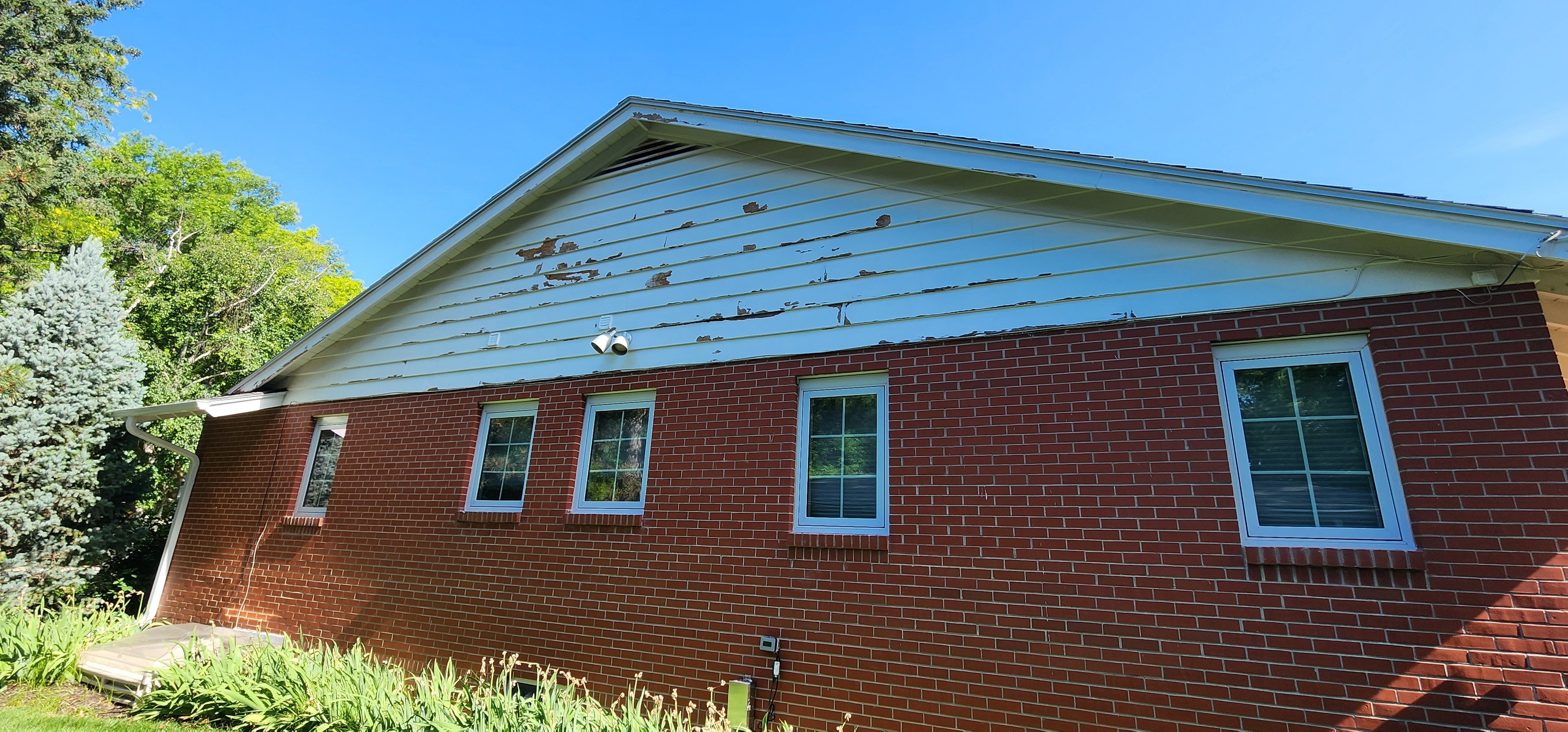
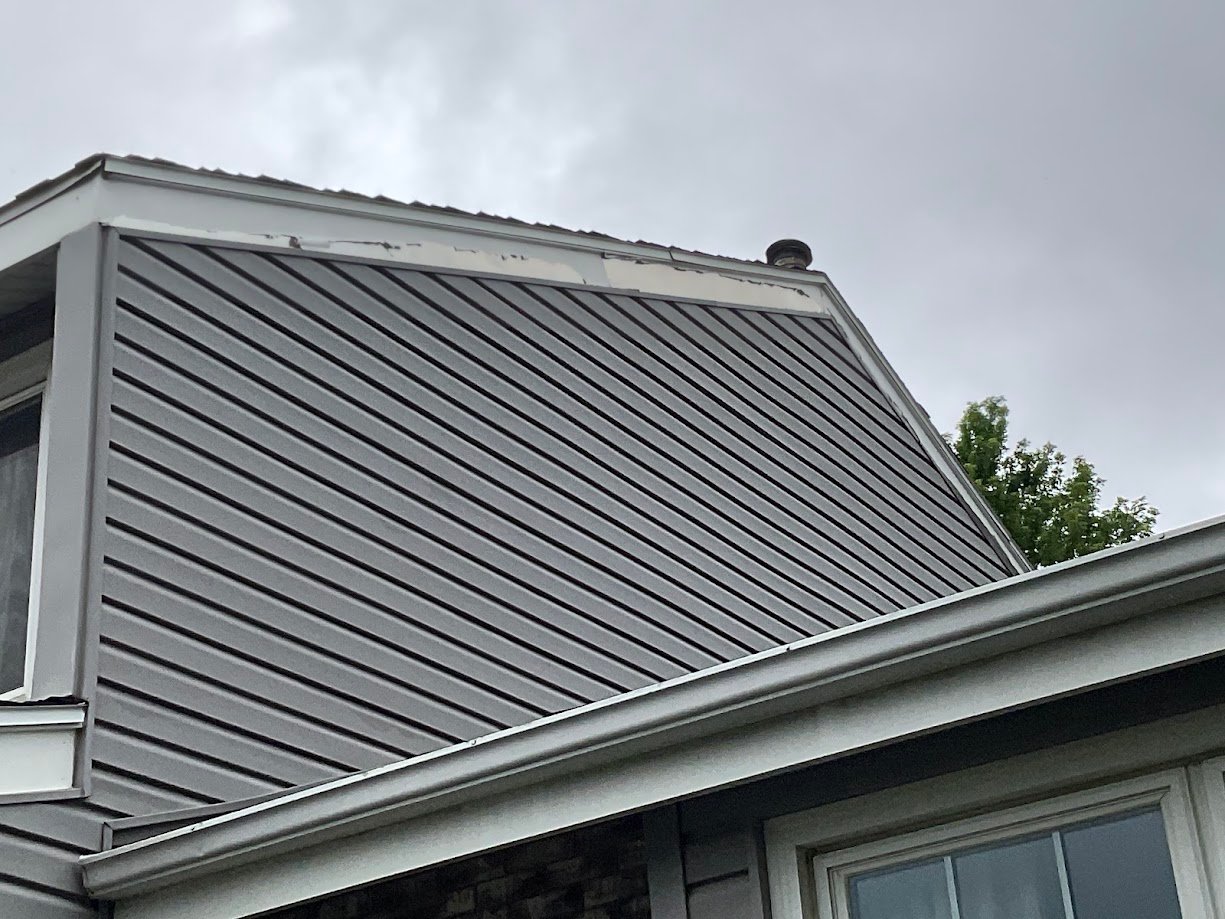
You walk around your home one spring afternoon and notice sheets of paint lifting from a gable, metal siding, flashing, or window trim. At first it looks like a small problem. Then you gently touch the edge of the paint, and a much larger piece comes loose.
Naturally, you start asking questions.
- Was the wrong paint used?
- Does galvanized steel even hold paint?
- Will the whole house need to be repainted?
These are common concerns, especially for homeowners around Omaha where homes experience hot summers, freezing winters, strong winds, hail, and plenty of moisture throughout the year.
At Brush & Roll Painting, we've been painting homes throughout the Omaha area since 1996.
Over the years, we have worked on many homes with galvanized steel components. Every project is a little different. Some surfaces have paint that is still holding well after many years. Others begin peeling because the original preparation was skipped or the wrong products were used.
Experience has shown us that successful painting starts long before the first coat of finish paint is applied.
This guide will help you understand exactly how to paint galvanized steel.
By the end of this article, you'll know why paint sometimes fails, what preparation is needed, which primers work best, what questions to ask before hiring a painter, and how to help your painted galvanized steel last as long as possible in Omaha's climate.
Can You Paint Galvanized Steel?
Yes, galvanized steel can be painted successfully, but only after the surface has been properly cleaned, prepared, and primed with a primer designed specifically for galvanized metal.
Many homeowners believe galvanized steel cannot be painted because they have seen paint peel from it.
Paint does not usually fail because galvanized steel is impossible to paint. It usually fails because one or more preparation steps were skipped.
Galvanized steel has a protective zinc coating. That coating helps prevent rust, which is exactly what it was designed to do. While that zinc layer protects the steel underneath, it also makes it harder for ordinary paint to stick.
Without the proper preparation, paint may look beautiful at first but begin peeling months or years later.
Why Does Paint Peel Off Galvanized Steel?
Paint usually peels because it never bonded properly to the galvanized surface.
One of the biggest mistakes homeowners make is assuming all peeling paint is caused by old age. That is not always true.
Several factors can cause paint failure.
Common reasons include:
- The wrong primer was used.
- No primer was used.
- Dirt or oxidation remained on the surface.
- Loose paint was painted over.
- Moisture worked underneath the coating.
- The previous coating was already failing.
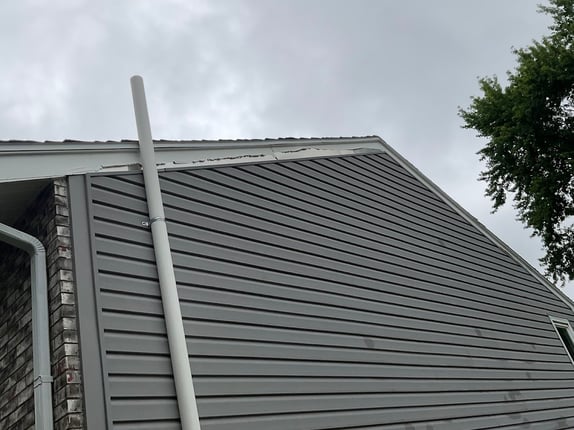
Sometimes peeling begins in only one area, such as a sunny gable or around a window. Over time, that small section grows larger because moisture gets beneath the paint.
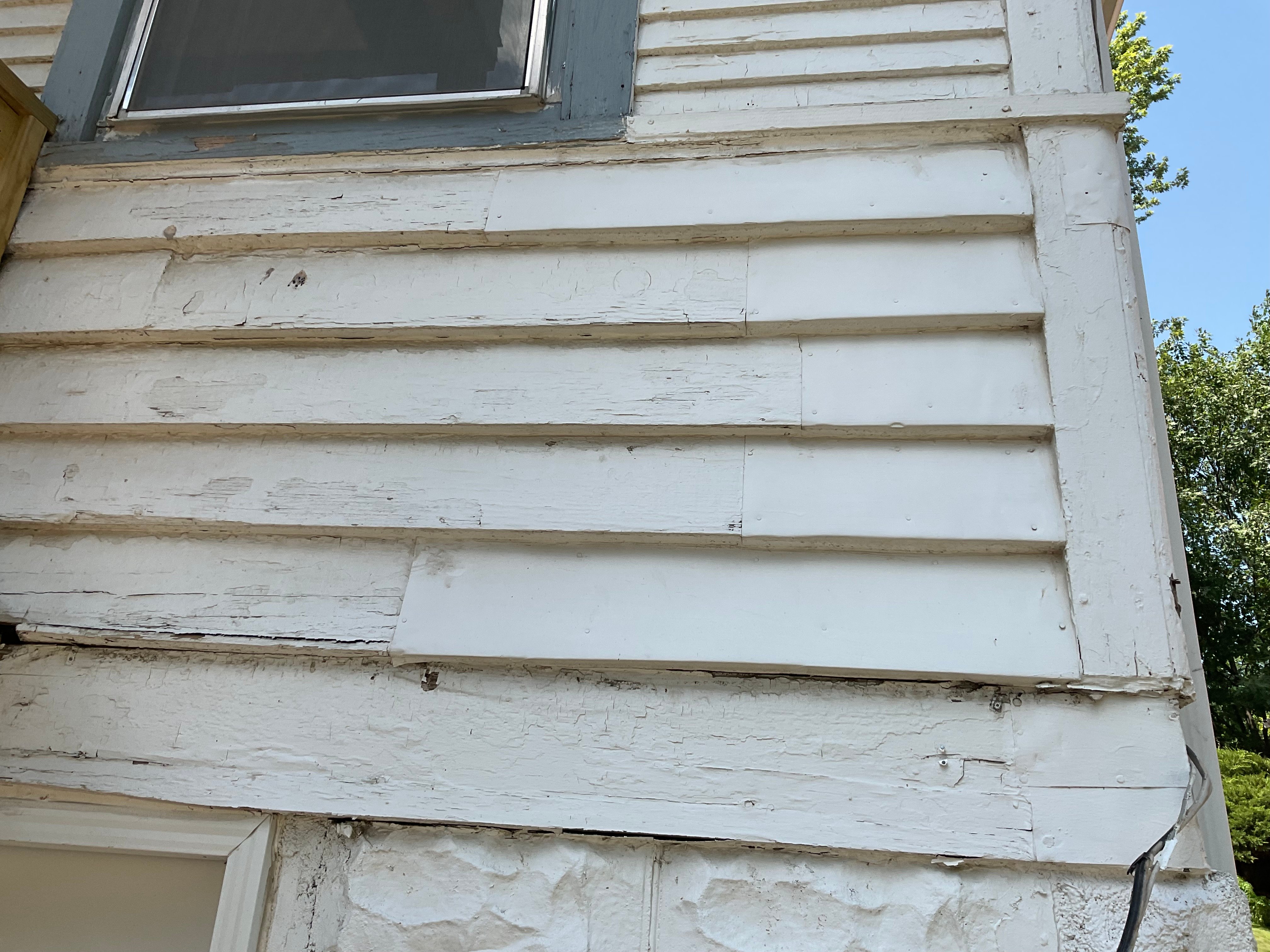
You may even notice large sheets peeling away with very little effort.
That is often a sign the original coating never formed a strong bond with the galvanized surface.

Does Omaha Weather Affect Painted Galvanized Steel?
Yes, Omaha's changing seasons place constant stress on exterior coatings.
Homes throughout eastern Nebraska experience a little bit of everything.
Throughout the year, your exterior may face:
- Summer heat
- Strong sunlight
- Heavy rain
- Snow
- Ice
- Wind
- Freeze and thaw cycles
- Hail
Each season causes the steel and paint coating to expand and contract slightly.
If the paint was properly applied, these movements are usually not a problem.
If preparation was rushed, those same movements may begin separating the paint from the metal.
This is one reason painters spend so much time inspecting the condition of existing coatings before giving recommendations.
A house with mostly solid paint may only require spot repairs.
A house with widespread peeling may require much more preparation before repainting.
What Should Be Done Before Painting Galvanized Steel?
Cleaning and preparation are often the most time-consuming part of the project.
Homeowners sometimes think painting simply starts with opening a can of paint.
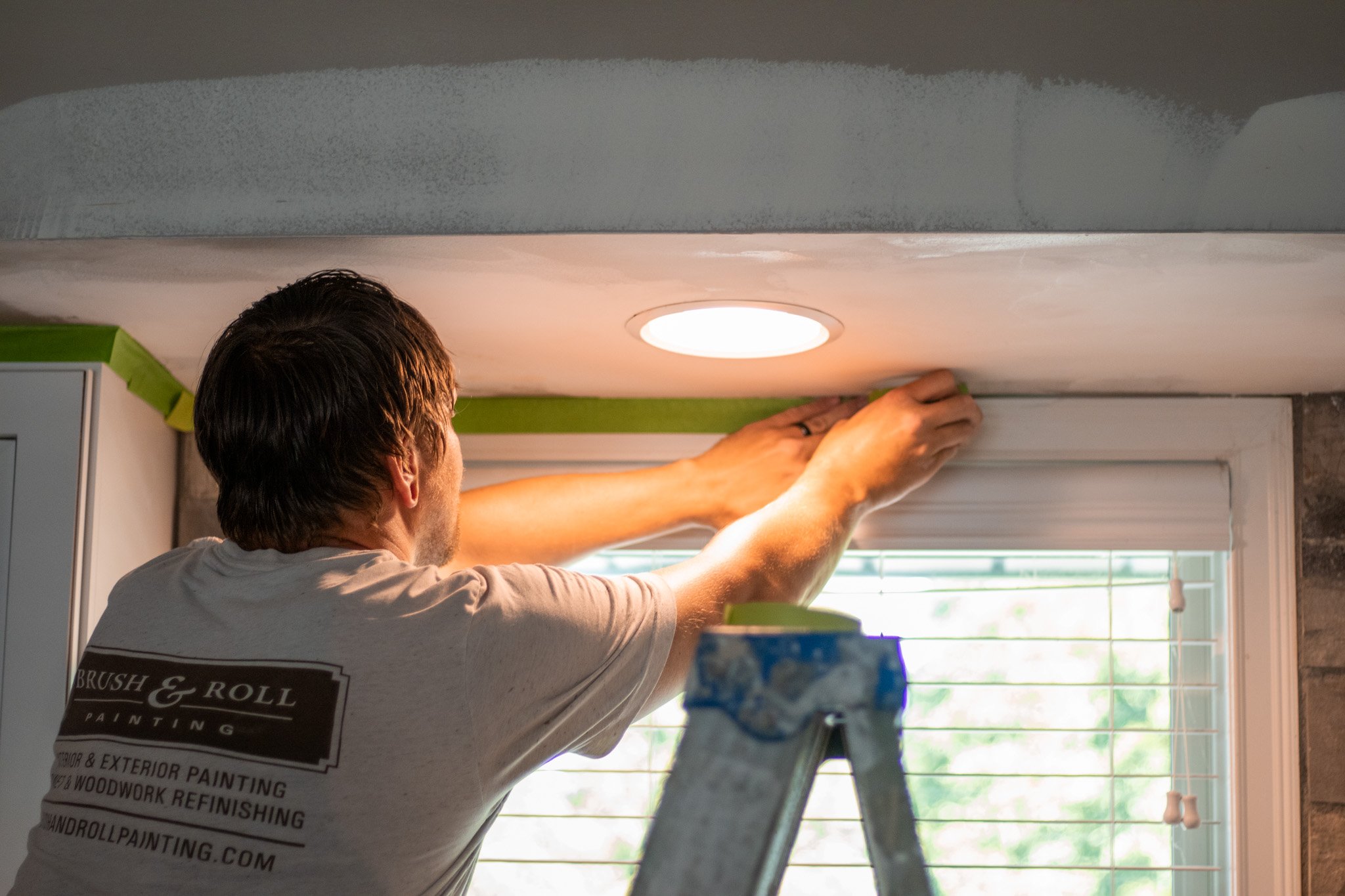
Professional exterior painting rarely works that way.
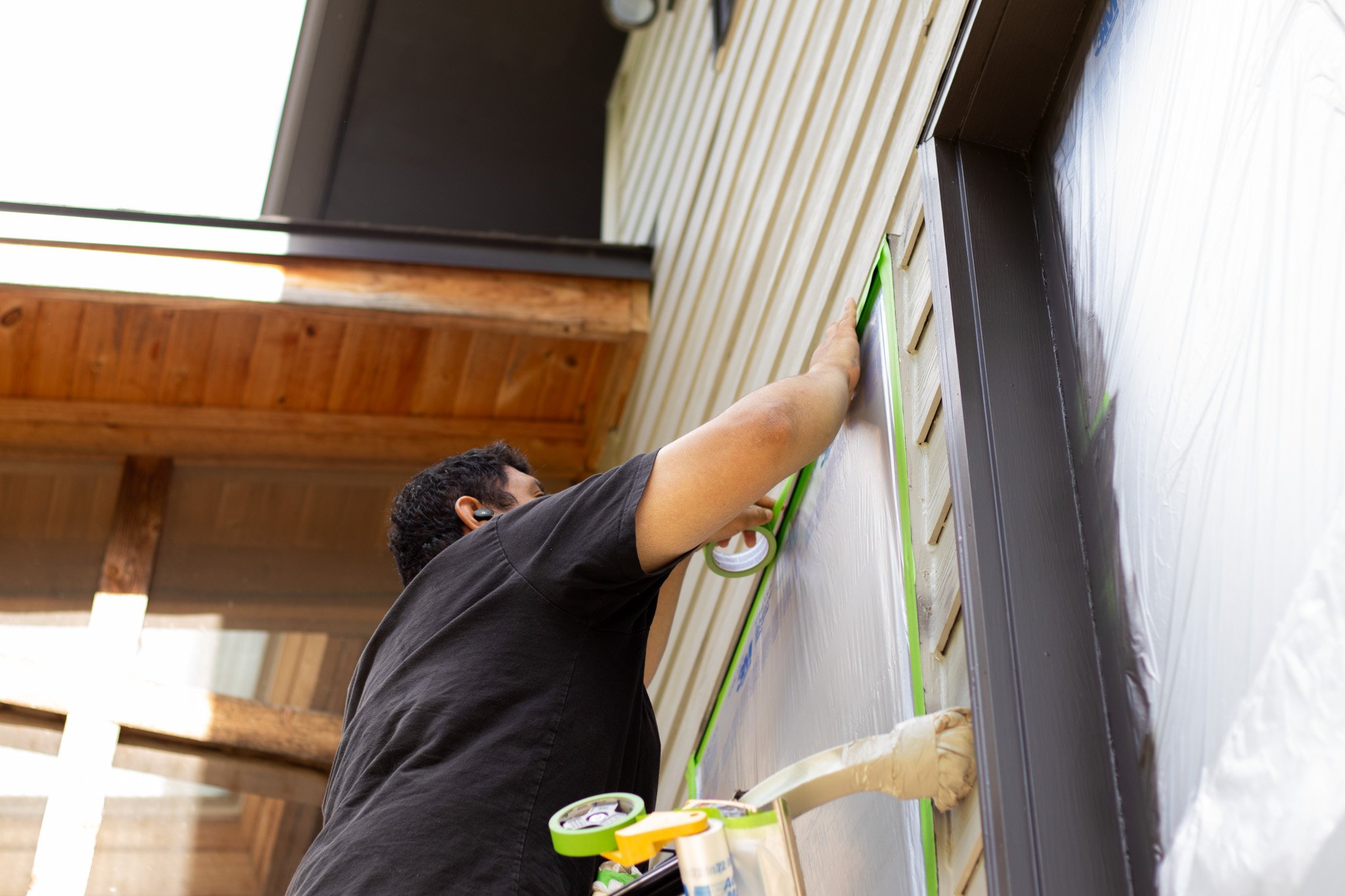
Preparation may include:
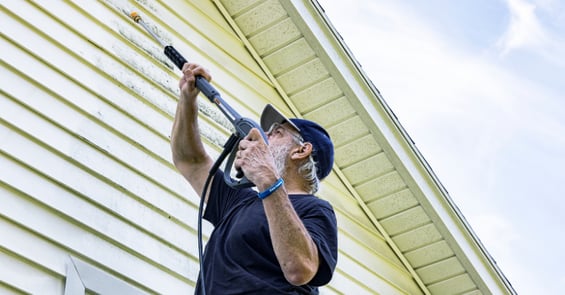
- Washing dirt from the surface
- Removing chalky residue
- Scraping loose paint
- Sanding rough edges smooth
- Feather sanding transitions
- Removing failed caulking
- Applying fresh caulk where needed
- Spot priming exposed galvanized steel
- Protecting landscaping and nearby surfaces
Every home is different. Some homes need very little scraping.
Others may have sections where loose paint continues lifting once washing begins. This is completely normal.
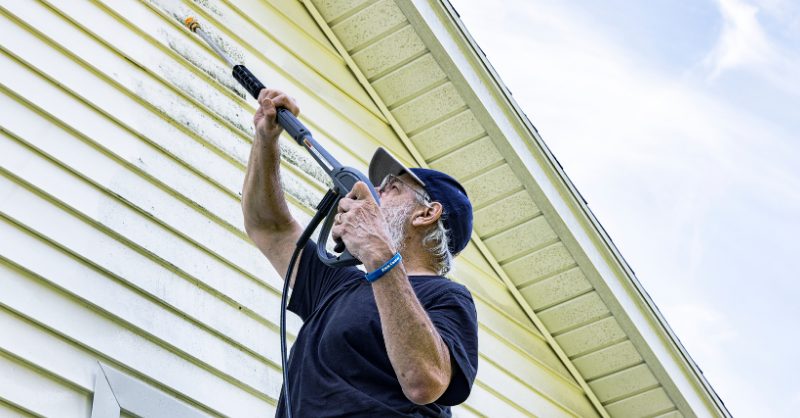
Pressure washing often reveals areas that were already losing their bond but had not yet fallen off.
Finding those weak spots before painting is actually helpful because they can be repaired correctly instead of being trapped beneath fresh paint.
Should Every Bit of Peeling Paint Be Removed?
As much loose paint as reasonably possible should be removed before repainting.
One question homeowners often ask is whether every tiny piece of old paint has to come off.
The answer depends on how well the remaining paint is attached.
Paint that is firmly bonded can often stay. Paint that easily lifts should be removed.
A painter may gently scrape an area and discover that much more loose paint comes off than expected.
That does not necessarily mean anything went wrong.
It simply means the existing coating had already failed.
Removing those weak areas gives the new paint system a much better chance of lasting.
Many homeowners actually appreciate finding these hidden problems during preparation instead of after the new paint has already been applied.
What Primer Should Be Used on Galvanized Steel?
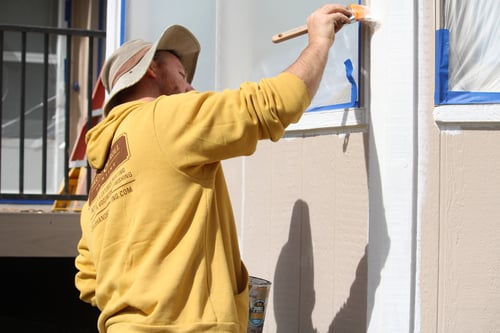
A bonding primer designed specifically for galvanized metal is usually the best choice.
Primer is one of the most misunderstood parts of exterior painting.
Many people focus almost entirely on the finish paint because that is what they see.
The primer often determines whether the finish paint stays attached for years.
A quality galvanized bonding primer is designed to grip the zinc coating while creating a surface the finish paint can bond to.
Without that connection, even premium exterior paint may eventually peel.
Choosing a high-quality finish paint is still important, but it cannot make up for skipping the correct primer.
For that reason, many experienced painters place just as much attention on the preparation and primer as they do on the finish coat.
Should You Spot Prime or Prime the Entire Galvanized Surface?
It depends on the condition of the existing paint. Some homes only need spot priming, while others benefit from a full coat of bonding primer.
There is no single answer that fits every project.
If most of the existing paint is still tightly bonded and only a few areas have peeled, spot priming those bare sections may be all that is needed.
On the other hand, if paint is peeling across large portions of the home or comes off easily during preparation, applying a full coat of galvanized bonding primer often creates a more consistent surface before the finish paint is applied.
A professional painter should evaluate each elevation of the home separately because one side may receive much more sun, wind, or moisture than another.
For example:
- South-facing walls often receive the most sunlight.
- Areas beneath roof lines may hold moisture longer.
- Gables can experience more weather exposure.
- Window sills may collect water if caulking has failed.
Looking at each area individually helps determine the right approach rather than treating every surface the same.
What Type of Paint Works Best on Galvanized Steel?
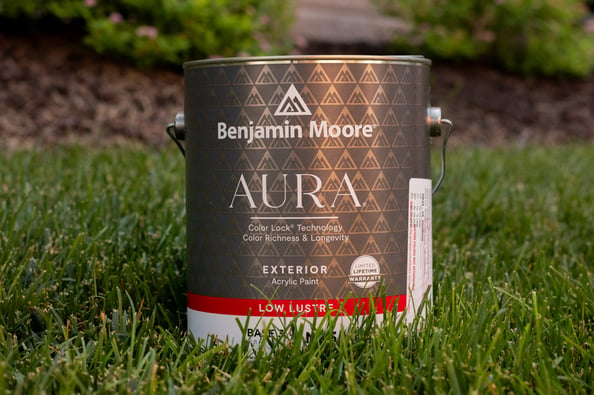
A high-quality exterior acrylic paint is usually the preferred finish coat after the proper primer has been applied.
Many homeowners assume they need a special metal paint for galvanized steel.
In reality, the primer does most of the work when it comes to bonding.
Once the correct primer has cured, many premium exterior acrylic paints perform very well.
When comparing paints, consider:
- Color retention
- Resistance to fading
- Flexibility during temperature changes
- Moisture resistance
- Ease of future maintenance
Higher quality paints generally hold their color longer and stand up better to Omaha's changing weather.
While premium paints may cost more upfront, they can reduce the need for repainting as quickly.
Can You Paint Over Existing Paint on Galvanized Steel?
Yes, but only if the existing paint is still firmly attached.
This is one of the most common questions homeowners ask.
If the old paint is solid, clean, and well bonded, it can often serve as a good base for new paint after proper cleaning and preparation.
If the paint is already peeling, blistering, or separating from the metal, simply covering it with another coat will not solve the problem.
Think of it like putting new flooring over a weak subfloor.
The new surface may look nice at first, but the problem underneath eventually shows itself again.
That is why experienced painters spend time checking how well the existing coating is attached before deciding on the best preparation process.
How Can You Tell If Paint Is Already Failing?
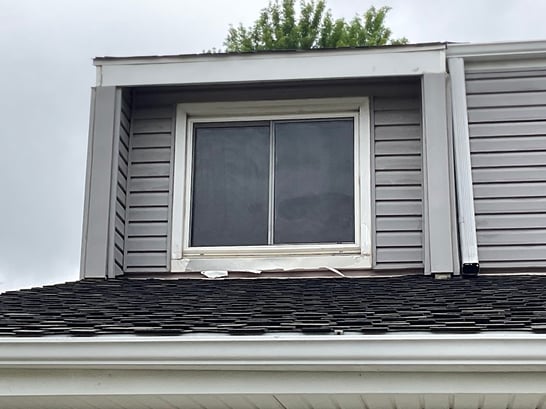
Look for early warning signs before large sections begin peeling.
Paint failure rarely happens overnight.
Most homes show clues long before large sheets begin falling off.
Watch for:
- Small cracks near edges
- Bubbling paint
- Blisters
- Peeling around windows
- Paint lifting near joints
- Rust stains
- Loose caulking
- Bare galvanized metal showing through
Finding these issues early often means repairs are smaller and less expensive than waiting until the damage spreads.
Walking around your home once or twice each year is a simple habit that can help catch these problems before they become major repairs.
How Long Should Painted Galvanized Steel Last?
A properly prepared and painted galvanized surface can provide many years of service, although its lifespan depends on weather exposure, maintenance, and the quality of the original work.
There is no exact number because every home is different.
A house surrounded by mature trees may experience different conditions than one sitting in full sun all day.
Regular maintenance can make a noticeable difference.
Helpful maintenance habits include:
- Wash dirt off every year or two.
- Check caulking around windows.
- Repair small peeling areas early.
- Keep gutters working properly.
- Watch for standing water.
- Remove mildew if it develops.
Small repairs are usually much easier than waiting until several elevations require repainting.
What Questions Should You Ask Before Hiring a Painter for Galvanized Steel?
Ask questions about preparation, primers, repairs, and how unexpected peeling will be handled.
Many estimates list the paint that will be used but spend very little time explaining the preparation.
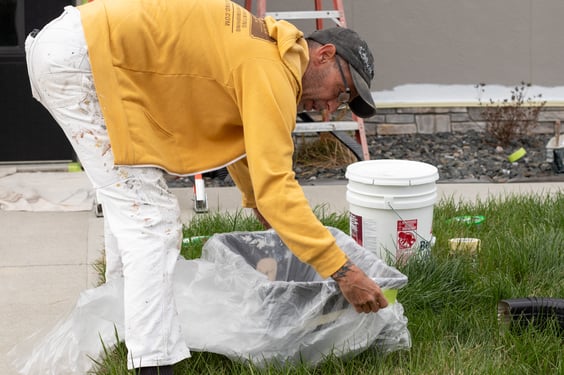
Preparation is often what separates a paint job that lasts from one that begins peeling early.
Here are several questions worth asking.
- Will the galvanized steel be inspected for loose paint?
- How will peeling paint be removed?
- What bonding primer will be used?
- Will bare metal be spot primed or fully primed?
- What happens if additional loose paint is found during washing?
- Will failed caulk be replaced?
- Will repaired areas be feather sanded?
- How will nearby landscaping be protected?
- Which finish paint is recommended, and why?
- Is there a written scope of work describing the preparation?
A detailed scope of work gives homeowners a much clearer understanding of what will actually happen during the project.
Is Painting Better Than Replacing Galvanized Steel?
In many situations, yes. If the galvanized steel is still structurally sound, repainting is often the more practical option.
Galvanized steel is designed to resist rust for many years.
If the metal itself remains in good condition, replacing it simply because the paint has failed is often unnecessary.
Painting may be a good choice when:
- The metal is solid.
- Rust is minimal.
- Paint failure is the main issue.
- The homeowner wants to refresh the home's appearance.
Replacement may be worth discussing if:
- The steel has extensive corrosion.
- Panels have been damaged.
- Fasteners have failed.
- Water damage has affected surrounding materials.
A careful inspection can usually determine which option makes the most sense.
Frequently Asked Questions About Painting Galvanized Steel
Can galvanized steel rust after it is painted?
Yes. If the protective coating becomes damaged or moisture reaches exposed steel, rust can eventually develop. Keeping paint and caulking in good condition helps protect the surface.
Can I paint galvanized steel myself?
Many homeowners complete small projects. Larger exterior projects often require more preparation, specialized primers, ladders, and safety equipment.
Does all galvanized steel need primer?
Most previously unpainted galvanized steel benefits from a bonding primer before applying finish paint.
Can pressure washing remove loose paint?
Yes. Washing sometimes removes paint that had already lost its bond. While that may seem concerning, it actually exposes areas that should be repaired before repainting.
Does peeling always mean the steel is damaged?
No. In many cases, only the paint has failed while the galvanized steel underneath remains in excellent condition.
Should small peeling areas be ignored?
Small peeling areas rarely stay small. Addressing them early often prevents larger repairs later.
Painting Galvanized Steel in Omaha, NE
When homeowners first notice peeling paint on galvanized steel, it is easy to assume the entire surface needs to be replaced or that galvanized steel simply cannot hold paint.
As you've learned throughout this guide, that usually is not the case.
The long-term success of a paint job depends on careful inspection, proper cleaning, removing loose paint, using the correct bonding primer, and applying a quality exterior finish coat. Skipping any of these steps can shorten the life of the paint system, while taking the time to prepare the surface properly can lead to years of reliable performance.
Since 1996, Brush & Roll Painting has worked with homeowners throughout the Omaha area on a wide variety of exterior painting projects, including homes with galvanized steel. Our goal is to help homeowners understand their options so they can make informed decisions about maintaining and protecting their homes.
If you're ready to move forward with your project, click the Get a Quote button below to request an estimate.
If you're still comparing options and planning your budget, try our Exterior Painting Pricing Calculator. It can help you better understand what may influence the cost of your project before requesting estimates.
%202.jpeg?width=564&height=564&name=Scheppers%20After%2070%20(1)%202.jpeg)