Key Takeaways
- Homes near lakes around Omaha often deal with higher indoor humidity, which causes wood and drywall to expand and shrink more than normal
- Cracking paint and caulk inside your home is usually not a bad paint job; it is often movement in the materials underneath
- Trim, doors, and cabinets are especially affected because they are made of wood, which reacts quickly to moisture changes
- The right prep work, flexible caulks, and high-quality paint products can reduce visible cracking, but they cannot stop movement completely
- Managing indoor humidity plays a major role in protecting your interior paint over time
Why is my interior paint cracking in my lake house near Omaha?
Paint cracking in lake homes is usually caused by expansion and contraction from humidity changes, not just poor workmanship. Materials like drywall and wood shift as moisture levels rise and fall, which causes paint and caulk to split over time.
If you own a home near water, you may have noticed something frustrating. Your walls looked great when they were first painted, but now you are seeing small cracks, especially around trim, ceilings, and corners.
This is common in lake areas around Omaha like Lake Zorinsky, Standing Bear Lake, Cunningham Lake, and Wehrspann Lake. These areas naturally have more moisture in the air, especially during spring and summer.
That moisture gets inside your home. Even with air conditioning, humidity levels tend to be higher than in homes farther inland. When materials absorb moisture, they swell. When the air dries out, they shrink.
Paint sits on top of those surfaces. It cannot stretch enough to keep up with constant movement, so it cracks.
You walk through your home and notice thin cracks forming along your trim, corners, and maybe even your cabinets. It is frustrating. You might wonder if the painter rushed the job, or if something went wrong. You spent good money, and now it feels like the results are not lasting.
At Brush & Roll Painting, we have been painting homes in Omaha since 1996. Over the years, we have worked on homes all across the metro, including lake properties where humidity plays a much bigger role. We have seen how moisture affects paint, wood, and drywall, and how different products and prep methods perform over time.
In this article, you will learn exactly why your paint is cracking, what makes lake homes different, and what you can realistically expect from interior painting. You will also learn what can be done to reduce cracking and how to make better decisions when hiring a painter.
Why do lake houses in Omaha have more expansion and contraction?
Lake homes have higher humidity levels, which causes building materials to absorb more moisture and move more often. This leads to repeated expansion and contraction throughout the year.
Homes near lakes deal with a different environment than homes in other parts of Omaha. Water nearby increases humidity levels, especially during warm months.
Here is what happens inside your home:
- Moist air enters through doors, windows, and ventilation
- Wood and drywall absorb that moisture
- Materials swell slightly, even if you cannot see it
- When the air dries out, they shrink back
This cycle happens over and over again.
In a standard home, this movement is mild. In a lake home, it is more noticeable and more frequent. Over time, that movement stresses the paint and caulk.
Where will I see wood cracking inside my home?
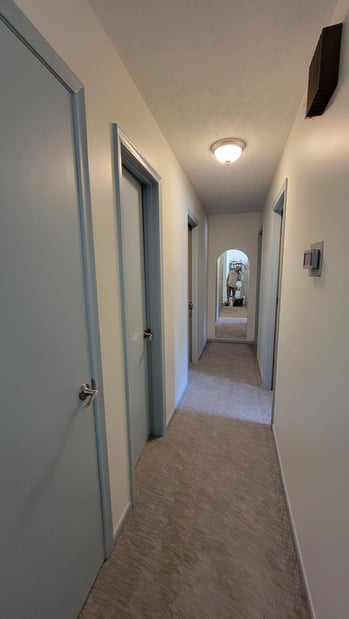
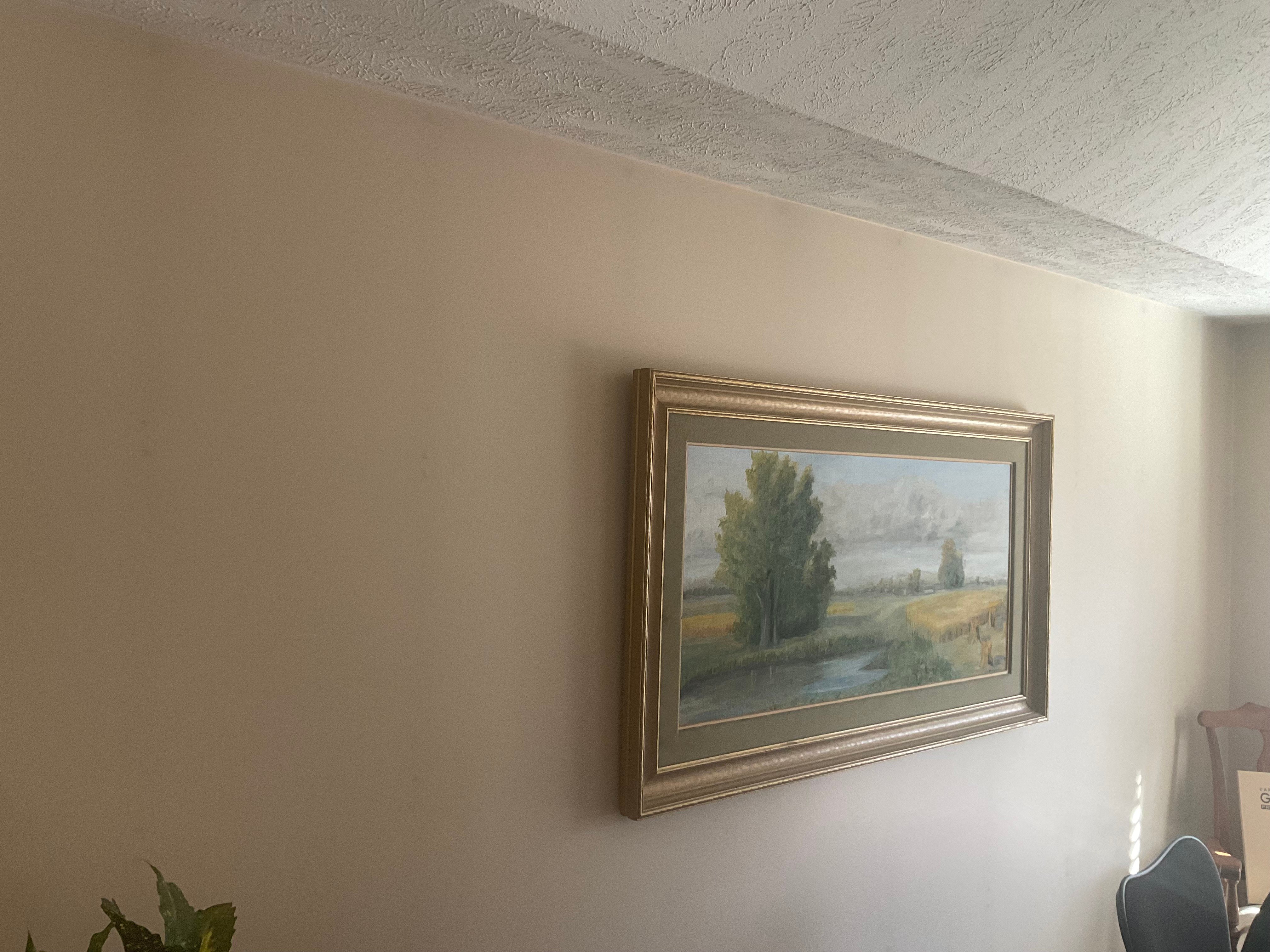
Cracking usually shows up in corners, along trim, at ceiling lines, and around doors and windows where materials meet, and movement is most noticeable.
You are not imagining it if the cracks seem to appear in specific areas. There are certain spots where movement is more visible.
Common problem areas include:
- Where walls meet ceilings
- Inside corners of rooms
- Along baseboards and crown molding
- Around door frames and window trim
- Seams in drywall
- Cabinet door and drawer frames (shaker, arch, etc.)
These areas are where two materials meet or where stress builds up from movement.
Even a perfectly painted home will show wear in these spots over time, especially in a lake environment.
Why does caulk crack in interior trim?
Caulk cracks because it is designed to stretch, but only to a certain point. In high-humidity environments, repeated movement eventually exceeds its flexibility.
Caulk is used to fill gaps between trim and walls. It helps create clean lines and a finished look.
But here is what happens over time:
- Caulk is flexible, but not unlimited. Constant expansion and contraction weaken it
- Over time, it dries out and loses elasticity
- Eventually, it splits
In lake homes, this process happens faster because materials are moving more often.
This is why you might see small cracks forming even just a year or two after painting.

Do wood cabinets crack or shift from humidity?
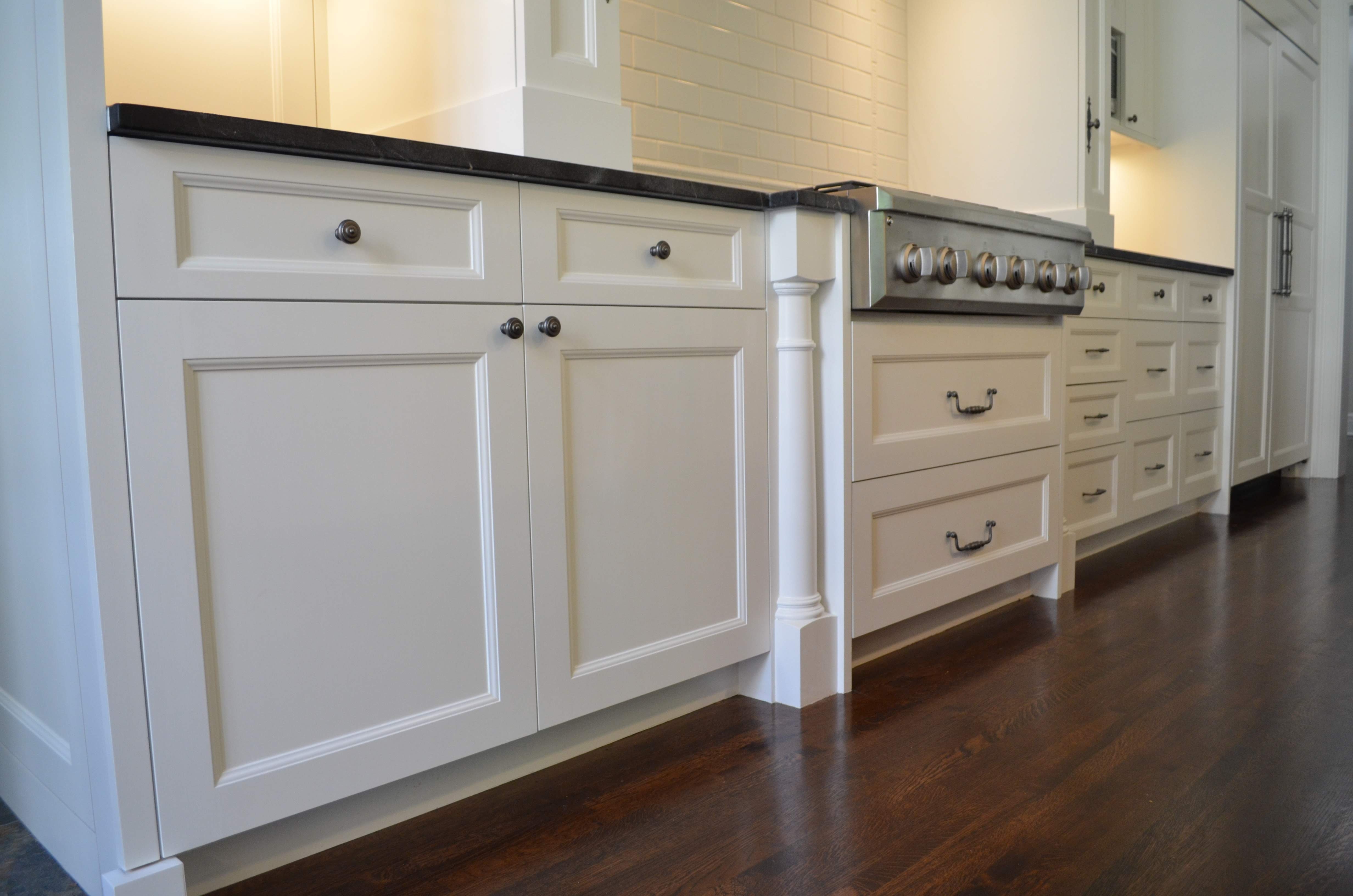
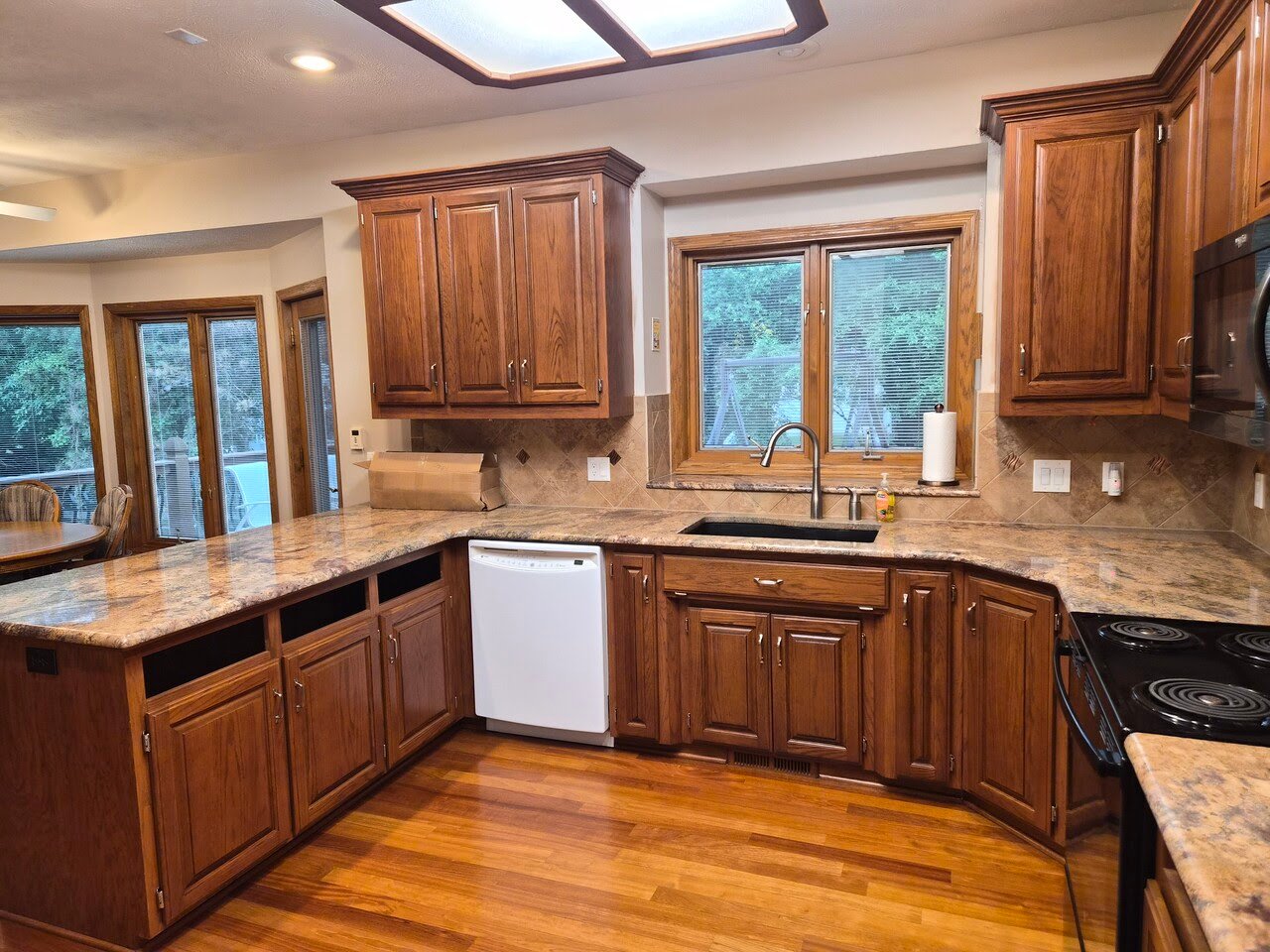
Yes, wood cabinets are highly sensitive to humidity and will expand and contract more than walls, which can lead to paint cracking at joints and seams.
Cabinets are one of the most affected parts of your home.
Wood reacts quickly to moisture changes. Unlike drywall, which is more stable, wood moves a lot.
Here is what you may notice:
- Hairline cracks where cabinet doors meet
- Splitting at joints or seams
- Slight gaps that appear and disappear
- Paint separating at corners
Even high-end cabinet finishes cannot fully prevent this for a long time.
That does not mean the paint failed. It means the wood is doing what it naturally does.
Can better paint stop cracking in high-humidity homes?
Better paint helps slow down visible cracking, but it cannot stop movement underneath. The quality of prep work and materials makes a difference, but it is not a permanent fix.
Many homeowners think switching to a better paint will solve the issue completely.
The truth is more balanced.
High-quality products can:
- Improve flexibility
- Stick better to surfaces
- Last longer before showing wear
But they cannot:
- Stop wood from moving
- Prevent drywall seams from shifting
- Eliminate humidity changes inside your home
This is why expectations matter. A good paint job reduces problems; it does not eliminate them entirely.
What can be done to reduce interior paint cracking?
You can reduce cracking by controlling humidity, using proper prep techniques, and choosing flexible materials, but some movement will always occur in lake homes.
There are practical steps that help extend the life of your paint.
Control indoor humidity
- Use a dehumidifier during summer
- Run HVAC consistently
- Keep humidity levels stable
Use proper prep methods
- Fill and sand drywall properly
- Use flexible caulks designed for movement
- Prime surfaces when needed
Choose better products
- Higher-quality wall paints
- Durable trim coatings
- Professional-grade cabinet finishes
Even with all of this, small cracks may still appear over time. The goal is to slow the process, not eliminate it.
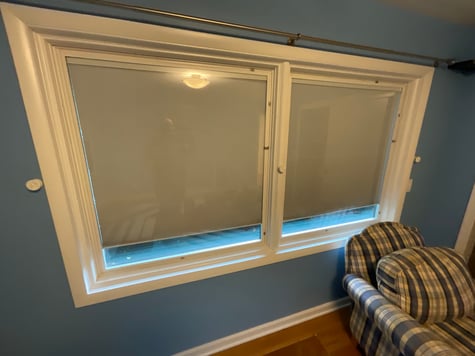
Is this a sign of a bad paint job?
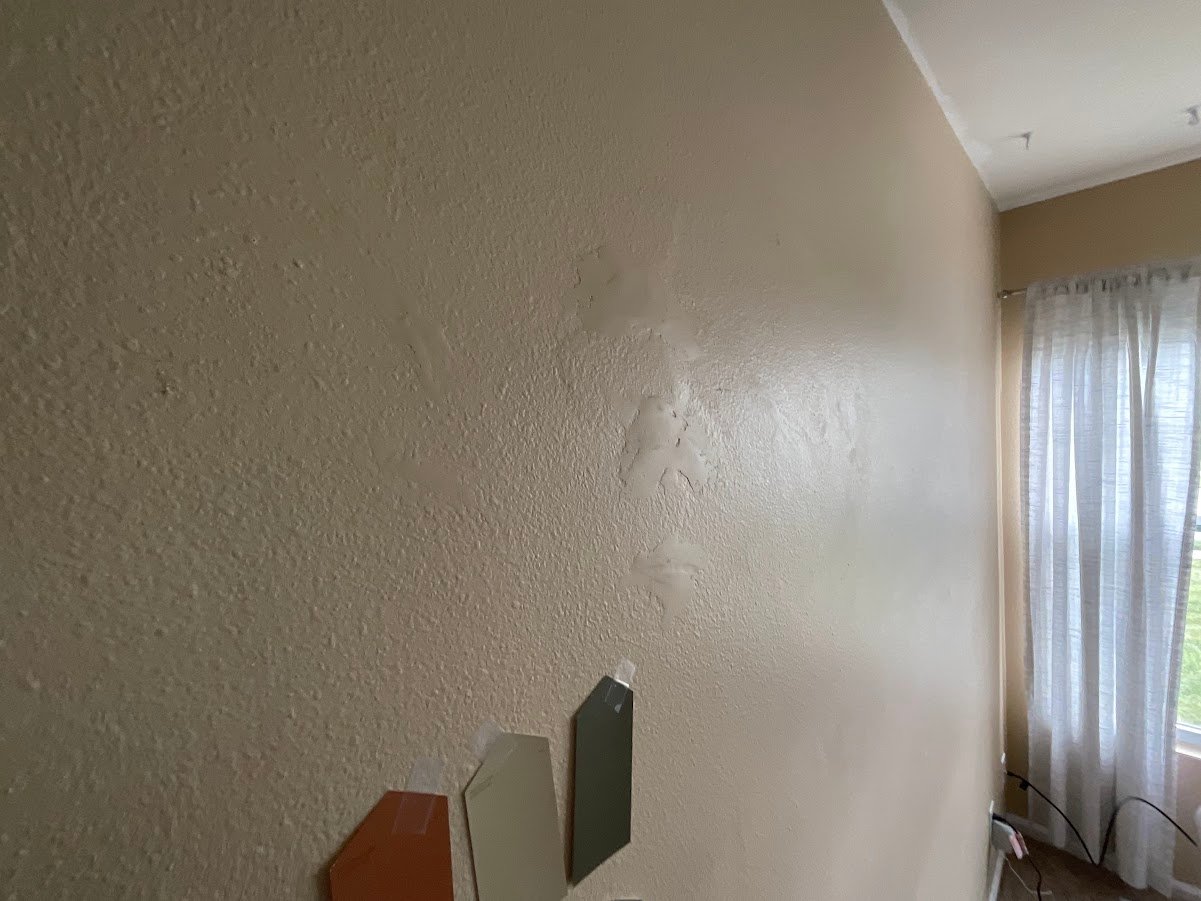
Not always. In many cases, cracking is caused by environmental conditions rather than poor workmanship. It is easy to assume something went wrong. Sometimes that is true, but often it is not.
Here is how to think about it:
- Large peeling areas may indicate a problem
- Widespread failure shortly after painting could be a concern
- Small hairline cracks in corners and trim are normal in lake homes
The key is to look at the pattern.
If the cracks are in predictable areas and develop gradually, it is likely due to movement, not poor painting.
How long should interior paint last in a lake home in Omaha?
Interior paint in lake homes may show minor cracking sooner than typical homes, often within 1 to 3 years in high-movement areas, even when done correctly.
In standard Omaha homes, interior paint can look great for many years.
In lake homes, you may notice:
- Early signs of wear in corners
- Caulk lines opening slightly
- Minor cabinet movement
This does not mean the entire paint job needs to be redone.
Most of the time, it just requires:
- Small touch-ups
- Re-caulking certain areas
- Occasional maintenance
FAQ: Interior Paint Cracking in Omaha Lake Homes
Why do cracks show up more in summer?
Higher humidity causes materials to expand more, which puts stress on paint and caulk.
Will repainting fix the problem permanently?
No. Repainting improves appearance, but the underlying movement will continue.
Should I avoid painting my lake home?
No. Painting still protects surfaces and improves your home, just with realistic expectations.
Are some paints better for trim in humid homes?
Yes. Higher-quality trim paints tend to hold up better and resist cracking longer.
Do all lake homes have this issue?
Most will experience it to some degree, especially if humidity is not well controlled.
Interior Painting Omaha, NE
If you are dealing with cracking paint or caulk in your lake home, you are not alone. The moisture in areas around Omaha lakes creates a different environment inside your home. That environment causes materials to move, and that movement shows up in your paint.
Now you understand why it happens, where to expect it, and what can be done to reduce it. You also know that small cracks are often normal and not always a sign of poor work.
Brush & Roll Painting has been serving Omaha homeowners since 1996. Our goal is to help homeowners understand their homes and make informed decisions, whether that means painting now or waiting.
If you are ready to move forward, click the button below to get a quote.

If you are still planning and want to understand costs first, try using our interior painting pricing calculator to get a clearer idea of what your project may look like.

-May-22-2026-01-56-32-9736-PM.png?width=800&height=418&name=Blog%20Post%20Image%20Size%20(1)-May-22-2026-01-56-32-9736-PM.png)