You’ve painted a few walls here and there after moving into your home. Every time you see them, you notice every dent, patch, roller mark, and uneven spot on the wall.
It feels frustrating. You might even think the paint made things worse.
At Brush & Roll Painting, we’ve been working in homes across Omaha since 1996. We’ve seen this exact situation many times. Homeowners often assume something went wrong with the paint when the real issue is what happened before the paint ever touched the wall.
In this guide, you’ll learn why new paint highlights imperfections more, what causes those issues, and how to fix or avoid them. By the end, you’ll know what separates a smooth, professional finish from one that shows every flaw.
Why does fresh paint make walls look worse sometimes?
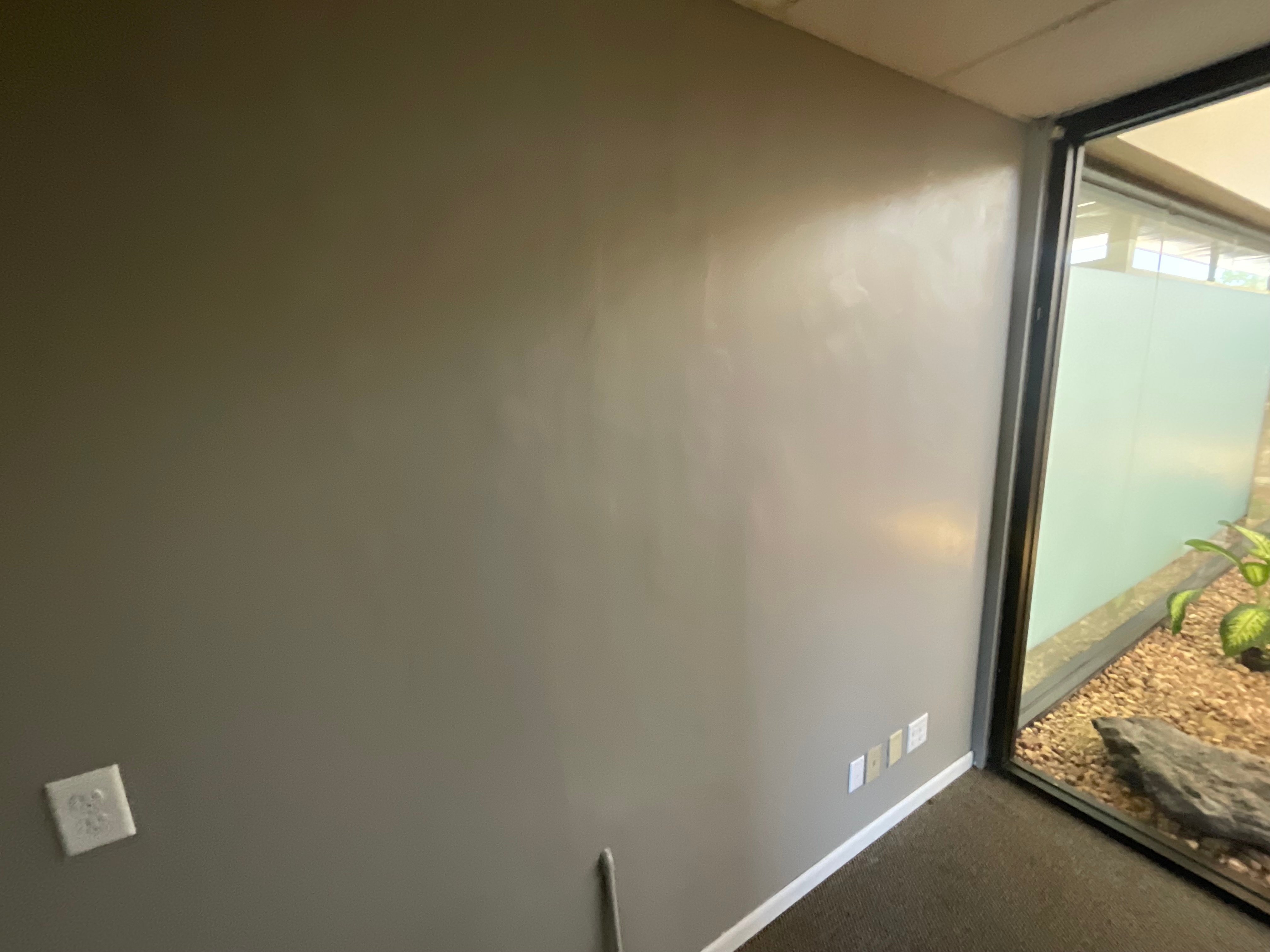
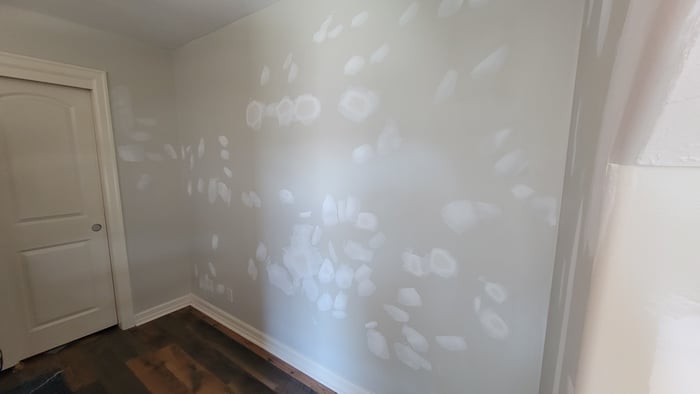
Fresh paint creates a uniform surface that reflects light evenly. That even reflection makes bumps, dents, and texture differences easier to see.
When walls are older, they often have uneven fading, dirt, or a patchy sheen. These inconsistencies can actually hide flaws. Once you apply new paint, especially a clean, solid color, those hiding spots disappear.
Think of it like shining a flashlight across a surface. The smoother the light reflection, the more it reveals.
What’s really happening:
- Old paint masks imperfections with inconsistency
- New paint creates consistency, which exposes flaws
- Light reflects more clearly across the surface
Does paint quality affect how imperfections show?
Better paint improves coverage and durability, but it does not hide poor prep work.
Many homeowners believe buying a higher-end product will solve wall imperfections. While premium paints like Benjamin Moore products often cover better and dry more evenly, they are not designed to fill dents, smooth drywall, or hide bad patchwork.
What good paint actually does:
- Covers color better
- Reduces streaking
- Provides a more even finish
What it does NOT do:
- Fix drywall damage
- Hide sanding scratches
- Level uneven textures
If anything, higher-quality paint can make imperfections more noticeable because it lays down smoother.
Why does sanding matter before painting walls?
Sanding smooths out rough areas, patch edges, and previous paint texture so the new coat looks even.
Skipping sanding is one of the biggest reasons new paint highlights imperfections. Even small ridges around patched holes or old roller texture can become very noticeable after painting.

Common sanding mistakes DIY painters make:
- Not sanding at all
- Only sanding patches, not blending edges
- Using the wrong grit of sandpaper
- Not wiping dust before painting
What proper sanding does:
- Softens patch edges
- Levels minor surface differences
- Helps paint adhere better
A good rule of thumb is this: if you can feel it with your hand, you will likely see it after painting.
Why do drywall patches show through paint?
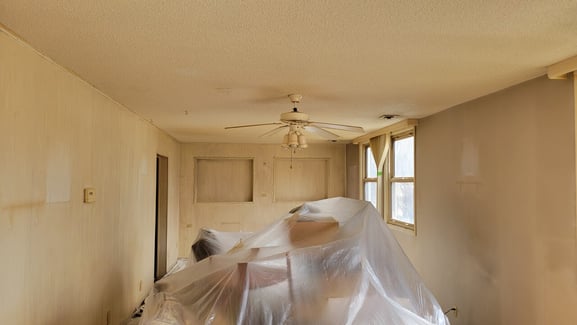
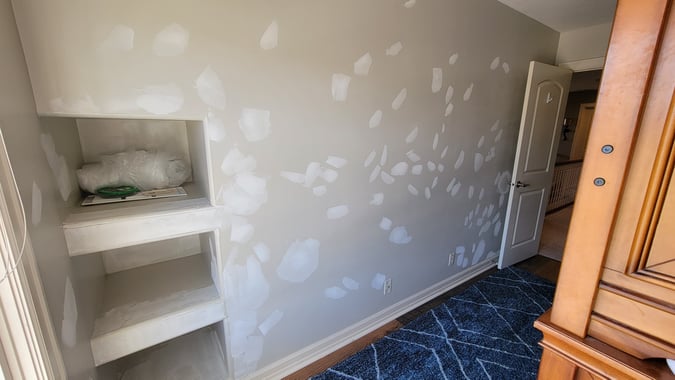
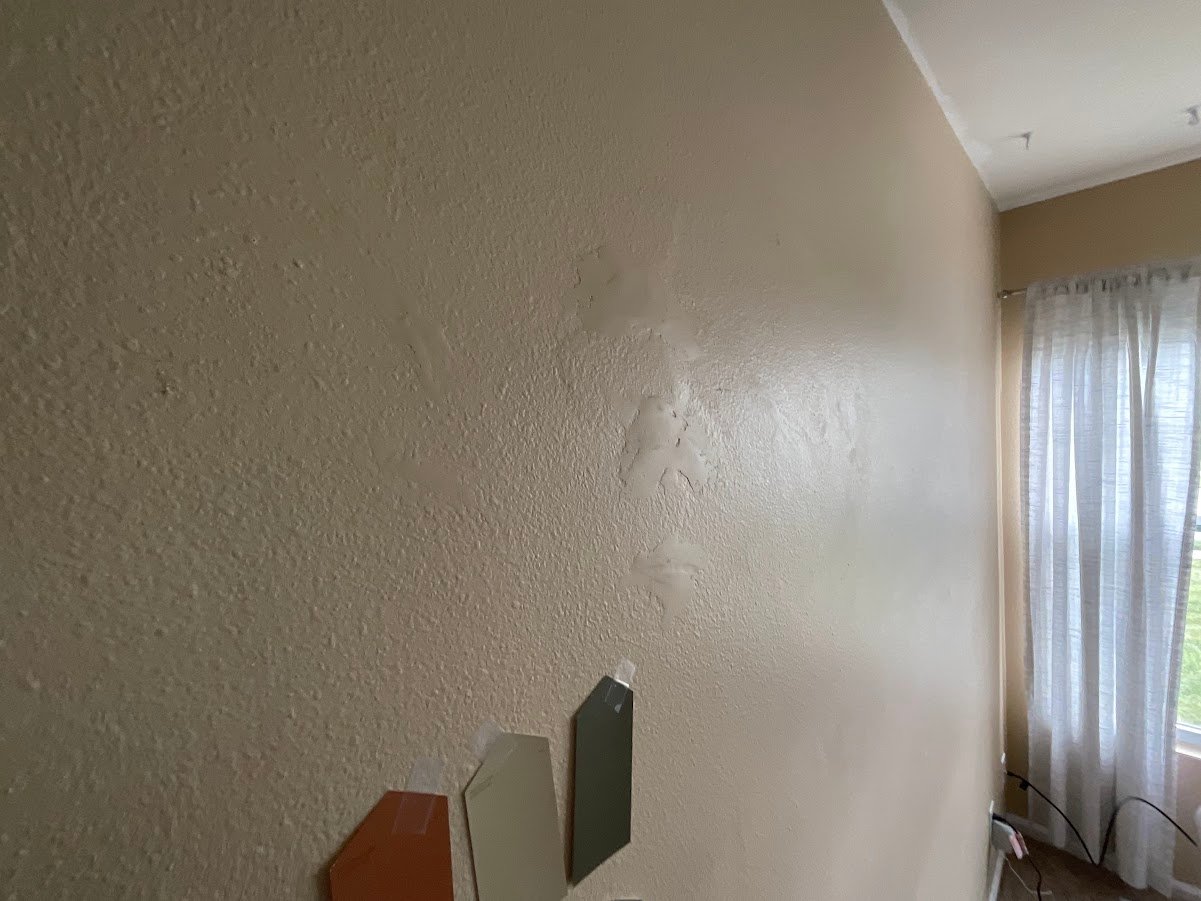
Drywall patches absorb paint differently from the surrounding wall, which creates flashing and visible spots.
When you patch a hole or dent, the compound has a different texture and porosity than the existing wall. Without proper prep, that area will stand out after painting.
This is called “flashing”:
- Patches look dull or shiny compared to the rest of the wall
- The texture appears uneven
- The color may even look slightly different
How to fix it:
- Sand the patch smooth
- Apply primer over the patched area
- Feather the edges carefully
Skipping primer is one of the biggest reasons patches show through.
Do you really need primer before painting?
Yes, especially over patches, repairs, or bare drywall.
Primer helps create a consistent surface so the paint absorbs evenly. Without it, certain areas soak up more paint, which leads to uneven sheen and visible spots.
When primer is necessary:
- New drywall
- Patched areas
- Stains or repairs
- Color changes, especially from dark to light
What primer does:
- Seals the surface
- Creates uniform absorption
- Helps paint bond properly
Even if your paint says “paint and primer in one,” that does not replace the need for a true primer in problem areas.
Does paint sheen affect how imperfections show?
Yes. The higher the sheen, the more it highlights flaws.
Paint sheen plays a major role in how light reflects off your walls. The more reflective the finish, the more it draws attention to imperfections.
Sheen comparison:
- Flat paint: hides the most imperfections
- Eggshell: slight reflection, still forgiving
- Satin: more durable but shows more flaws
- Semi-gloss: highlights nearly everything
For many Omaha homes, especially older ones, going too shiny can make walls look worse, even with good prep.
Why do roller marks and streaks show after painting?
Uneven application, poor technique, or low-quality tools can leave visible lines and marks.
Even if the wall is prepped well, application still matters. Paint needs to be applied evenly and consistently.
Common causes:
- Pressing too hard with the roller
- Not maintaining a wet edge
- Using cheap rollers or brushes
- Painting in sections that dry too quickly
How professionals avoid this:
- Work in consistent sections
- Use high-quality tools
- Apply even pressure
- Back roll for a smooth finish
This is one area where experience makes a noticeable difference.
Are older homes in Omaha harder to paint?
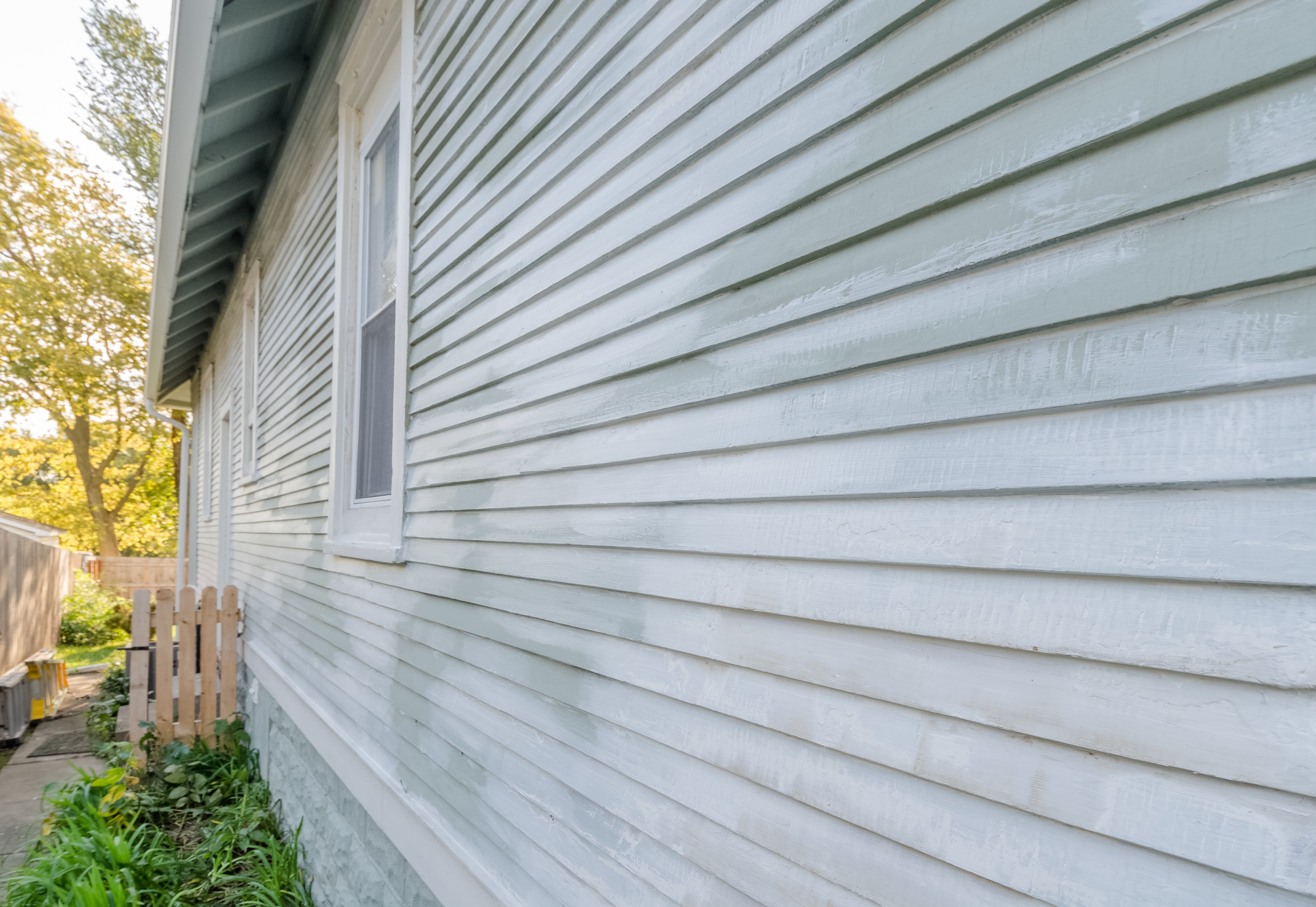
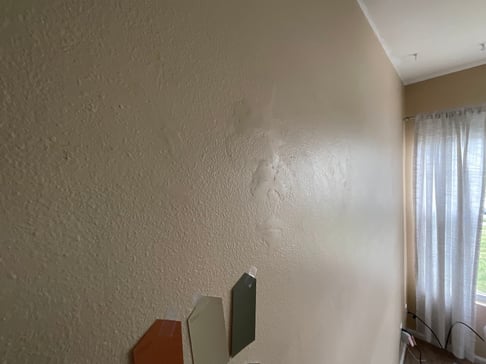
Yes, they can be. Older homes often have more surface imperfections that need extra prep work.
Many homes in Omaha, built before the 1970s, have layers of paint, repairs, and texture changes over time.
Common issues in older homes:
- Multiple paint layers
- Settling cracks
- Uneven drywall texture
- Previous poor repairs
These surfaces require more prep than newer homes. Skipping those steps almost guarantees imperfections will show.
How do professional painters prevent imperfections from showing?
Short answer:
They focus heavily on prep work before painting ever begins.
Most homeowners are surprised by how much time professionals spend preparing surfaces. Painting is often the fastest part of the job.
Typical prep process:
- Inspect walls under proper lighting
- Patch holes and imperfections
- Sand entire surfaces, not just repairs
- Spot prime or full prime as needed
- Clean dust and debris
At Brush & Roll Painting, prep work is a major focus because it directly affects the final result.
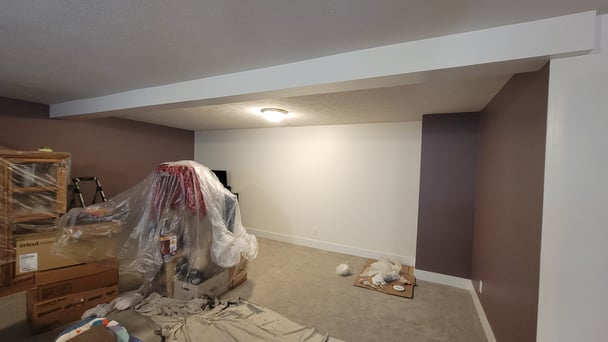
When should you stop DIY and hire a painter?
If you’re seeing imperfections after painting and aren’t sure how to fix them, it may be time to bring in a professional.
DIY painting can work well for simple projects. But once you start dealing with:
- Visible patches
- Uneven texture
- Light reflection issues
- Repeated coats with no improvement
…it often becomes more time-consuming and frustrating than expected.
A professional can identify the root problem quickly and fix it correctly the first time.
FAQ: Why does new paint highlight imperfections more?
Why do my walls look worse after painting?
New paint creates a uniform surface that makes flaws easier to see. The issue is usually prep work, not the paint itself.
Will another coat fix imperfections?
Not usually. Additional coats can sometimes make the problem more noticeable if the surface underneath is uneven.
Can I fix imperfections after painting?
Yes, but it often requires sanding, patching, priming, and repainting. It is not always a quick fix.
What is the best paint to hide wall imperfections?
Flat or matte finishes hide flaws best, but proper prep matters more than the type of paint.
How do I know if I need primer?
If you have patches, repairs, stains, or uneven surfaces, primer is strongly recommended.
Painting in Omaha, NE
If you’ve painted a room and ended up noticing more flaws than before, you’re not alone. What feels like a paint problem is almost always a surface preparation issue.
You’ve learned that sanding, patching, priming, and choosing the right sheen all play a role in how your walls look once the paint dries. You also now understand why fresh paint reflects light differently and why that can expose even small imperfections.
At Brush & Roll Painting, we’ve been helping Omaha homeowners work through these exact challenges since 1996. Our goal is to help you understand what goes into a smooth, long-lasting finish so you can make the best decision for your home.
If you’re ready to move forward with hiring a painter for your project, click the button below to get a quote.

If you’re still in the planning stage, but looking into hiring a painter, a great next step is to try a home painting pricing calculator. It can help you understand what to expect and plan your project with more confidence.
-May-22-2026-01-56-32-9736-PM.png?width=800&height=418&name=Blog%20Post%20Image%20Size%20(1)-May-22-2026-01-56-32-9736-PM.png)
-May-15-2026-04-54-24-9954-PM.png?width=800&height=418&name=Blog%20Post%20Image%20Size%20(1)-May-15-2026-04-54-24-9954-PM.png)
-Sep-20-2024-01-43-26-0356-PM.png?width=800&height=418&name=Blog%20Post%20Image%20Size%20(2)-Sep-20-2024-01-43-26-0356-PM.png)