You finally picked out new countertops. The samples looked great, the install went smoothly, and then you noticed something you were not expecting. There is a thin strip of cabinet wood showing under the new countertop edge. Maybe it is a small gap. Maybe the cabinet face frame is more visible than before. Guests will probably never see it, but you see it every time you grab something out of a lower cabinet. That tiny change can suddenly feel like a big problem.
We see this situation often. At Brush and Roll Painting, we have worked in Omaha homes since 1996, many of them after countertop replacements. As a cabinet painting company, we regularly walk into kitchens where new countertops were installed months or even years after the cabinets. Different materials, different thicknesses, and different edge profiles all interact with cabinets in small but noticeable ways.
By the end of this article, you will understand how countertop thickness affects cabinets, why gaps or exposed wood sometimes appear, whether this is normal, and what options homeowners have. You will walk away knowing when it is worth addressing, when it can be left alone, and how cabinet painting fits into the decision without pressure or sales talk.
Will a different thickness countertop affect how my cabinets look?
Yes, it can, especially along the top edge of the cabinet box or face frame.
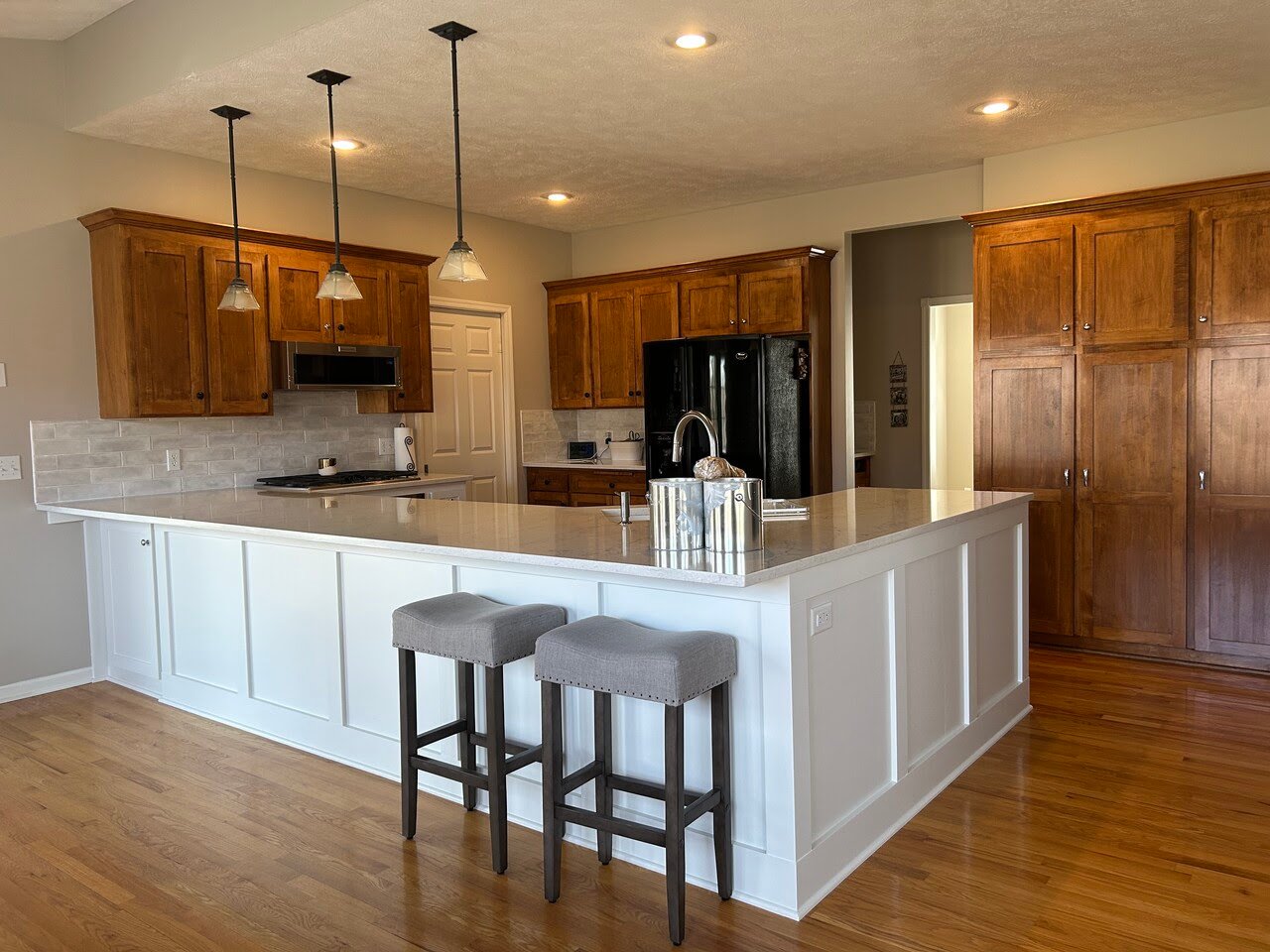
Countertops are not all the same thickness. Laminate, granite, quartz, and solid surface materials each sit differently on cabinets. When a new countertop is thicker or thinner than the old one, it can change how much of the cabinet is visible below the edge. This is one of the most common surprises homeowners notice after an upgrade.
In many Omaha homes, older laminate countertops were thinner than modern stone options. When a thicker countertop is installed, it may sit higher or project farther outward. When a thinner option replaces a thicker one, it may expose a strip of cabinet material that was never meant to be seen.
What countertop thicknesses are most common today?
Most stone countertops are about one and a quarter inches thick, but edge styles can make them appear thicker.
Here are some common countertop thicknesses homeowners encounter:
- Laminate, often three-quarters of an inch
- Quartz and granite slabs, typically one and one-quarter inches
- Thicker edge builds that appear two inches or more due to laminated edges
- Solid surface materials that can vary based on fabrication
Edge profiles matter too. A square edge shows the true thickness. A built-up edge can make the countertop look heavier and can cover more or less of the cabinet, depending on how it is installed.

Why am I seeing a gap or exposed wood above my lower cabinets now?
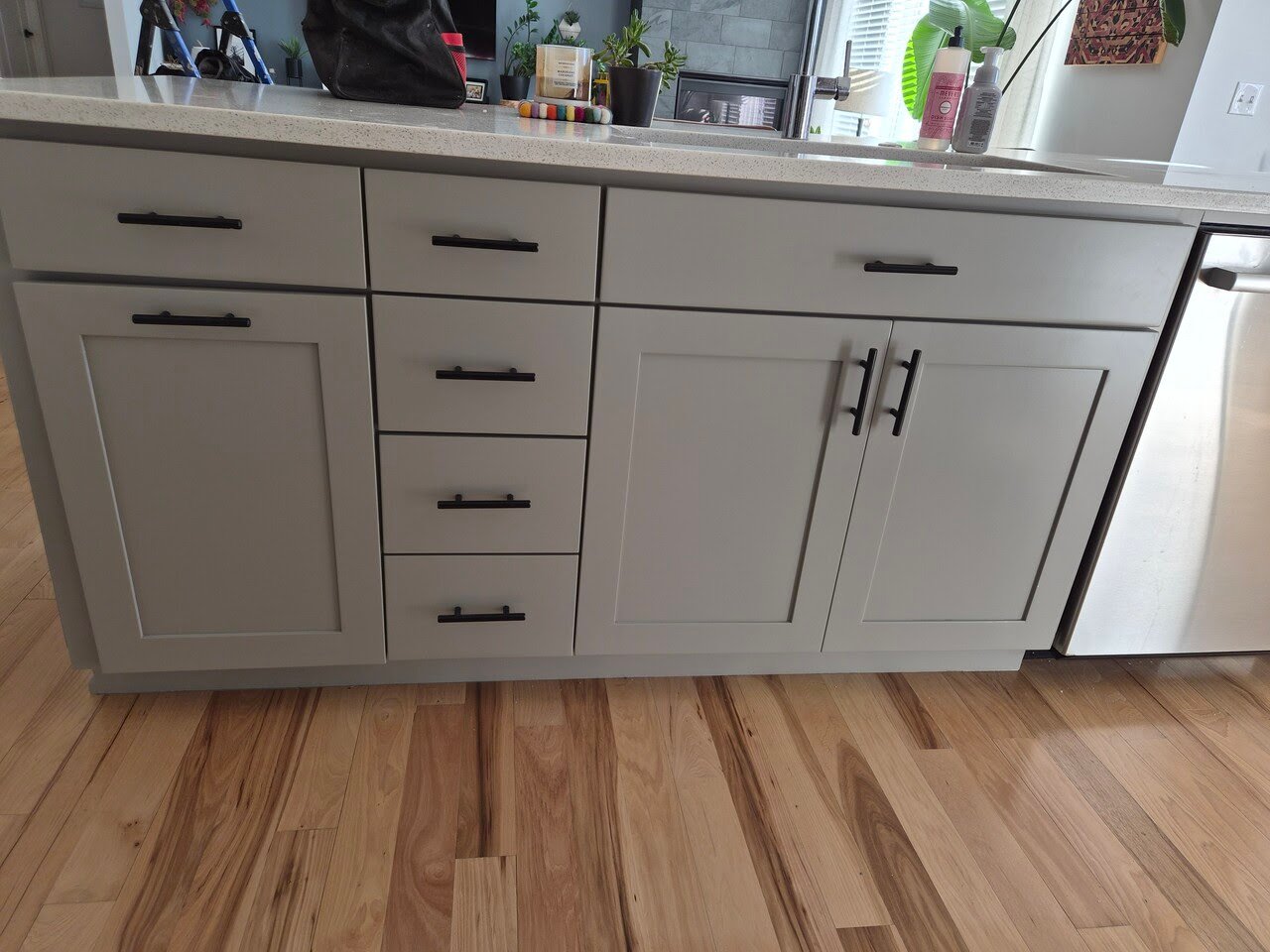
The new countertop sits differently than the old one, revealing cabinet areas that were previously hidden.
This happens for a few reasons:
- The old countertop overhung the cabinet more
- The new countertop is thinner at the edge
- The cabinets were installed slightly out of level years ago
- Shims were adjusted during countertop installation
- The backsplash height changed or was removed
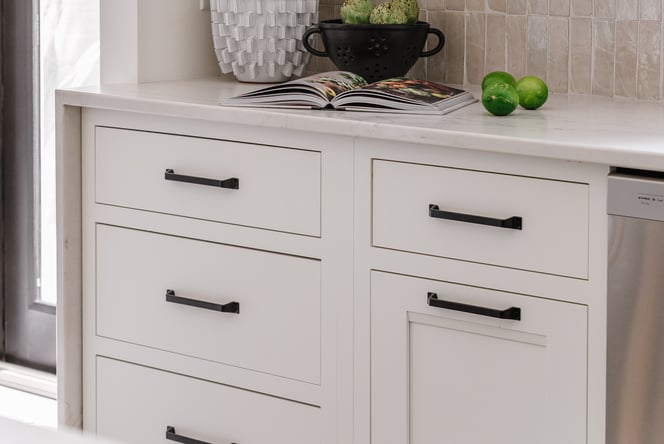
Cabinet boxes are usually built to be hidden under a countertop lip. When that lip changes, raw wood, painted surfaces, or unfinished areas can appear. This is not usually a cabinet defect. It is a change in how two separate parts of the kitchen now meet.
Is this a cabinet problem or a countertop problem?
It is usually neither. It is simply how new components interact with existing ones.
Cabinets and countertops are often installed years apart. They are also installed by different trades. Cabinet installers focus on level bases and door alignment. Countertop installers focus on stone seams, overhangs, and support. Small differences add up.
This is especially common in older Omaha homes where cabinets have settled slightly over time. When new countertops go in, everything becomes more visible and sharper. That can make minor imperfections easier to notice.
Is it normal for homeowners to be bothered by this?
Yes, very normal, even if no one else notices it.
We hear this often from homeowners. Friends come over and never comment. Family members do not see the issue. But the homeowner knows it is there. That awareness can make the kitchen feel unfinished even when everything else looks great.
This reaction is understandable. Kitchens are visual spaces. When you invest in new countertops, your eye naturally scans for changes. A small strip of exposed cabinet wood can stand out more than it should.
Should I paint the exposed cabinet area?
Sometimes yes, sometimes no, it depends on visibility and personal comfort.
Here are a few common scenarios:
- If the exposed area is visible while standing, painting can help it blend in
- If it is only visible when you crouch or lean, many homeowners leave it
- If the wood is unfinished, painting or sealing can protect it
- If cabinets are already scheduled for painting, it is usually addressed at the same time
Painting this area is common. It is not unusual or excessive. It is also not required. The choice is about how you want your kitchen to feel when you walk into it.
Will guests notice exposed cabinet wood near the countertop?
Almost never.
Guests look at countertops, cabinet doors, and the overall layout. They rarely focus on small details like the thin line where the countertop meets the cabinet unless it is very large or uneven. Most of the time, only the homeowner notices it because they know it was not there before.
That said, you live in your kitchen every day. Comfort matters. If something bothers you daily, it deserves consideration even if visitors do not notice it.
Can cabinet painting fix this issue completely?
Cabinet painting can help visually blend exposed areas, but it does not change the countertop fit.
Painting can make exposed wood match the rest of the cabinet so it does not stand out. It cannot move the countertop or eliminate the physical gap. For most homeowners, visual blending is enough.
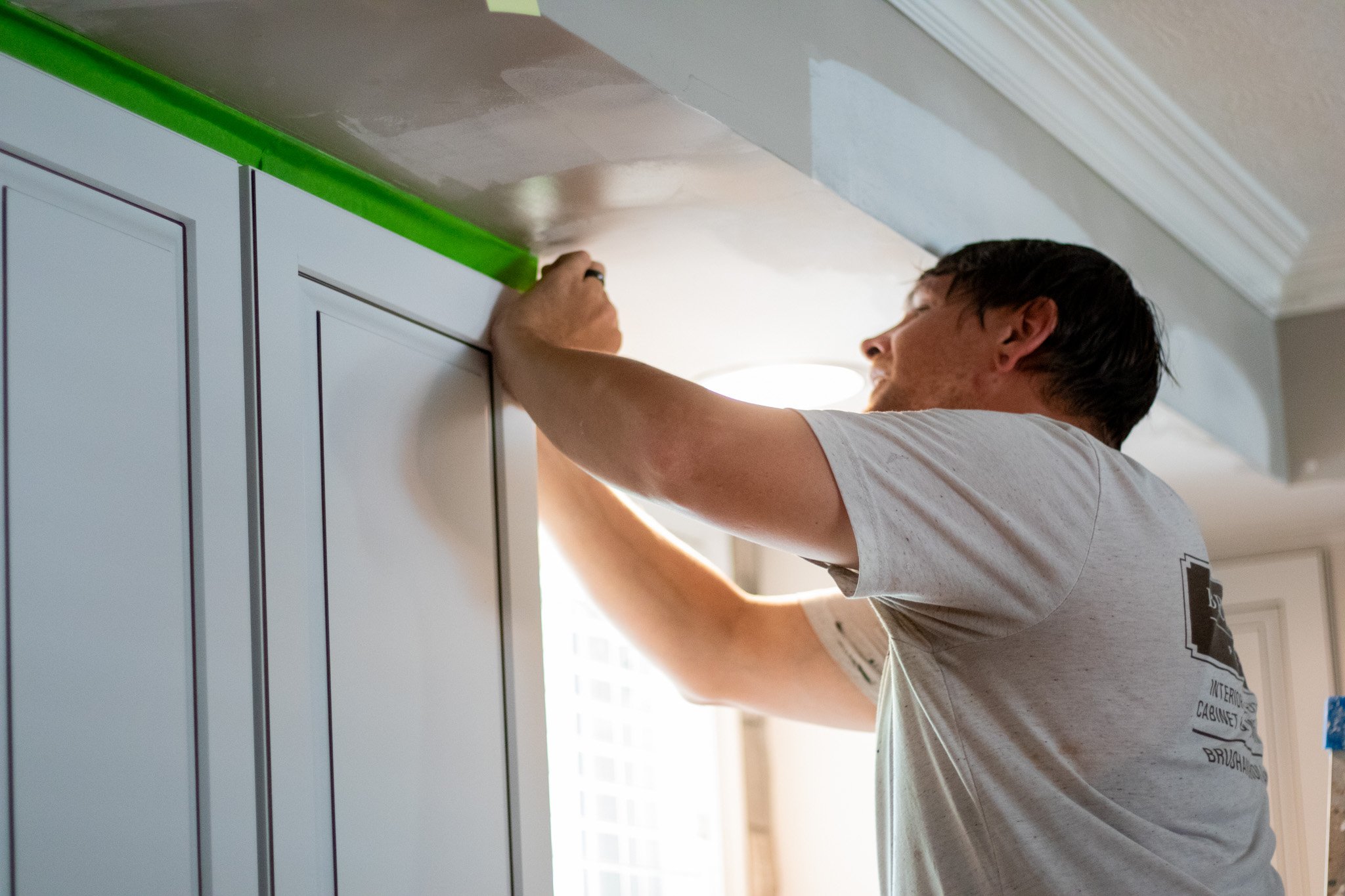
During cabinet painting projects, professionals often address:
• Exposed cabinet edges
• Face frame color consistency
• Small visible gaps
• Transitions between the cabinet and the wall or the counter
This is usually handled quietly as part of prep and finish work, not as a separate project.
What if I plan to paint my cabinets later?
It is okay to wait, but understand the exposed area will still be there.
If cabinet painting is planned down the road, many homeowners choose to live with the exposed wood for a while. This is common and reasonable. When painting eventually happens, the exposed strip is usually included.
If the wood is raw, a temporary seal or touch-up may help protect it until the full project is done.
Does this mean my cabinets were installed incorrectly?
No, this is usually not an installation error.
Cabinets are installed based on the countertop selected at the time. When countertops change years later, the cabinet installation does not suddenly become wrong. It is just a different pairing.
This is similar to replacing flooring under existing trim. The trim was correct at the time. The new material changes the look.
Cabinet Painting in Omaha, Nebraska
Changing countertop thickness can change how your cabinets look, even if nothing is actually wrong. Small gaps, exposed wood, or new lines can appear simply because two materials now meet differently. This article walked you through why it happens, what is normal, and how homeowners usually respond.
If this change has been bothering you, now you know you are not alone and that there are calm, practical ways to handle it. Brush and Roll Painting has helped Omaha homeowners navigate these small but meaningful details for over 30 years.
If you are ready to take the next step on your cabinet project, click the button below to get a quote.

If you are still planning and gathering information, our cabinet painting pricing calculator can help you understand options and timing before talking with a team.

Topics:
.jpg?width=1280&height=721&name=Havens%20after%201%20(1).jpg)